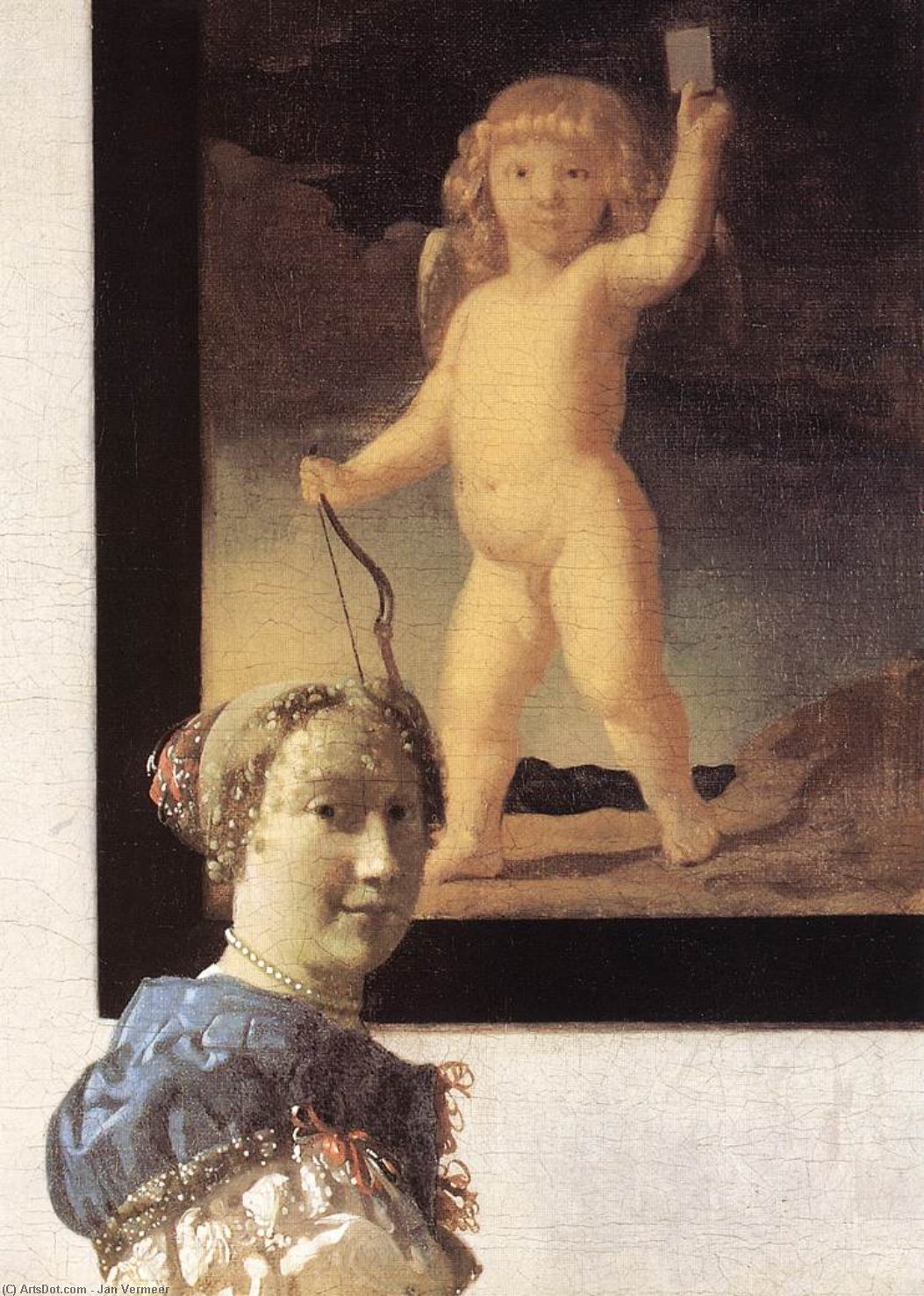
A Moment Frozen in Time: Johannes Vermeer’s ‘Lady Standing at a Virginal’
Johannes Vermeer's “Lady Standing at a Virginal (Detail)” is more than just a painting; it’s a portal into the intimate world of 17th-century Delft. Completed between 1670 and 1672, this exquisite work, now residing in the National Gallery in London, offers a rare glimpse into domestic tranquility—a carefully constructed tableau of quiet contemplation and refined leisure. Vermeer, already recognized as a master of light and atmosphere, elevates the seemingly simple scene to an extraordinary level of artistry, inviting us to linger within its serene confines.
The painting immediately captivates with its masterful use of chiaroscuro – the dramatic interplay of light and shadow. Vermeer employs this technique not merely for aesthetic effect but to draw our attention to the central figure: a woman, richly adorned in velvet and lace, poised before a virginal, a small keyboard instrument favored by ladies of the era. Her posture is graceful, her gaze lowered as if lost in the music she produces, creating an immediate sense of intimacy and vulnerability. The light, originating from an unseen window to the left, washes over her face and hands, highlighting the delicate textures of her clothing and the polished wood of the instrument.
Beyond the central figure, Vermeer’s attention to detail is remarkable. Notice the subtle variations in color – the rich blues and whites of the Delftware tiles adorning the floor, a testament to the local craftsmanship of the time; the muted tones of the wall paintings depicting scenes from classical mythology, likely by either Jan Wijnants or Allart van Everdingen, adding depth and complexity to the composition. These elements aren’t merely decorative; they speak to the woman's social standing, her connection to her home, and the artistic sensibilities prevalent in Delft society. The inclusion of these details elevates the painting beyond a simple portrait, transforming it into a miniature world brimming with cultural significance.
The Harmony of Light and Domesticity
Vermeer’s genius lies not just in his technical skill but also in his ability to capture the essence of everyday life. “Lady Standing at a Virginal” is a quintessential example of Dutch Golden Age art, characterized by its realism, meticulous observation, and profound sense of serenity. Unlike many artists of the period who focused on grand historical or religious subjects, Vermeer chose to depict scenes from ordinary domestic life—a strategy that allowed him to explore human emotions and experiences with unparalleled subtlety.
The virginal itself is a key element of the painting’s symbolism. It represents not only musical skill but also refinement, education, and social grace – qualities highly valued in women of Vermeer's time. The woman’s focused expression suggests a deep engagement with her music, hinting at a contemplative spirit and an appreciation for beauty. The scene evokes a sense of quiet domesticity—a moment suspended in time, free from the anxieties and complexities of the outside world.
A Pair of Masterpieces: Vermeer and His Studio
Interestingly, “Lady Standing at a Virginal (Detail)” is closely linked to another Vermeer masterpiece, “Lady Seated at a Virginal,” which shares almost identical dimensions and canvas origin. Recent research has confirmed that the two paintings originated from the same bolt of linen, suggesting that Vermeer may have worked on them simultaneously or in close succession. This connection adds another layer of intrigue to the work, prompting us to consider how Vermeer’s artistic vision remained remarkably consistent across his diverse oeuvre.
The presence of other artists' works within the scene—the wall paintings attributed to Wijnants or Everdingen—further underscores Vermeer’s collaborative approach. It’s possible that he commissioned these panels, adding them to his compositions as a means of enriching the visual narrative and demonstrating his awareness of contemporary artistic trends. This collaborative spirit is characteristic of many artists during the Dutch Golden Age, who often relied on assistants and workshop members to execute various aspects of their work.
A Legacy of Serenity: Reproductions and Beyond
Today, “Lady Standing at a Virginal (Detail)” continues to captivate audiences worldwide. Its enduring appeal lies in its ability to transport us to another time and place—a world of quiet beauty, refined elegance, and profound human emotion. ArtsDot offers meticulously crafted hand-painted reproductions that faithfully capture the essence of Vermeer’s masterpiece, allowing you to bring this iconic work into your own home or office.
Whether you're an art enthusiast, a collector seeking a unique addition to your collection, or simply someone who appreciates exquisite beauty, a reproduction of “Lady Standing at a Virginal (Detail)” is sure to be a treasured possession. Explore our selection of high-quality reproductions and experience the timeless allure of Vermeer’s genius.