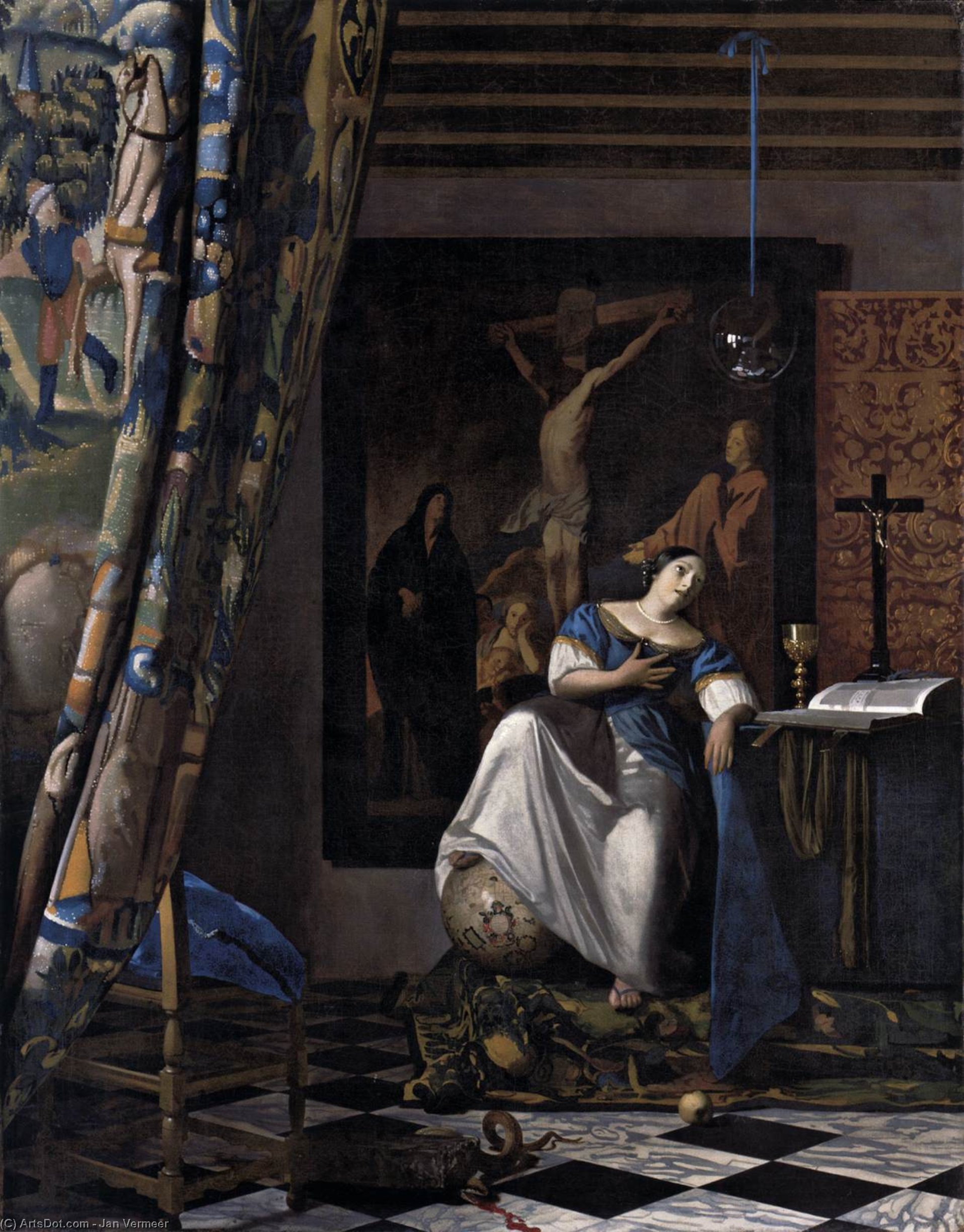
A Window into Delft’s Soul: Johannes Vermeer's ‘The Allegory of Faith’
Johannes Vermeer, a name whispered with reverence in the annals of Dutch art history, remains an artist whose life and work continue to fascinate scholars and captivate audiences alike. Born in Delft in 1632, his artistic journey unfolded during the zenith of the Dutch Golden Age—a period defined by unprecedented economic prosperity, burgeoning intellectual curiosity, and a fervent embrace of artistic innovation. Unlike many of his contemporaries who pursued grand historical narratives or mythological themes, Vermeer honed his craft on intimate domestic scenes, capturing fleeting moments of everyday life with an unparalleled sensitivity to light and color.
- Subject Matter: The painting delves into the profound concept of faith through a meticulously crafted allegory. At its core is a woman seated at a table adorned with symbols—a globe representing knowledge and exploration, books symbolizing learning, a chalice signifying spiritual devotion, and a crucifix embodying Christian piety. These objects aren’t merely decorative; they speak volumes about Vermeer's worldview and the moral compass of his era.
- Style: Vermeer’s artistic approach firmly establishes him within the Baroque tradition—a style characterized by dramatic realism, masterful chiaroscuro (the interplay between light and shadow), and an obsessive attention to detail. Yet, he transcends mere imitation; instead, he imbues his canvases with a quiet grace and contemplative serenity that distinguishes him from other artists of his time.
- Technique: Vermeer’s genius lay in his revolutionary technique—the application of thin layers of oil paint (glazes) to create luminous effects and subtle gradations of color. This painstaking process allowed him to capture the nuances of light as it filtered through windows, transforming ordinary interiors into spaces imbued with ethereal beauty.
- Historical Context: Painted around 1670-72 during a time when religious fervor gripped Delft—Vermeer’s hometown—the artwork reflects the spiritual values prevalent in Dutch society. The clandestine celebration of Mass within private homes, shielded from public scrutiny by “schuilkerken,” underscores the importance of faith and piety in daily life.
Composition & Visual Harmony
The painting’s composition is remarkably balanced yet subtly dynamic. Vermeer skillfully guides the viewer's eye through the space using converging lines—the chandelier and tapestry on the left anchoring the scene vertically, while the table and floor establishing horizontal axes. The careful placement of objects contributes to a sense of deliberate arrangement, reinforcing the overarching theme of faith.
Symbolism & Emotional Resonance
Beyond its visual splendor, ‘The Allegory of Faith’ resonates deeply with viewers on an emotional level. Vermeer's portrayal of serenity and contemplation invites introspection—a reflection on the pursuit of virtue and the enduring power of spiritual conviction. The woman’s gaze directs towards the crucifix, symbolizing faith and redemption, creating a palpable connection between artist and subject.
A Legacy Illuminated
Johannes Vermeer's ‘The Allegory of Faith,’ reproduced with meticulous accuracy on ArtsDot.com, transcends mere artistic representation; it embodies the spirit of Delft’s Golden Age—a testament to human ingenuity, aesthetic sensibility, and a profound engagement with the complexities of faith. Its enduring appeal lies in its ability to transport us back to a moment in time, capturing not just an image but also the very essence of human experience.