Explore Johannes Vermeer (1632-1675), Dutch Master of light & intimate scenes. Discover 'Girl with a Pearl Earring' & his iconic Golden Age paintings, renowned for realism and tranquility.
Explore the Louvre Museum in Paris! Home to iconic masterpieces like the Mona Lisa & Venus de Milo, journey through art history from ancient Egypt to Renaissance icons. Plan your visit today!
A Portrait of Quiet Industry: Johannes Vermeer’s ‘The Lacemaker’
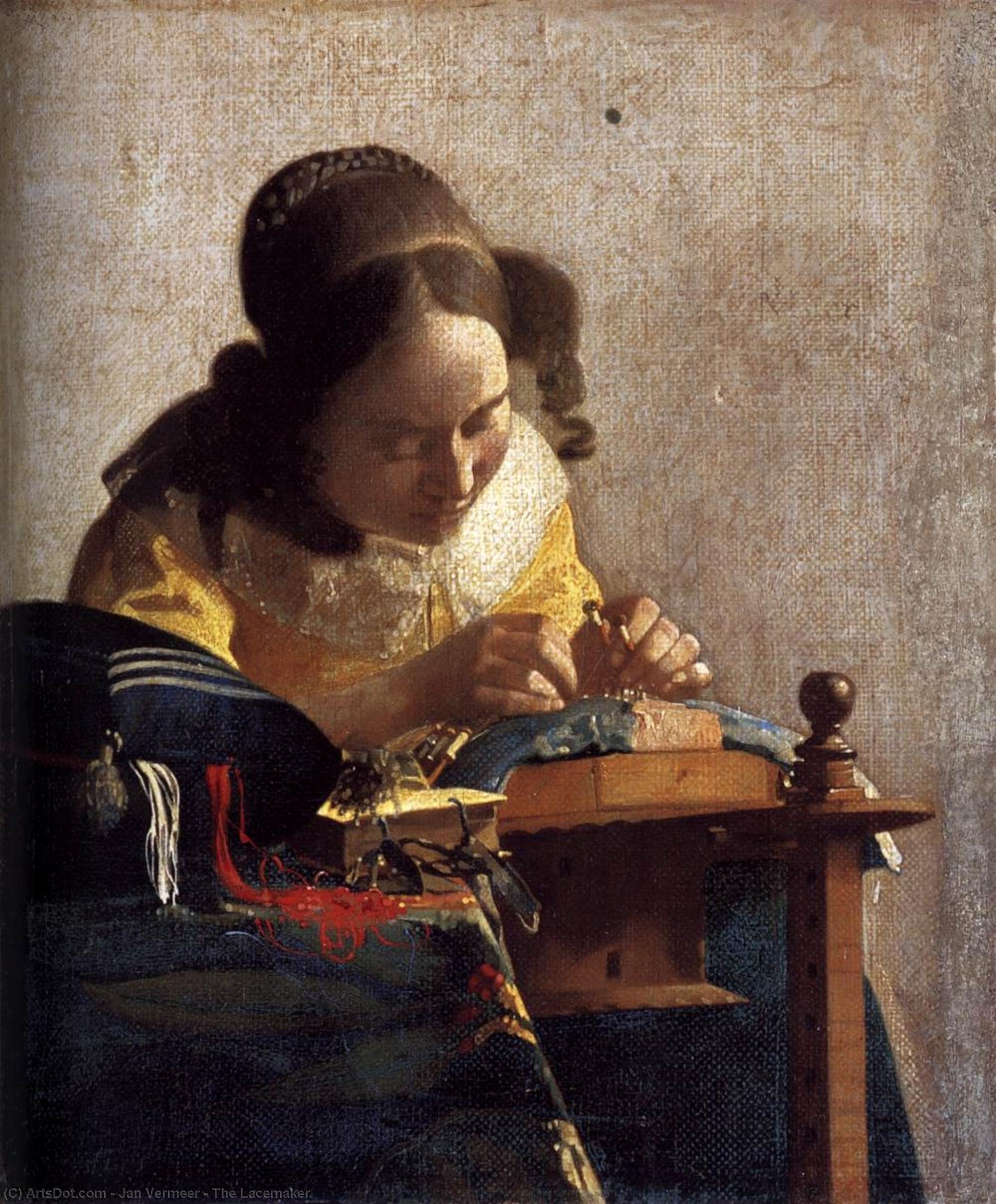
Johannes Vermeer's 'The Lacemaker,' painted in Delft around 1669, transcends mere depiction; it embodies the very essence of Dutch Golden Age artistry—a masterful blend of observation, meticulous detail, and subtle psychological insight. This captivating portrait captures a young woman absorbed in the delicate craft of lace making, offering viewers a glimpse into domestic life during one of Europe’s most vibrant artistic periods. The painting resides within the Louvre Museum in Paris, where its luminous quality continues to inspire admiration and scholarly debate.
The Artist's Vision: Vermeer and Delft
Johannes Vermeer (1632-1675) remains an enigma, a figure shrouded in mystery despite decades of research into his life and oeuvre. Born into a family involved in silk weaving and art dealing—a profession that instilled him with a profound understanding of materials and artistic sensibilities—Vermeer’s formative years shaped his distinctive approach to painting. Unlike many of his contemporaries who pursued grand narratives or mythological themes, Vermeer focused on capturing everyday scenes with remarkable accuracy and emotional resonance. Delft, his hometown, served as both his studio and his muse, providing him with a rich tapestry of subjects – women engaged in domestic activities, interiors bathed in soft light—that would become the hallmark of his artistic legacy.
Technical Brilliance: Vermeer’s Mastery of Light
What distinguishes ‘The Lacemaker’ from countless other portraits of its time is Vermeer's unparalleled command of chiaroscuro—the dramatic interplay between light and shadow—a technique perfected by him to an astonishing degree. Observe how Vermeer utilizes a single window source to illuminate the woman’s face and hands, casting delicate shadows that sculpt her features and conveying a sense of serenity and concentration. This masterful manipulation of light isn't merely decorative; it serves as a crucial element in establishing mood and enhancing the painting’s emotional impact. The artist employs glazing—thin layers of translucent paint applied over subsequent coats—to achieve an ethereal luminosity, capturing the subtle nuances of color and texture with breathtaking precision.
Symbolism Within Simplicity: Layers of Meaning
Beyond its technical prowess, ‘The Lacemaker’ is laden with symbolic significance reflecting the values of Dutch society during the Baroque era. The woman herself represents industriousness, femininity, and domestic virtue—qualities highly esteemed by the upper classes. The lace making itself symbolizes patience, precision, and artistry – skills considered desirable for women within the home. Furthermore, the inclusion of objects like a book, scissors, and spool of thread speaks to the intellectual pursuits and practical activities that constituted daily life. Even the clock hanging on the wall serves as a reminder of time’s passage and underscores the painting's contemplative atmosphere.
Emotional Resonance: Capturing Inner Tranquility
Ultimately, ‘The Lacemaker’ succeeds in conveying an extraordinary sense of inner tranquility—a rare achievement for portraiture during this period. Vermeer captures not just what is seen but also what is felt—the quiet dignity of a woman engaged in her craft, the stillness of the room bathed in soft light. The painting invites viewers to contemplate beauty and contemplation, prompting reflection on themes of domestic life, femininity, and artistic skill. It remains a testament to Vermeer’s ability to transform ordinary subjects into profound expressions of human experience—a timeless masterpiece that continues to captivate audiences centuries after its creation.