A Quiet Revolution in Light and Domesticity
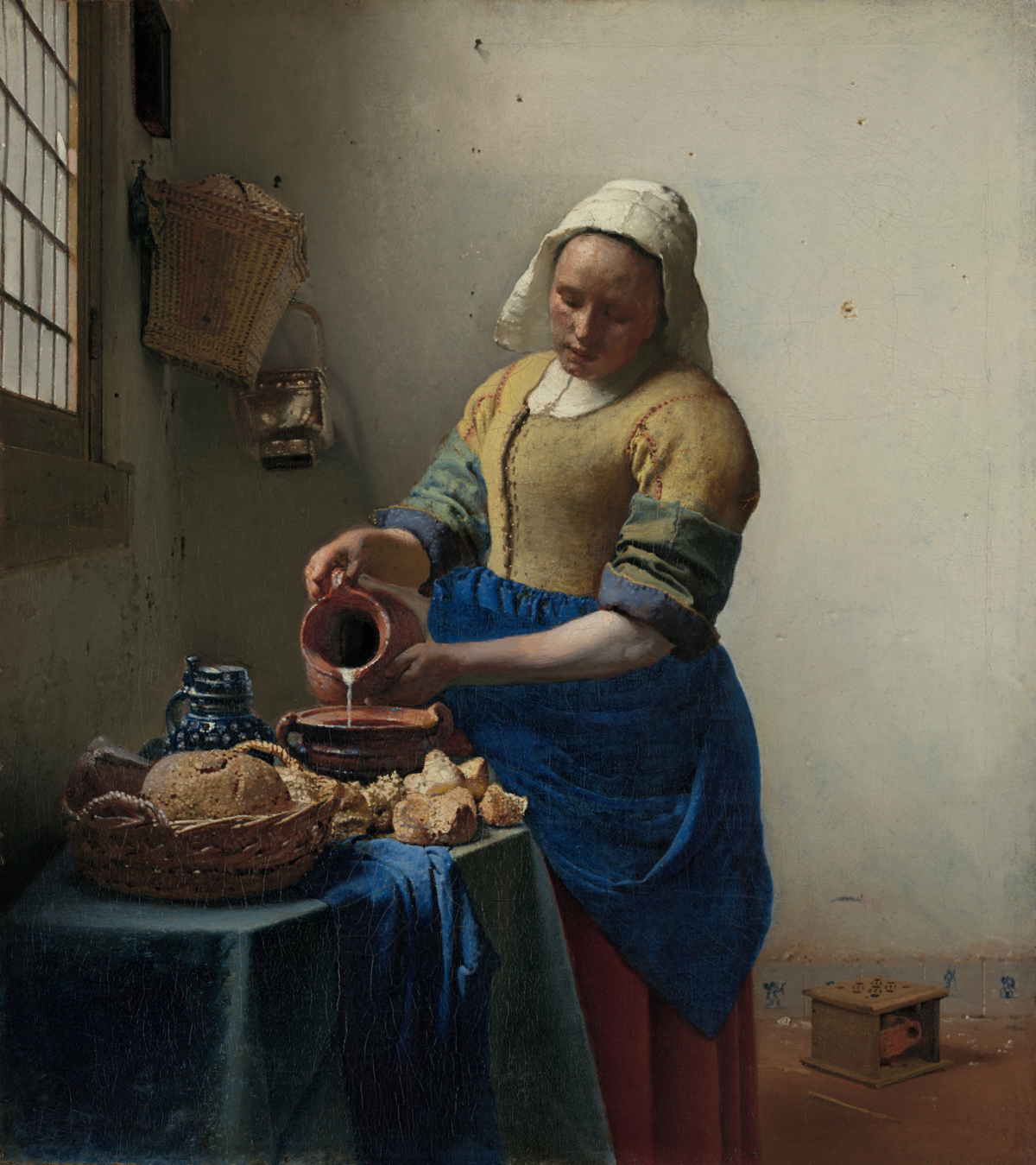
Johannes Vermeer’s “The Milkmaid” (De Melkmeid), painted circa 1657-1658, isn't merely a depiction of a daily chore; it’s a profound meditation on light, stillness, and the subtle poetry of ordinary life. Housed within the hushed reverence of the Rijksmuseum in Amsterdam, this seemingly simple scene—a young woman pouring milk from a jug into a bowl – has captivated viewers for centuries, revealing layers of artistic innovation and psychological depth that continue to resonate today. It’s a painting that invites us to linger, to observe, and ultimately, to contemplate the quiet beauty hidden within the commonplace.
The Language of Light and Shadow
What immediately draws the eye is Vermeer’s masterful manipulation of light – a technique that would become synonymous with his name. Unlike many of his contemporaries who relied on strong, directional illumination, Vermeer employs a diffused, almost ethereal light source, likely originating from the window to the left. This isn't harsh sunlight; it’s a gentle wash that sculpts the forms of the milkmaid and her surroundings, creating an illusion of three-dimensionality with remarkable subtlety. Notice how the light catches the folds of her apron, highlights the texture of the Delft tiles beneath her feet, and casts delicate shadows across the table – each element contributing to a sense of palpable realism. Vermeer’s use of ultramarine blue, a notoriously expensive pigment at the time, further enhances this luminous effect, adding depth and richness to the scene.
A Study in Domesticity and Symbolism
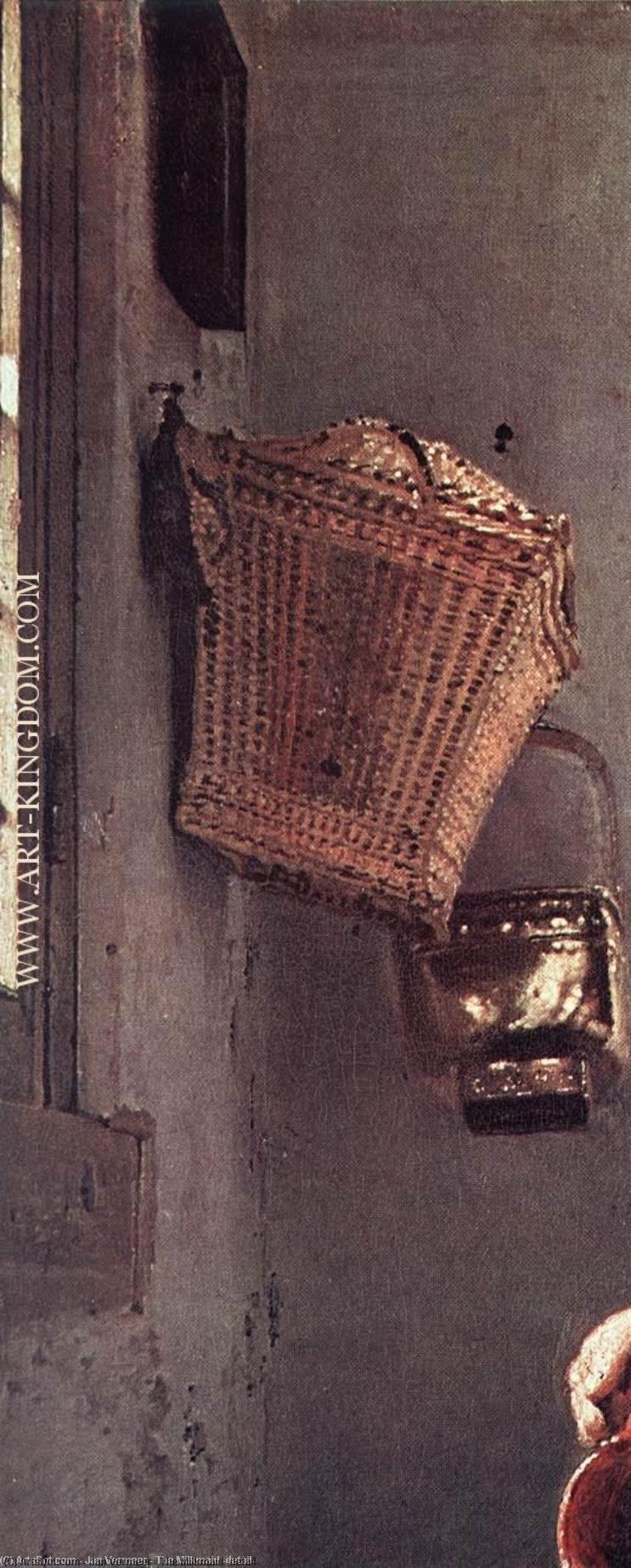
Beyond its technical brilliance, “The Milkmaid” offers a fascinating glimpse into 17th-century Dutch life. The setting is remarkably simple – a modest kitchen interior with a worn wooden table, earthenware jugs, and a copper pot. Yet, Vermeer imbues this everyday scene with an extraordinary sense of dignity and grace. The milkmaid’s posture—her head slightly bowed, her gaze focused intently on her task—conveys a feeling of quiet concentration and dedication. Some art historians have suggested that the painting subtly references the tradition of depicting maids as potentially alluring figures, reflecting a cultural fascination with female sexuality within the domestic sphere. However, Vermeer avoids overt sensuality, instead presenting a portrait of a hardworking woman engaged in a humble but essential role.
The Artist's Legacy and Enduring Appeal
Johannes Vermeer’s life was tragically short, marked by financial struggles and relative obscurity during his lifetime. He produced only around thirty paintings, yet his work has achieved an unparalleled level of recognition and admiration in the centuries since. “The Milkmaid” stands as a testament to his extraordinary talent—a painting that transcends its simple subject matter to become a profound meditation on beauty, light, and the quiet dignity of everyday life. Reproductions by ArtsDot.com offer a remarkable opportunity to experience this masterpiece firsthand, allowing you to appreciate the intricate details and luminous quality that have captivated audiences for generations. It’s a piece that speaks volumes about the artist's genius and continues to inspire awe and wonder.