A Window into Dutch Golden Age Intimacy
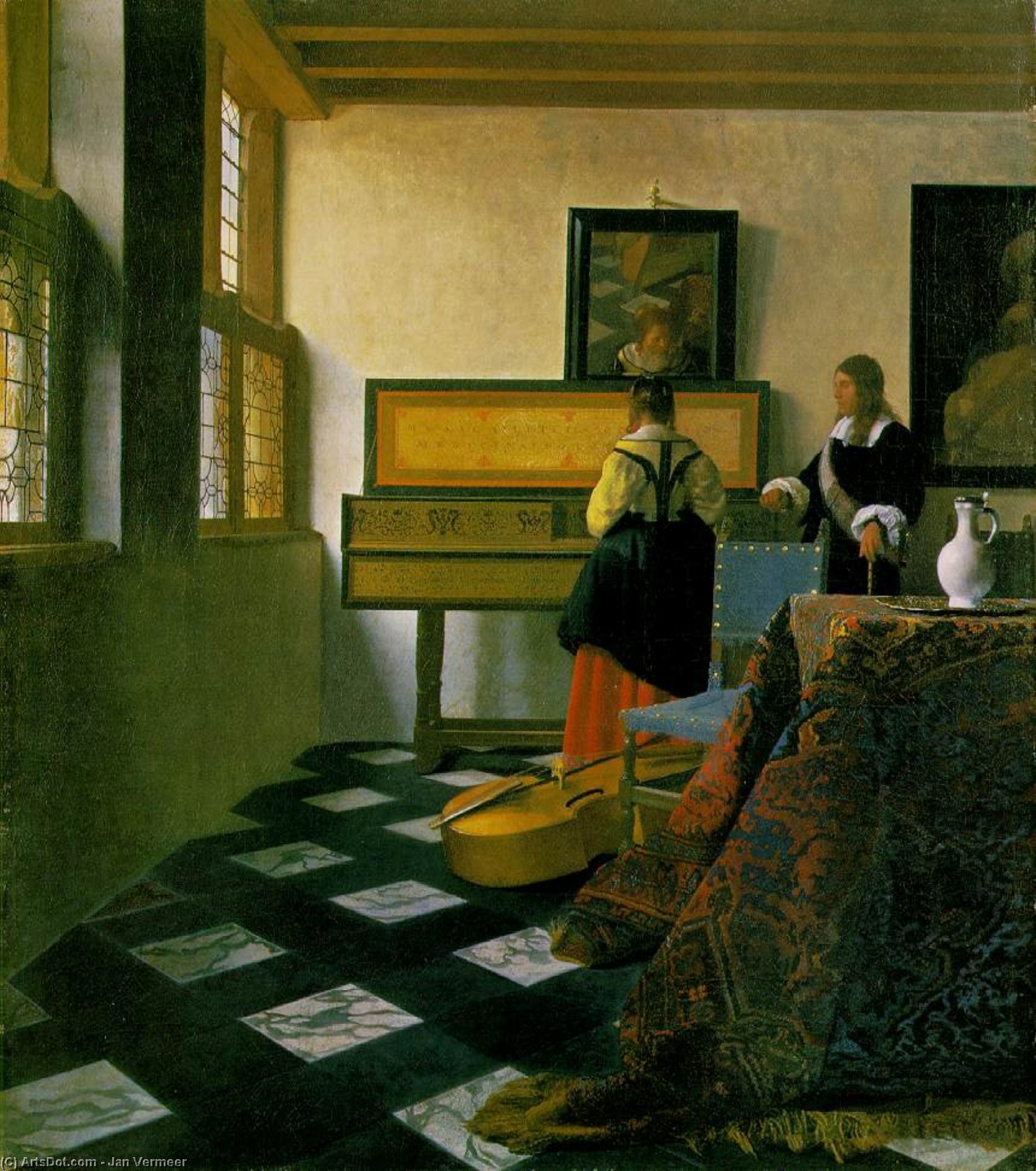
Johannes Vermeer’s *The Music Lesson*, painted around 1665, is more than just a depiction of musical instruction; it's a captivating glimpse into the refined domesticity of the Dutch Golden Age. Currently held in the Royal Collection of Great Britain, this masterpiece exemplifies Vermeer’s unparalleled ability to capture light, texture, and subtle human emotion within everyday scenes. The painting invites us into a quiet moment shared between a young woman receiving instruction and her teacher, creating an atmosphere of both concentration and burgeoning connection.
Composition & Artistic Technique
The composition is masterfully balanced, centered around the virginal (a type of harpsichord) and the two figures. Vermeer’s meticulous attention to detail is immediately apparent – from the intricate patterns on the oriental rug to the sheen of the polished wood and the delicate folds of fabric. He employs a remarkable technique utilizing layers of translucent glazes, building up color and luminosity to achieve an almost photographic realism. The light source, entering from a window to the left, bathes the scene in a soft glow, highlighting key elements and casting gentle shadows that define form and space. Notice how Vermeer expertly uses perspective to create depth, drawing the viewer into the room.
Symbolism & Narrative
Beyond its aesthetic beauty, *The Music Lesson* is rich with symbolic meaning. Music itself was often associated with love, harmony, and courtship during this period. The presence of a lute leaning against the wall hints at further musical possibilities, while the mirror behind the woman reflects not only her image but also subtly suggests themes of vanity and self-awareness.
The inscription on the virginal – “Music is the companion of joy, balm for sorrow” – adds another layer of interpretation, suggesting music’s power to both elevate and console. The man's slightly parted lips suggest he may be singing along with his student, hinting at a developing rapport that transcends mere instruction.
Historical Context & Vermeer’s Legacy
Johannes Vermeer lived during a period of unprecedented prosperity in the Netherlands. This “Golden Age” saw a flourishing of art and culture, fueled by trade and a growing middle class. Unlike many artists who focused on grand historical or religious themes, Vermeer dedicated himself to portraying scenes of everyday life – interiors, portraits, and genre paintings that celebrated the beauty of the mundane. He produced a relatively small body of work—only around 34 paintings are definitively attributed to him—making each piece exceptionally valuable and sought after. His influence on subsequent generations of artists is undeniable, inspiring countless painters with his mastery of light, composition, and psychological insight.
Emotional Resonance & Interior Design
*The Music Lesson* evokes a sense of tranquility, intimacy, and quiet contemplation. The painting’s muted color palette—dominated by blues, yellows, and browns—creates a soothing atmosphere that is both elegant and inviting.
Its timeless appeal makes it an ideal addition to a variety of interior design schemes, from traditional drawing rooms to contemporary living spaces. A reproduction of this masterpiece can serve as a focal point in any room, adding a touch of sophistication and artistic depth. It’s a work that invites viewers to pause, reflect, and appreciate the beauty of a fleeting moment captured for eternity.
- Masterful use of light and shadow creating atmospheric depth.
- Intricate detail showcasing Vermeer's technical skill.
- Subtle symbolism hinting at themes of love, music, and self-reflection.
- A quintessential example of Dutch Golden Age domesticity.