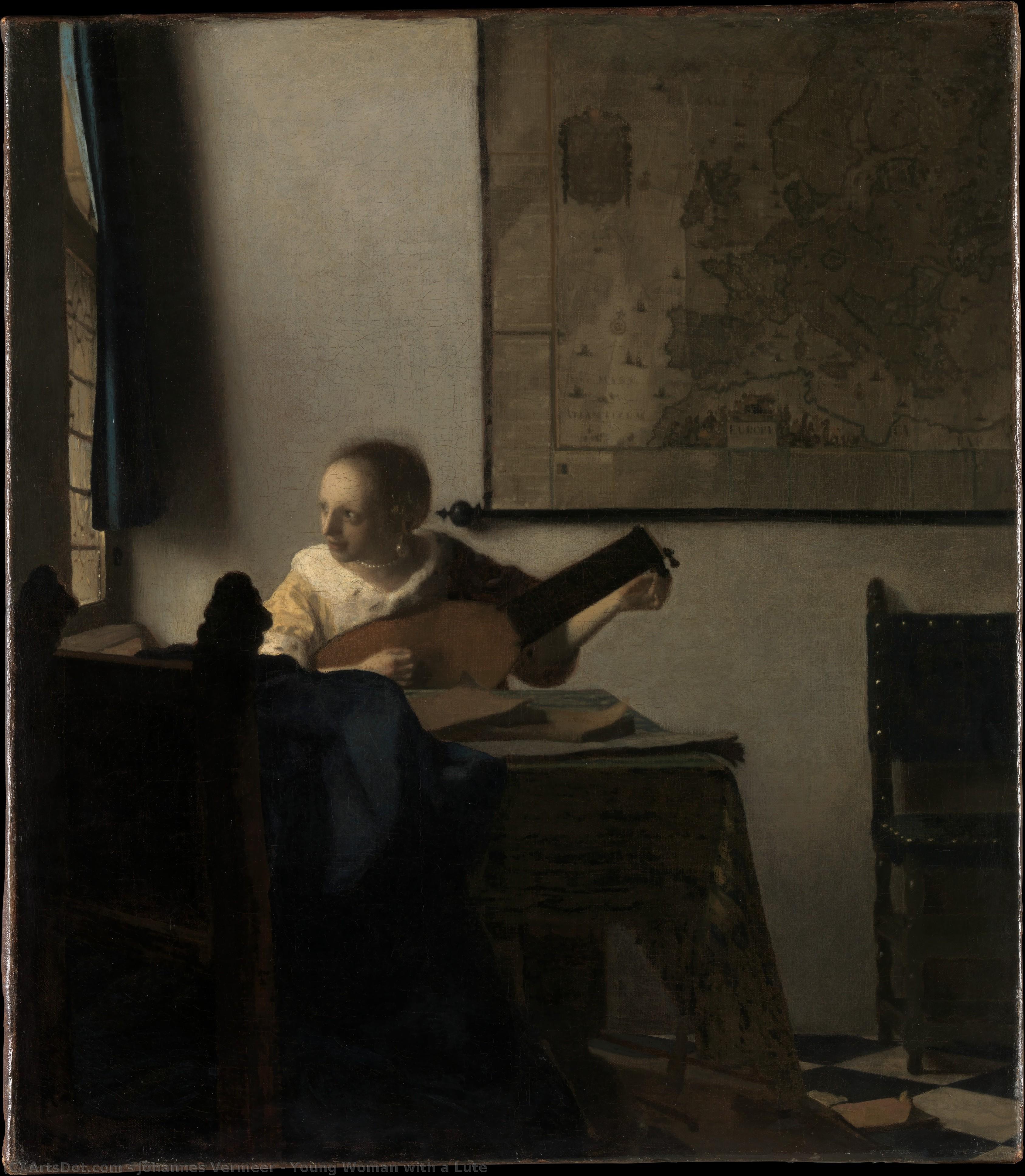
A Window into 17th-Century Delft: Unveiling Vermeer’s “Young Woman with a Lute”
Johannes Vermeer's 1662 masterpiece, *Young Woman with a Lute*, is more than just a portrait; it’s an intimate glimpse into the domestic life of the Dutch Golden Age. This captivating oil on canvas (51 x 46 cm), currently housed at The Metropolitan Museum of Art in New York, exemplifies Vermeer's mastery of light, color, and quiet narrative. It invites viewers to share a moment of peaceful contemplation with its subject.
Subject & Composition: A Moment of Musical Anticipation
The painting centers on a young woman poised before an open window, intently focused on tuning her lute. The composition is carefully balanced; the warm light streaming through the window illuminates her face and hands, drawing our attention to her delicate task. Scattered around her are subtle clues to her refined upbringing – open songbooks and a viola da gamba resting on the floor suggest she’s preparing for a musical performance, likely a duet. This detail speaks volumes about music's importance as both an educational pursuit and a social grace within Dutch society.
Artistic Technique: The Poetry of Light & Shadow
Vermeer was renowned for his exceptional handling of light, and *Young Woman with a Lute* is a prime example. He employs the technique of chiaroscuro – the dramatic interplay between light and shadow – to create depth and dimensionality. This isn’t merely about visual realism; it's about capturing the fleeting quality of light itself, lending an ethereal glow to the scene. His meticulous brushwork and subtle gradations of color further enhance this effect, particularly noticeable in the rendering of the lute and musical scores, showcasing his remarkable attention to detail.
Historical Context & Symbolism: A Reflection of Dutch Golden Age Values
Painted during a period of unprecedented prosperity for the Netherlands, *Young Woman with a Lute* reflects the cultural values of the Dutch Golden Age. The map of Europe visible in the background isn’t simply decorative; it symbolizes Dutch pride in navigation, cartography, and their burgeoning global trade network. Maps were status symbols, representing wealth, knowledge, and exploration. Furthermore, the act of tuning a lute was often associated with the virtue of temperance – suggesting a deeper symbolic layer to this seemingly simple domestic scene.
Emotional Impact & Enduring Appeal
What makes *Young Woman with a Lute* so enduringly captivating is its ability to evoke a sense of tranquility and intimacy. The painting isn’t about grand gestures or dramatic narratives; it's about the beauty found in everyday moments. It invites us to slow down, appreciate the quiet grace of the subject, and reflect on the universal human experience of finding joy in music and self-expression.
Key Details at a Glance
- Artist: Johannes Vermeer
- Painting Title: Young Woman with a Lute
- Museum: The Metropolitan Museum of Art, New York
- Date: 1662
- Medium: Oil on Canvas
- Dimensions: 51 x 46 cm
For those seeking to bring the timeless beauty of Vermeer’s work into their own spaces, high-quality reproductions are available, allowing you to experience the serenity and artistry of “Young Woman with a Lute” firsthand.