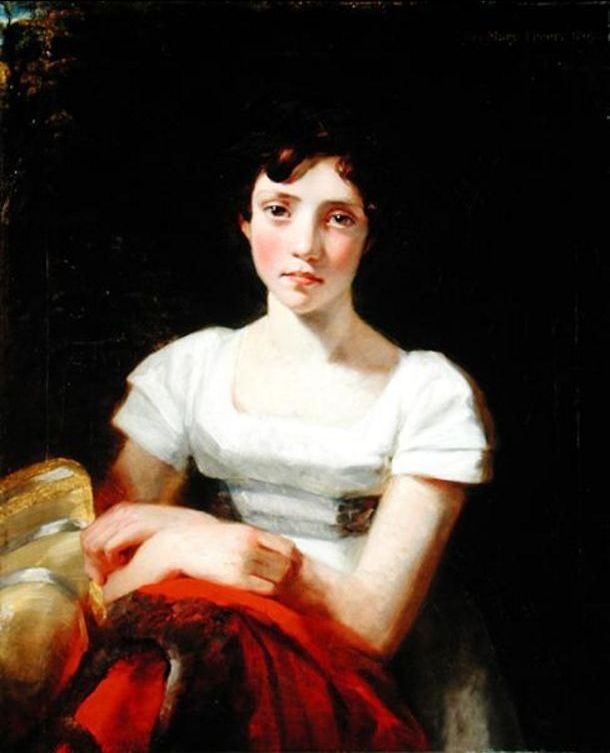
A Portrait of Quietude: Unveiling John Constable’s ‘Portrait of Mary Freer’
John Constable's 'Portrait of Mary Freer,' painted in 1809, is more than just a likeness; it’s a poignant meditation on the human condition rendered with the master’s characteristic sensitivity to light and atmosphere. This captivating portrait, depicting a woman with striking red hair and a melancholic gaze, immediately draws the viewer into a world of quiet introspection. The dark background, meticulously crafted by Constable, serves not as mere absence of color but as a deliberate device, amplifying the subject's presence and creating an almost theatrical depth that invites contemplation.
- Subject & Composition: Mary Freer’s pose – hands gently placed before her chest, a scarf draped over her shoulder – speaks volumes about her demeanor. The direct engagement with the viewer, coupled with her subtly sad expression, establishes an immediate connection, fostering a sense of shared vulnerability.
- Technical Mastery: Constable's brushwork is immediately recognizable; loose, expressive strokes build up layers of color and texture, particularly evident in the rendering of Mary’s hair and dress. The subtle gradations of light and shadow – hallmarks of his style – create a remarkable sense of volume and realism, while simultaneously imbuing the portrait with an emotional resonance.
The Romantic Spirit & Constable's Vision
Painted during the height of the Romantic movement, ‘Portrait of Mary Freer’ embodies many of its key tenets. The emphasis on individual emotion, the fascination with nature (represented by the implied landscape beyond the dark background), and the exploration of psychological states are all characteristic of this artistic era. Constable, deeply influenced by artists like Claude Lorrain, sought to capture not just external appearances but also the inner spirit of his subjects. His dedication to depicting the nuances of light – a crucial element in Romantic painting – elevates this portrait beyond a simple representation of a woman; it becomes an exploration of mood and feeling.
- Historical Context: 1809 was a period of significant social and political change in Britain. The Napoleonic Wars were drawing to a close, and there was a growing interest in the lives and experiences of ordinary people. Constable’s portraits reflect this shift, moving away from the formal, aristocratic commissions that had dominated portraiture for centuries.
- Constable's Dedication: Born in 1776 in East Bergholt, Suffolk, Constable’s artistic journey was profoundly shaped by his upbringing amidst the rolling hills and waterways of Dedham Vale. This intimate connection to the English landscape would inform his work throughout his career, imbuing it with a sense of authenticity and emotional depth.
Symbolism & Emotional Resonance
The dark background surrounding Mary Freer is not merely a compositional device; it’s laden with symbolic weight. It suggests a hidden world, perhaps representing the complexities of her inner thoughts or the uncertainties of life itself. The scarf, a recurring motif in Constable's work, could symbolize protection, modesty, or even mourning – adding another layer to the portrait’s enigmatic quality. The overall impression is one of quiet contemplation, inviting viewers to ponder Mary Freer’s story and perhaps reflect on their own experiences with sadness and introspection.
A Timeless Masterpiece - Recreated for Your Collection
ArtsDot offers a meticulously crafted hand-painted reproduction of John Constable's ‘Portrait of Mary Freer,’ capturing the essence of this remarkable artwork. Each reproduction is created by skilled artisans, ensuring an unparalleled level of detail and authenticity. This piece will not only enhance your interior design but also serve as a beautiful reminder of Constable’s artistic genius and his profound understanding of human emotion.