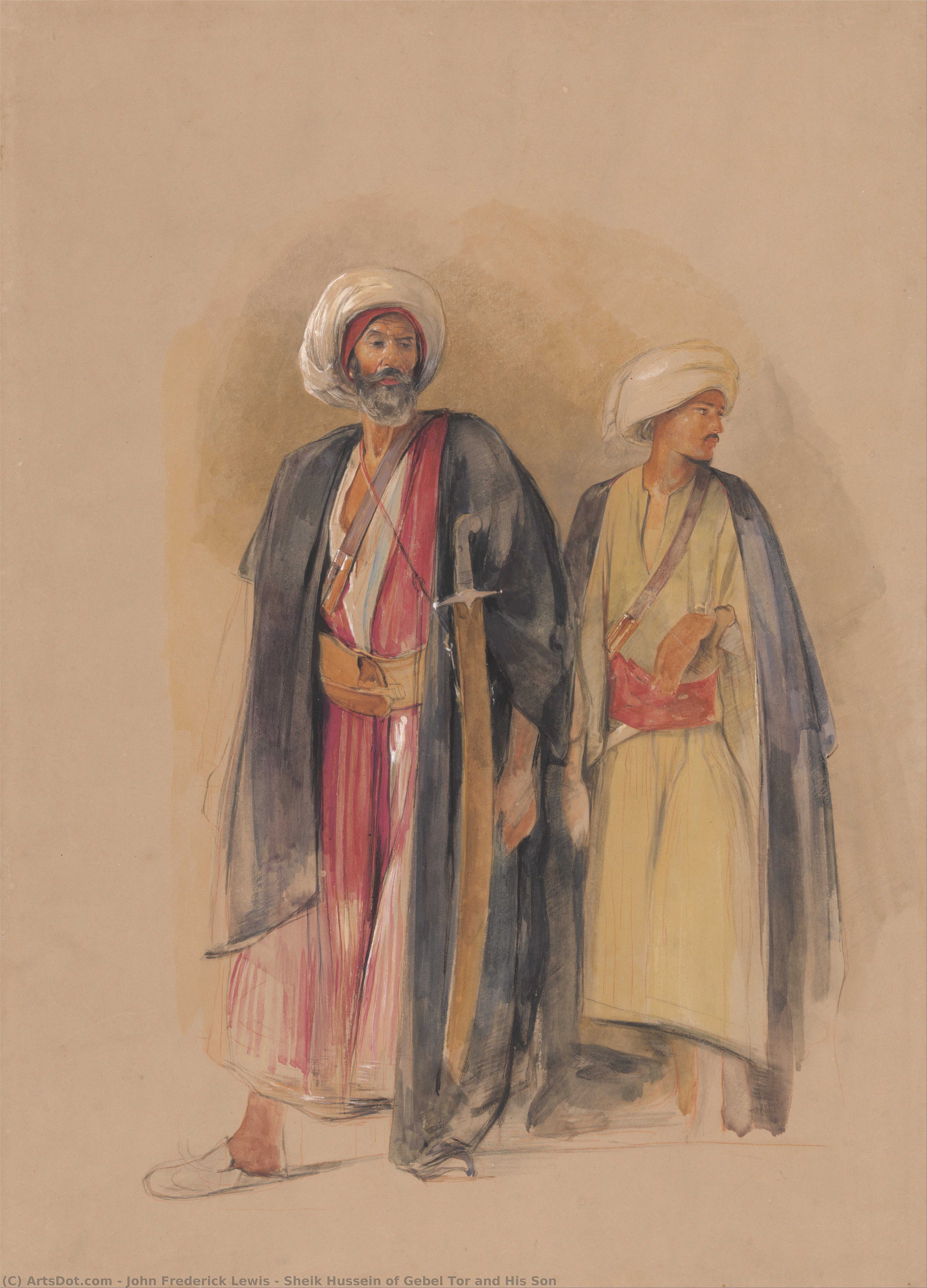
Sheik Hussein of Gebel Tor and His Son – A Window Into Egyptian Royalty
John Frederick Lewis’s “Sheik Hussein of Gebel Tor and His Son,” painted in 1843, stands as a quintessential example of Orientalist painting—a genre that flourished during the Victorian era and captivated audiences with idealized depictions of the East. More than just a portrait, it's an immersive experience into a specific moment within Egyptian history and culture, skillfully rendered by Lewis’s meticulous hand.
Subject Matter & Composition
The painting portrays Sheik Hussein ibn Rashid al-Gaylani, ruler of Gebel Tor (modern Alexandria), alongside his son. They are positioned centrally against a backdrop of an opulent interior—likely a palace or grand residence—dominated by richly patterned textiles and illuminated by diffused light. The figures themselves are rendered with remarkable realism, capturing subtle expressions and gestures that convey dignity and authority.
Style & Technique – Watercolor Mastery
Lewis employed watercolor as his primary medium, demonstrating exceptional control over color and texture. He utilized a technique known as “grisaille,” applying thin washes of white gouache to establish tonal values before layering translucent watercolors. This approach allowed him to achieve breathtaking luminosity and depth—characteristics typical of Orientalist painters who sought to convey the grandeur and mystery of distant lands.
Historical Context & Symbolism
Painted during a period of intense British fascination with Egypt following Muhammad Ali’s reforms, “Sheik Hussein” reflects the Victorian obsession with exotic cultures. The depiction of royalty underscores Britain's ambition to emulate Egyptian splendor and reinforces the narrative of imperial expansion. Furthermore, the elaborate textiles symbolize wealth and status—visual cues that communicate the painting’s message of power and prestige.
Emotional Impact & Artistic Legacy
"Sheik Hussein of Gebel Tor and His Son" transcends mere visual representation; it evokes a sense of timeless elegance and conveys an idealized vision of Egyptian nobility. Lewis's masterful technique—particularly his use of watercolor—established him as a pioneer in capturing the ethereal beauty of Oriental landscapes and portraits. Today, reproductions of this artwork continue to inspire admiration for its artistic merit and offer viewers a glimpse into the cultural landscape of Victorian Britain.