Discover John French Sloan (1871-1951), a key figure of the Ashcan School & American Realism. Explore his evocative NYC scenes, urban life, and socialist influences. View art now!
Explore the Art Gallery of Hamilton's diverse collection spanning centuries & cultures! Discover Canadian art, international masterpieces, and architectural marvels in downtown Hamilton.
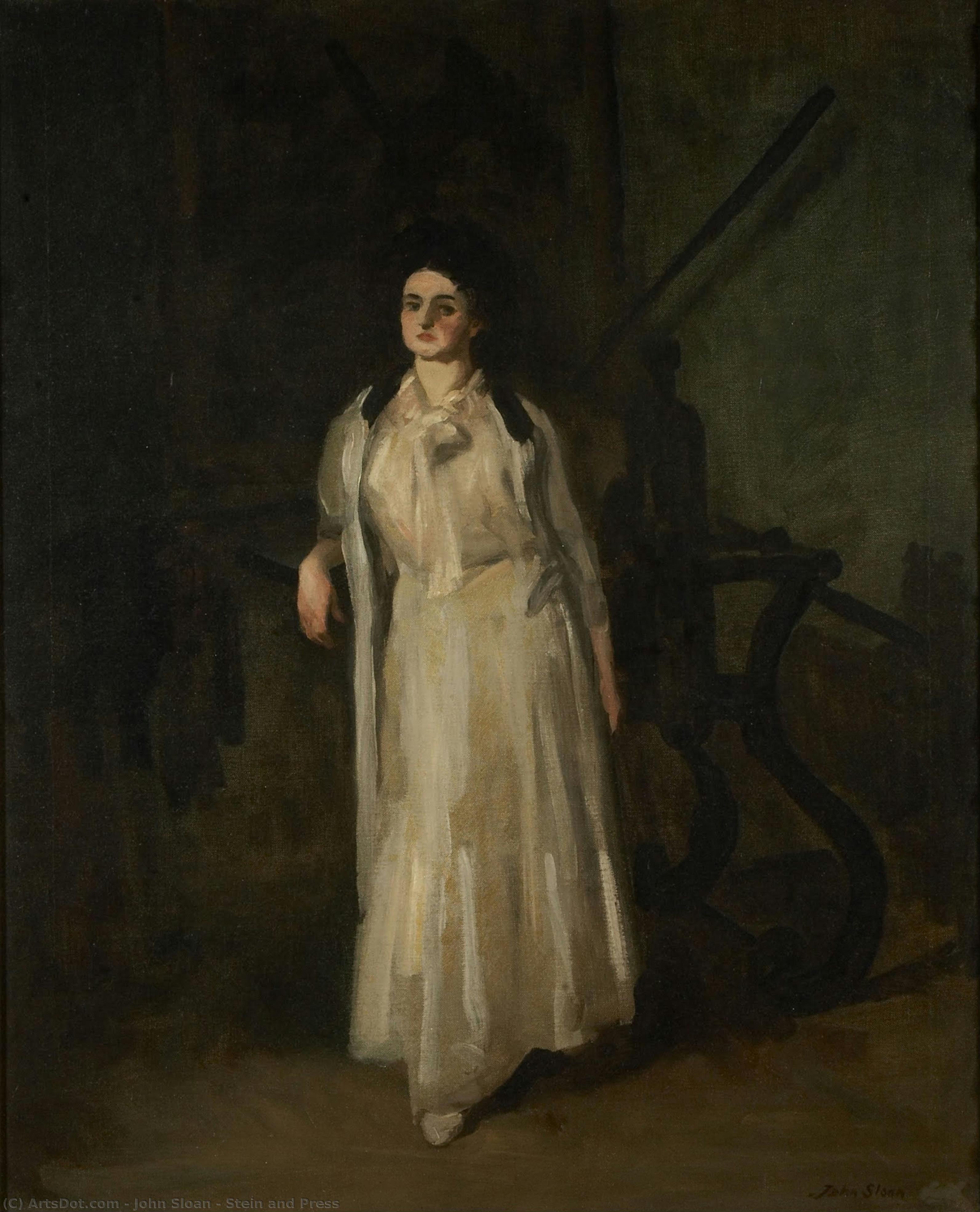
Stein and Press: A Portrait of Urban Melancholy
John French Sloan’s “Stein and Press” (1906) stands as a cornerstone of Ashcan School realism—a movement dedicated to portraying the gritty realities of American city life with unflinching honesty. More than just a depiction of a woman seated in a dimly lit room, it's an exploration of solitude, introspection, and the quiet sorrow inherent within everyday existence. Sloan’s masterful use of chiaroscuro – dramatic contrasts between light and shadow – immediately establishes a mood of profound seriousness.
The painting centers on a single female figure, rendered with meticulous detail against a backdrop of muted browns and greys that amplify her isolation. Her posture is subtly turned away from the viewer, fostering a sense of intimacy while simultaneously conveying vulnerability. Sloan’s brushstrokes are visible, layering textures to create an impressionistic surface that captures not just form but also atmosphere. The woman's clothing—a dark gown draped over a chair—adds to the somber palette and reinforces the feeling of quiet contemplation.
Sloan’s technique is rooted in traditional oil painting methods, prioritizing tonal gradation and blending to achieve remarkable depth and luminosity. He skillfully employs hatching and cross-hatching to define facial features and drapery folds, demonstrating an unwavering commitment to draughtsmanship—a hallmark of his artistic approach. The composition itself contributes significantly to the artwork's emotional resonance; the flattened perspective subtly diminishes the grandeur of the setting, emphasizing the subject’s internal state rather than external surroundings.
The Ashcan School, emerging in New York City during the Progressive Era, reacted against academic art conventions and championed a more truthful representation of urban life—often depicting poverty, hardship, and marginalized communities. Sloan's work aligns with this ethos, reflecting social concerns prevalent at the time while simultaneously exploring universal themes of human emotion. “Stein and Press” isn’t merely a portrait; it’s a meditation on the complexities of inner experience within the confines of an unremarkable space—a timeless reminder of the beauty found in quiet contemplation and the pervasive melancholy that accompanies solitude.
- Artist: John French Sloan
- Year Created: 1906
- Medium: Oil on Canvas
- Style: Ashcan School Realism
- Location: Private Collection
Symbolic Resonance and Artistic Influence
Sloan’s deliberate use of muted colors—primarily browns, greys, and ochres—serves as a powerful visual metaphor for melancholy and introspection. The woman's averted gaze symbolizes withdrawal from the world, inviting viewers to contemplate her inner thoughts and feelings. Furthermore, Sloan’s stylistic choices – particularly his textured brushstrokes and chiaroscuro lighting – profoundly impacted subsequent generations of artists, establishing him as a pivotal figure in American Modernism. His unwavering dedication to portraying authentic human experience continues to inspire contemporary painters and designers alike.