A Tapestry of Unburdened Joy: Exploring Hiding in the Old Oak
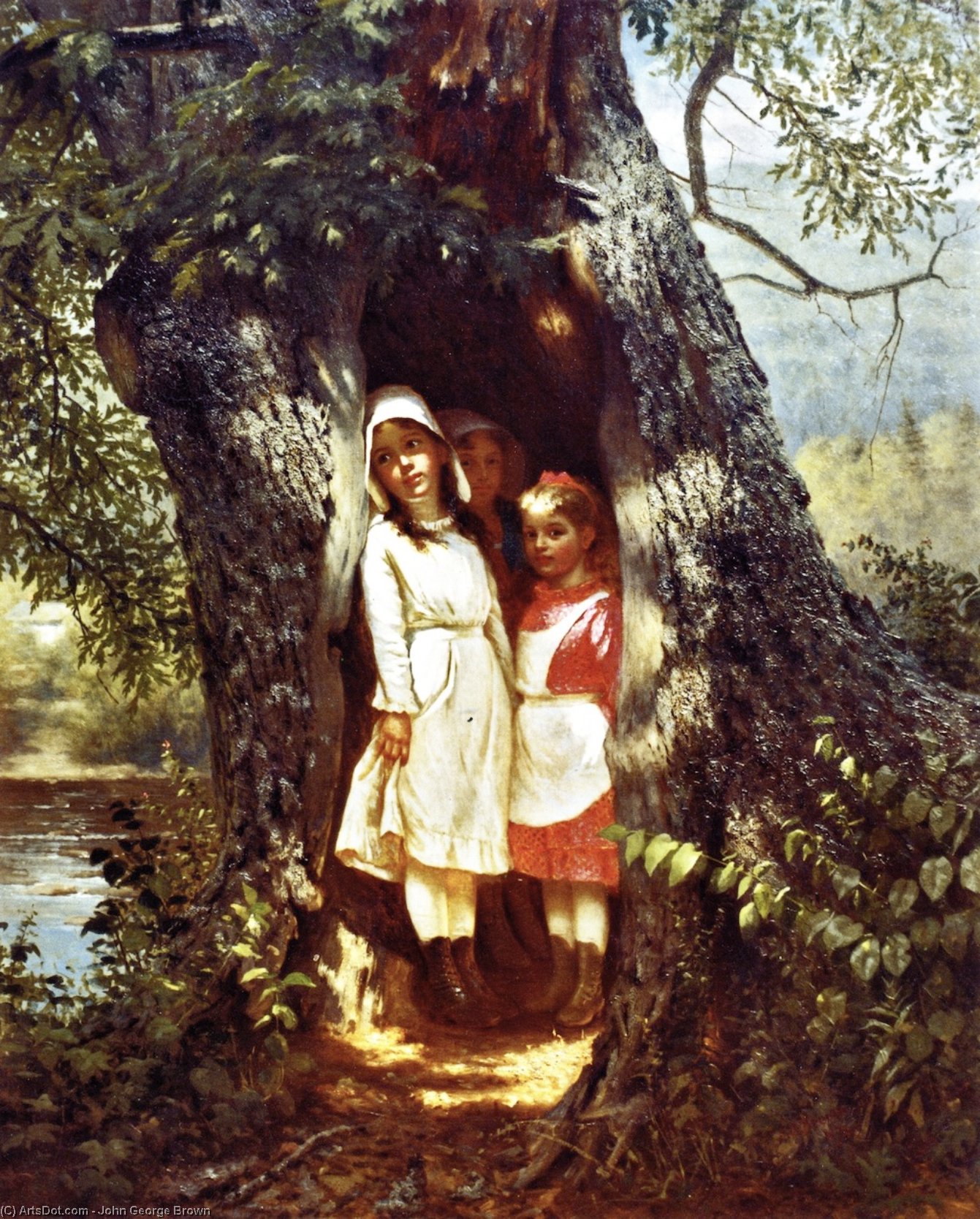
To gaze upon John George Brown's Hiding in the Old Oak is to be instantly transported back to a sun-dappled afternoon, a moment suspended purely by the magic of childhood play. This painting, executed in 1874, is far more than a mere depiction of children at play; it is an eloquent meditation on innocence itself. The scene unfolds within the embrace of nature, centered around a magnificent, sheltering old oak tree. Four figures—a vibrant constellation of youthful energy—are captured mid-game. Three are nestled beneath the sturdy boughs and trunk, while one child perches with triumphant glee atop the structure. Brown has masterfully composed this gathering, arranging his subjects at varying heights and angles so that the viewer feels not like an observer behind glass, but a secret participant in their joyful enterprise.
Mastery of Light and Shadow: Technique and Atmosphere
Brown’s technical skill is immediately apparent upon viewing the piece. The choice of oil on canvas allows for a richness of color and texture that breathes life into every leaf and patch of sunlight. Notice how the artist employs light and shadow not just as decorative elements, but as structural components of the narrative. Shafts of daylight pierce through the canopy, creating dramatic contrasts that lend an incredible sense of depth to the woods. This interplay between illumination and deep shade gives the composition a palpable dimensionality, making the space feel vast yet intimately contained. It is this careful handling of chiaroscuro, combined with his characteristic warmth, that draws the viewer into the very heart of the scene.
The Enduring Symbolism of Childhood Play
Throughout Brown’s oeuvre, and particularly evident here, there lies a profound celebration of youth. The woods themselves function as a symbolic playground—a liminal space where adult concerns dissolve, leaving only the pure, unadulterated joy of discovery. The act of hiding speaks to themes of camaraderie, imagination, and the simple pleasure of shared secrets. For collectors and those seeking art that evokes deep emotional resonance, this painting offers a powerful anchor to nostalgia. It reminds us of moments when life was uncomplicated, defined only by the next game played beneath an ancient tree.
Bringing the Woodland Spirit Home
For those considering bringing the spirit of Hiding in the Old Oak into your personal sanctuary or design space, understanding its historical context adds layers of appreciation. Created during a period of significant American change, Brown’s focus on idealized domestic and natural scenes provided comfort and continuity to his patrons. The vibrant yet gentle palette, combined with the dynamic energy of the composition, ensures that this piece functions beautifully in any setting—from a bright, airy living room to a study seeking an infusion of pastoral calm. Owning a reproduction allows you to curate not just a painting, but a feeling: the timeless, enduring magic of childhood adventure.