A Symphony of Color and Light in Twachtman's Garden
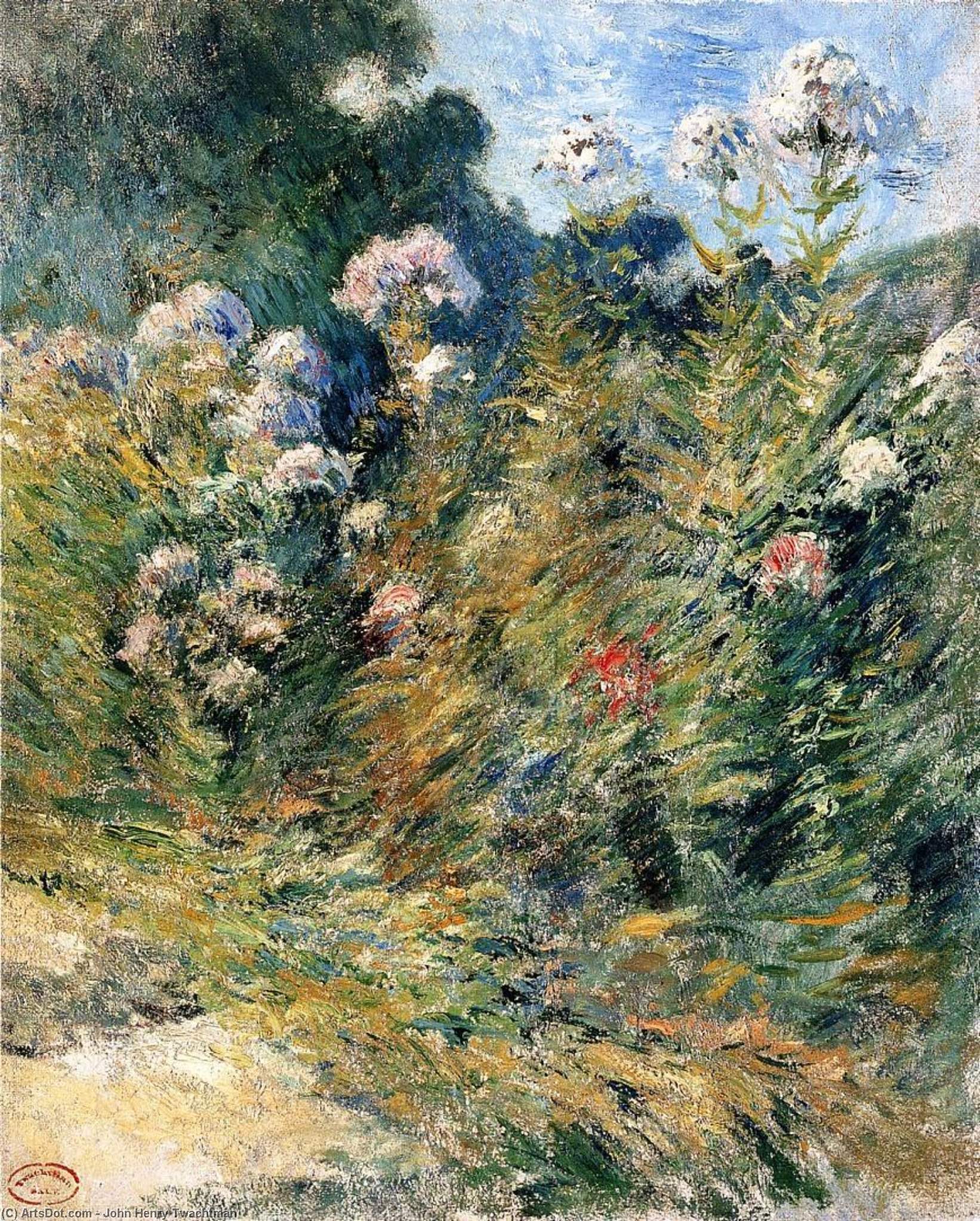
In the delicate dance of light and shadow captured within Flower Garden, we encounter one of the most enchanting glimpses into the soul of American Impressionism. Painted in 1895 by the master John Henry Twachtman, this exquisite oil on canvas serves as a vibrant testament to the fleeting beauty of the natural world. The scene unfolds as a lush, multi-colored tapestry where blossoms of varying hues are scattered with a rhythmic grace across the foreground and midground. Each petal and leaf seems to vibrate with life, anchored by a soft, atmospheric backdrop of trees that recede into a gentle haze, providing a profound sense of depth and perspective that draws the viewer into the very heart of the garden.
Twachtman’s technique in this piece is nothing short of masterful, utilizing bold, expressive brushstrokes that imbue the canvas with an unmistakable energy. Rather than focusing on rigid botanical precision, he employs the Impressionist tradition of capturing the essence of a moment. The interplay of vivid colors—ranging from soft pastels to deep, saturated tones—creates a sense of movement, as if a light breeze is currently rustling through the flora. This painterly approach allows the light to appear as though it is filtering through the canopy, dancing across the surfaces of the flowers and creating a luminous quality that feels both spontaneous and deeply intentional.
Historical Resonance and Emotional Depth
To understand Flower Garden is to understand the evolution of the American landscape tradition. Influenced by the revolutionary techniques of European masters like Claude Monet, Twachtman brought a uniquely American sensibility to the Impressionist movement. He moved away from the heavy, academic realism of his early training under Frank Duveneck, instead embracing a more tonal and atmospheric approach. This painting stands as a pivotal moment in his career, where the boundaries between subject and atmosphere begin to blur, creating a harmonious balance that is both visually stimulating and spiritually calming.
For the discerning collector or interior designer, this artwork offers much more than mere decoration; it provides an emotional sanctuary. The composition’s inherent harmony—the way the trees frame the floral explosion—evokes a sense of tranquility and peace. It is a piece that invites contemplation, making it an ideal centerpiece for a space designed for relaxation or sophisticated reflection. Whether placed in a sun-drenched morning room or a quiet study, a high-quality reproduction of this work brings with it the timeless charm of a summer afternoon, transforming any environment into a curated gallery of natural splendor.