A Serene Vision of American Impressionism
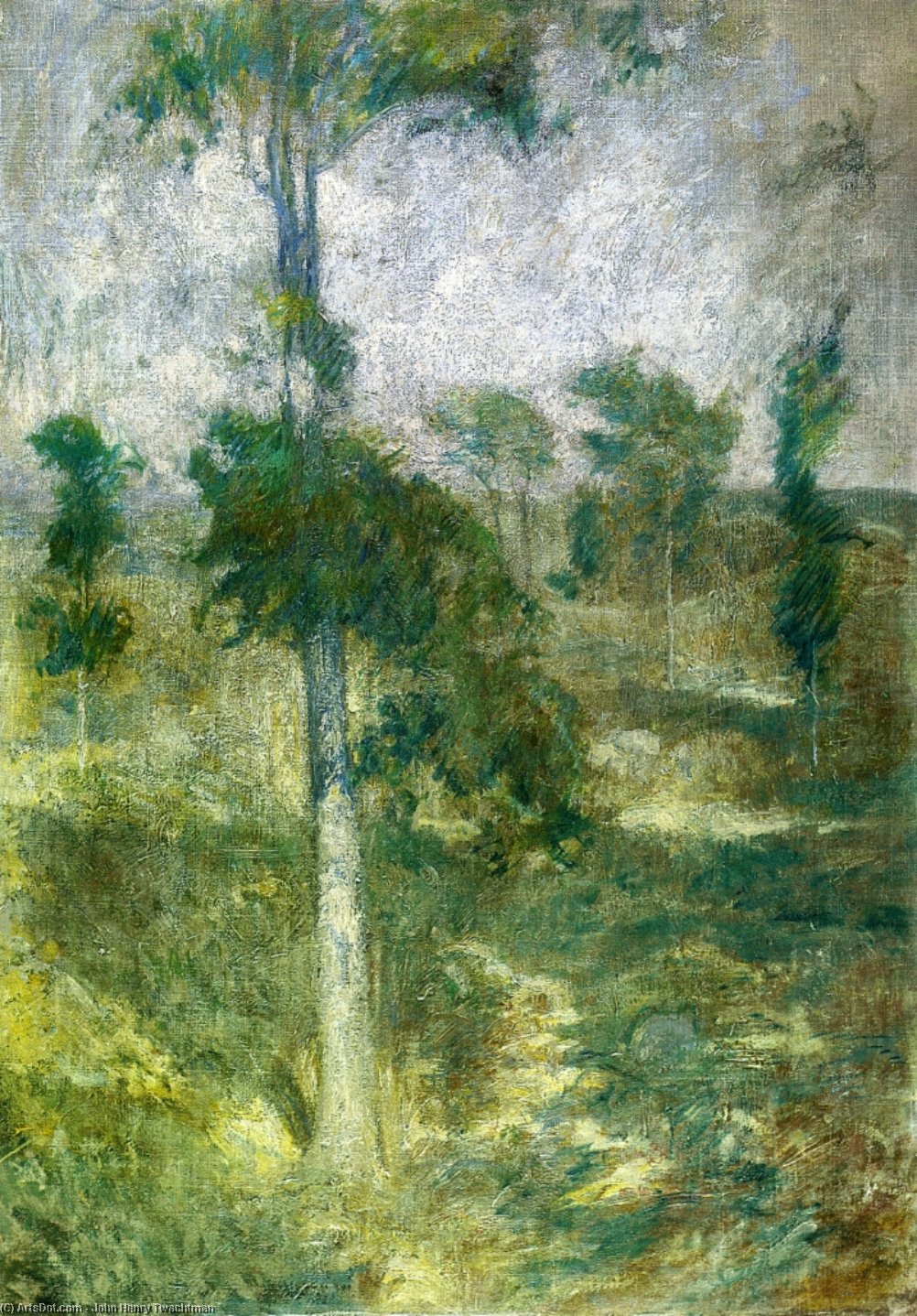
To gaze upon John Henry Twachtman's Tulip Tree, Greenwich is to step directly into a moment suspended in time—a breath of late afternoon tranquility captured on canvas. This painting, executed in 1901, is far more than a mere depiction of a landscape; it is an immersion into the very essence of American leisure and natural beauty at the turn of the twentieth century. Twachtman masterfully translates the ephemeral quality of light filtering through foliage, creating a scene that whispers of quiet contemplation. The composition draws the eye deep into the verdant expanse, where the stately presence of the central tree anchors the entire gathering of soft greens and muted tones.
Mastery in Brushstroke and Color
Technically, the work is a breathtaking testament to American Impressionism. Twachtman’s signature touch shines through in the application of paint itself. Observe the soft, feathery brushstrokes; they do not merely describe grass or leaves; they evoke the feeling of wind passing through them. This technique allows the light and shadow to play across the surface with an almost luminous quality. The palette is deliberately restrained—a symphony of muted colors that eschews harsh contrasts for a pervasive sense of calm. It is this careful handling of tone, rather than dramatic color shifts, that imbues Tulip Tree, Greenwich with its profound sense of peace.
The Narrative of Leisure and Place
Within the foreground's gentle sweep of grass and the background's scattered trees, two figures appear in the distance. They are small against the grandeur of nature, yet their presence is crucial; they provide scale and a subtle narrative thread. One can almost hear the soft murmur of conversation or the rhythmic crunch of footsteps on gravel. These figures invite the viewer to participate in the scene, suggesting that life’s greatest pleasures are often found in simple communion—a leisurely walk through a beautiful, sun-dappled park. It speaks to an era when the appreciation for cultivated natural spaces was blossoming across America.
Enduring Emotional Resonance
The emotional impact of this piece is one of profound serenity. For the collector or designer seeking art that elevates a space from merely decorated to truly inhabited, Tulip Tree, Greenwich offers an immediate balm. It whispers of escape, of slowing down, and of appreciating the delicate balance between human activity and untamed nature. Owning a reproduction allows one to bring this carefully curated atmosphere—this pocket of pastoral calm—into your own home or gallery, making it a perennial source of gentle inspiration.