A Stage Within a Scene: John Hoppner’s ‘Mrs. Richard Brinsley Sheridan’
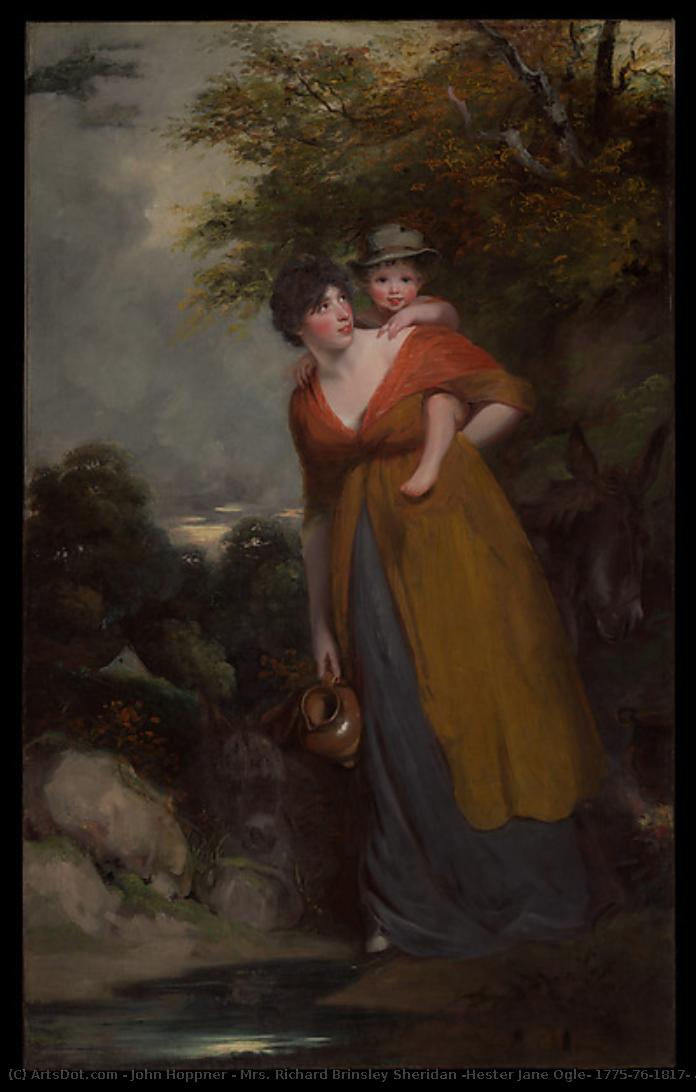
John Hoppner's 1797 painting, “Mrs. Richard Brinsley Sheridan (Hester Jane Ogle, 1775/76–1817) and Her Son (Charles Brinsley Sheridan, 1796–1843),” is more than a simple portrait; it’s a carefully constructed theatrical tableau that speaks volumes about the social conventions and artistic trends of late 18th-century London. The work, now housed at the Metropolitan Museum of Art, immediately draws the eye with its vibrant palette – a rich tapestry of ochres, yellows, and reds – yet it's the subtle complexities within the composition that truly captivate. Hoppner masterfully blends elements of Rococo elegance with a deliberate nod to the burgeoning Romantic movement, creating an image brimming with both charm and understated drama.
At first glance, the scene depicts Hester Sheridan, elegantly dressed in a flowing yellow gown, cradling her young son, Charles, on her shoulder. She’s positioned against a rustic brick wall, seemingly engaged in a humble labor – feeding a small animal, perhaps a lamb or goat. However, this is precisely where the painting's theatricality shines through. Hester isn’t merely a mother; she embodies a carefully crafted role-play, referencing the popular practice of “country walks” and rural performances that were immensely fashionable among London’s elite. These elaborate recreations offered an escape from the city’s constraints, allowing participants to temporarily inhabit roles of rustic simplicity – a deliberate act of social commentary and playful rebellion.
Theatricality and Social Commentary
Hoppner's skill lies in his ability to imbue this staged scene with genuine emotion. Hester’s pose is deliberately theatrical, her gaze directed outwards as if addressing an unseen audience. Her hand gestures are graceful yet purposeful, suggesting a practiced performance. The inclusion of the handbags – three distinct pouches scattered around the composition – adds another layer of intrigue. They aren't merely decorative; they hint at the social rituals and material possessions associated with this theatrical persona. The placement of these objects subtly underscores the artificiality of the scene while simultaneously acknowledging its appeal.
The historical context is crucial to understanding the painting’s significance. Richard Brinsley Sheridan was a prominent figure in British politics and theatre, known for his witty plays and passionate advocacy for reform. Hester, as his wife, navigated the complexities of high society with grace and intelligence. Hoppner's portrait captures this duality – her position as both a fashionable lady and a participant in a carefully constructed performance. The painting reflects the broader social trends of the time, where art was increasingly used to explore themes of identity, class, and the relationship between public and private life.
Technique and Artistic Style
Hoppner’s technique is characterized by his masterful use of color and light. He employs a loose, painterly style reminiscent of Reynolds, but with a greater emphasis on capturing fleeting moments of emotion. The brushstrokes are visible, creating a sense of immediacy and vitality. The lighting is particularly effective, bathing the scene in a warm, golden glow that highlights Hester’s features and creates a sense of intimacy. Hoppner's ability to render fabrics – the flowing gown, the rough texture of the brick wall – demonstrates his meticulous attention to detail and his deep understanding of artistic representation.
Symbolism and Emotional Resonance
Beyond its surface details, “Mrs. Richard Brinsley Sheridan” is rich in symbolism. The act of nurturing her son represents Hester’s role as a mother and protector, while the rustic setting suggests a connection to nature and a rejection of urban materialism. The painting's overall mood is one of gentle melancholy – a poignant reminder of the fleeting nature of beauty and the complexities of human relationships. It invites viewers to contemplate the performance of identity, the allure of social roles, and the enduring power of art to capture both the joys and sorrows of life.
This captivating portrait offers a glimpse into a bygone era, showcasing Hoppner’s artistic brilliance and his keen understanding of the social dynamics of 18th-century London. A reproduction of this work would undoubtedly bring a touch of elegance and historical intrigue to any interior space, serving as a conversation piece that celebrates both artistry and human experience.