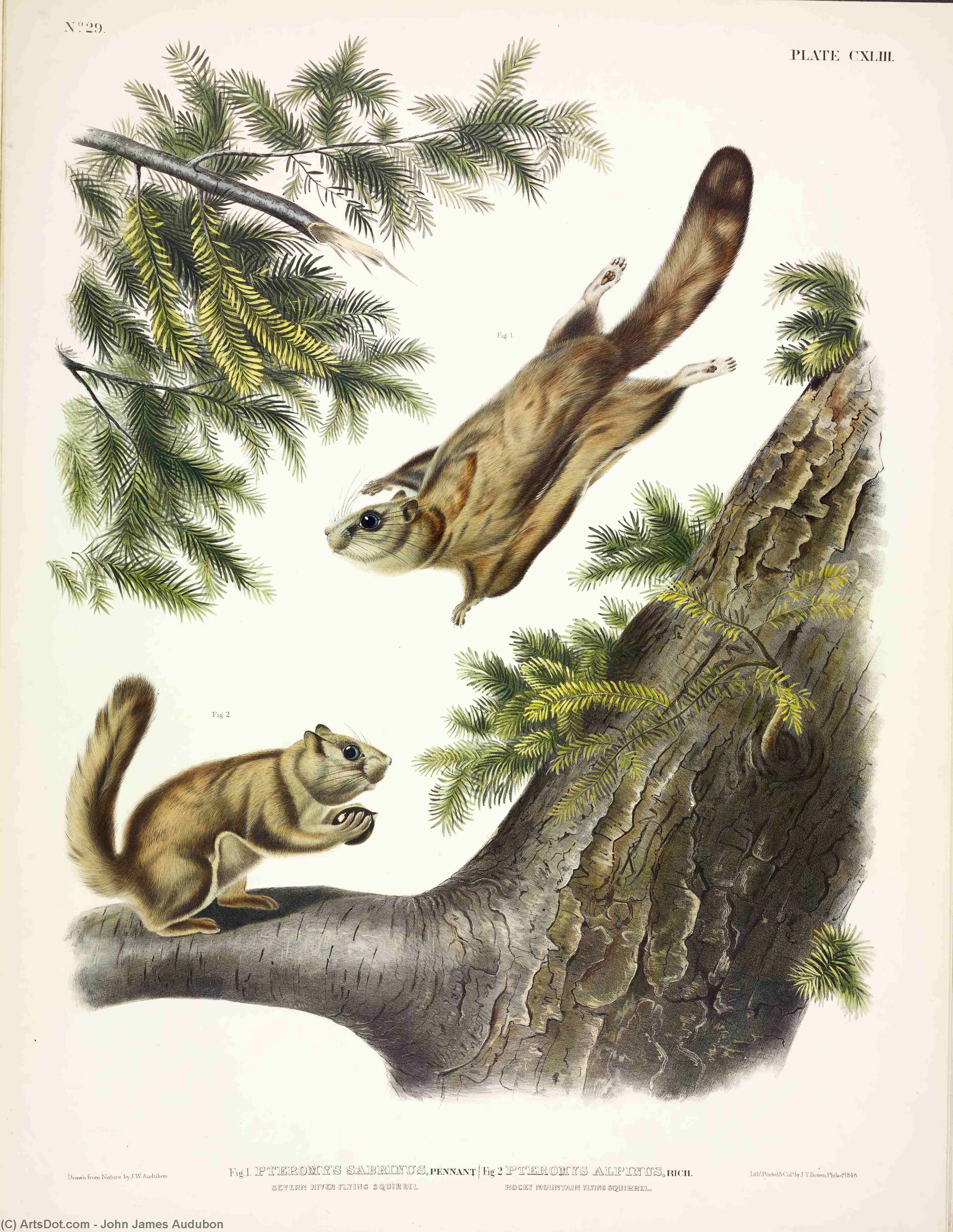
1. Pteromys sabrinus, Severn River Flying Squirrel; 2. Pteromys alpinus, Rocky Mountain Squirrel

John James Audubon's stunning oil painting captures Severn River Flying Squirrel and Rocky Mountain Squirrel in exquisite detail, showcasing the artist’s mastery of naturalism. Own a piece of art history with this hand-painted reproduction.


John James Audubon (1785 - 1851)

Explore the art of John James Audubon, pioneer of ornithology & American wildlife art! His stunning watercolors capture North America's birds with detail and beauty. Discover his legacy!

A Symphony of Nature: Audubon’s “Pteromys sabrinus, Severn River Flying Squirrel; 2. Pteromys alpinus, Rocky Mountain Squirrel”

  • Subject Matter: John James Audubon's masterful depiction captures two distinct North American squirrel species – the Severn River Flying Squirrel and the Rocky Mountain Squirrel – in their natural environments. The composition isn’t merely a study of animals; it’s an intimate portrait of wilderness, showcasing the remarkable diversity within the continent’s ecosystems.
  • Artistic Style: The painting exemplifies Audubon's signature style, characterized by meticulous detail and a profound respect for the subject. His approach transcends simple illustration, leaning heavily into Romanticism with its emphasis on emotion, drama, and the sublime beauty of nature. The dynamic pose of the flying squirrel, coupled with the grounded stillness of the Rocky Mountain Squirrel, creates a captivating visual narrative.

The Genius of Audubon: Technique and Observation

  • Oil Painting Mastery: Executed in oil on canvas, the painting demonstrates Audubon’s unparalleled skill in rendering texture and form. The fur of the squirrels is depicted with astonishing realism – each individual strand seemingly vibrating with life. The artist's use of light and shadow creates a three-dimensional effect, drawing the viewer into the scene.
  • Scientific Accuracy: Audubon was far more than just an artist; he was a dedicated naturalist. His meticulous observations informed every brushstroke. The precise anatomical details, combined with accurate depictions of their habitats – a branch laden with foliage and a rugged mountain landscape – reflect his commitment to scientific documentation. This painting served as both art and a vital record for the burgeoning field of natural history.

Symbolism and Context: A Window into 19th-Century America

  • Romantic Ideal: The painting embodies the Romantic movement’s fascination with untamed nature and its power to evoke awe and wonder. The squirrels, symbols of resilience and adaptability, represent humanity's connection to the natural world.
  • Audubon’s Legacy: Created during a period of significant exploration and westward expansion in America, Audubon’s work played a crucial role in shaping public perception of the nation’s wildlife. His detailed illustrations helped popularize ornithology and contributed to conservation efforts – though tragically, his observations were often made within a context of exploitation and colonial ambition.

Emotional Impact and Reproduction Value

  • A Timeless Masterpiece: “Pteromys sabrinus, Severn River Flying Squirrel; 2. Pteromys alpinus, Rocky Mountain Squirrel” remains a testament to Audubon’s artistic genius and his profound connection to the natural world. It evokes feelings of tranquility, wonder, and respect for the beauty and fragility of our planet.
  • Hand-Painted Reproduction: ArtsDot offers a meticulously crafted hand-painted reproduction of this iconic artwork, ensuring that you experience the full richness and detail of Audubon’s original vision. This is more than just a print; it's a tangible piece of art history, perfect for enhancing any interior space or collecting enthusiast’s portfolio.