A Glimpse into Audubon's Naturalist Vision
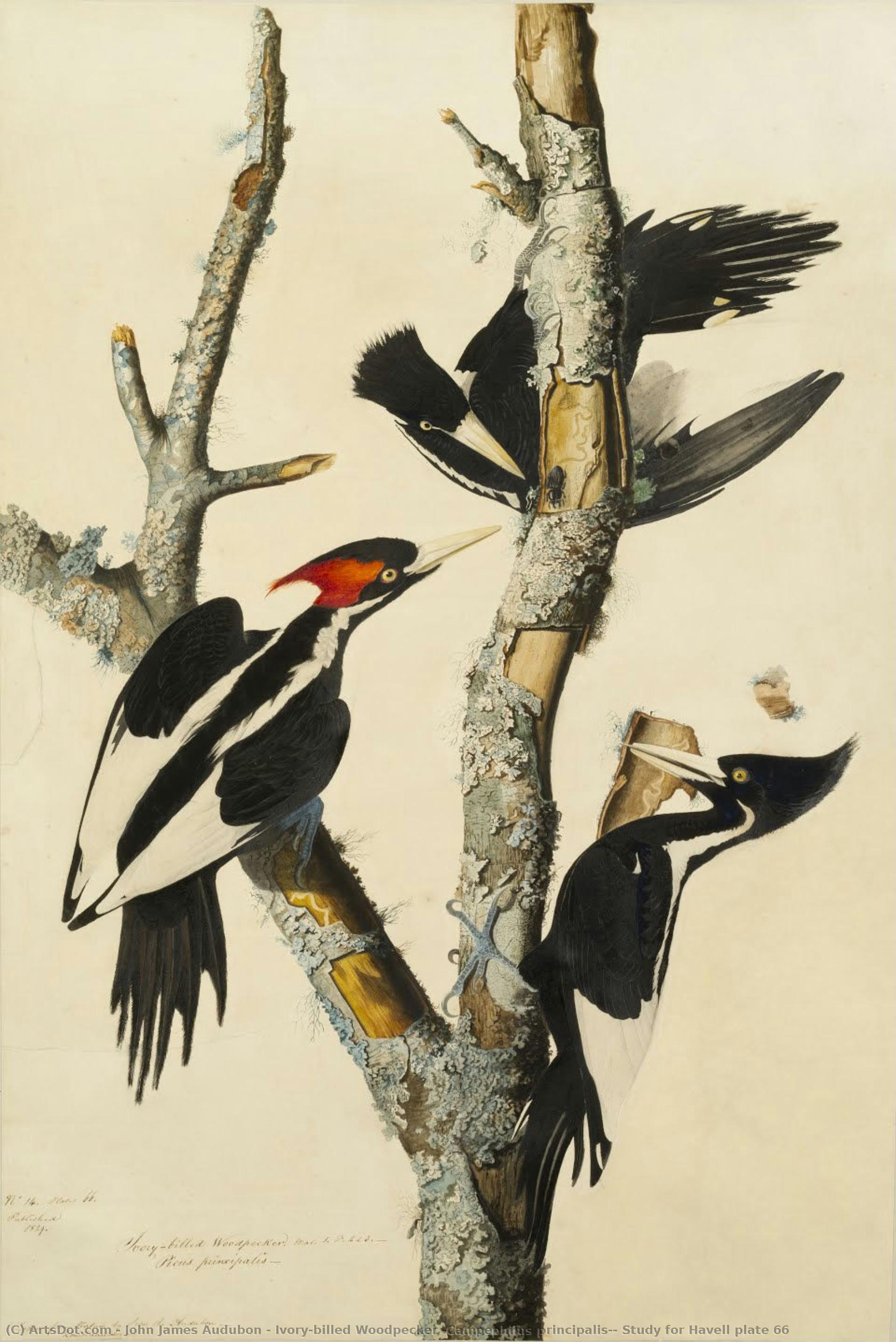
To stand before a reproduction of John James Audubon’s Ivory-billed Woodpecker (Campephilus principalis), Study for Havell plate 66 is to step directly into the vibrant, ambitious world of early American natural history. This piece is far more than a mere depiction of fauna; it is a testament to an era when scientific documentation met breathtaking artistic fervor. Audubon, the master ornithologist, captured not just species, but entire ecosystems in his meticulous hand. The composition itself is alive—a dynamic gathering where various birds perch upon sturdy branches, their forms rendered with an almost unbelievable vitality. Notice how the varying sizes and positions of the avian subjects create a sense of immediate action, as if one could hear the calls echoing through the humid air of the American wilderness.
The Human Element in Nature's Grand Stage
What elevates this study beyond a simple scientific plate is the inclusion of humanity. The presence of two figures observing the spectacle from below grounds the scene, inviting the viewer into the role of the contemporary naturalist alongside them. These observers act as emotional anchors, reminding us that art often arises from shared wonder and dedicated observation. Audubon masterfully balances the wild majesty of nature with the quiet contemplation of man. This interplay suggests a deep, almost reverent relationship between humanity and the natural world—a dialogue preserved in pigment.
Mastery of Technique and Historical Context
Painted in 1826, this work embodies the pinnacle of early 19th-century illustration techniques. The rich detail visible in the plumage, the texture of the bark, and the subtle interplay of light speaks to Audubon’s unparalleled skill as a painter. Owning a reproduction allows one to possess a piece steeped in ornithological history. It connects the modern admirer directly to the painstaking process of scientific art—a time when documenting life required both the sharp eye of a scientist and the delicate hand of a master artisan. The quality of this reproduction ensures that the depth and luminosity intended by Audubon are faithfully translated for contemporary appreciation.
Symbolism and Enduring Resonance
The subject matter itself carries profound symbolism. The woodpecker, often associated with industry and tireless energy, becomes central to a narrative about preservation. In an age where biodiversity is increasingly threatened, this artwork serves as a powerful visual plea. It compels us to pause our modern rush and consider the intricate beauty that exists just beyond our immediate view. For collectors and designers alike, it introduces a touch of exotic, scholarly romance into any space, transforming a room from merely decorated to deeply storied.