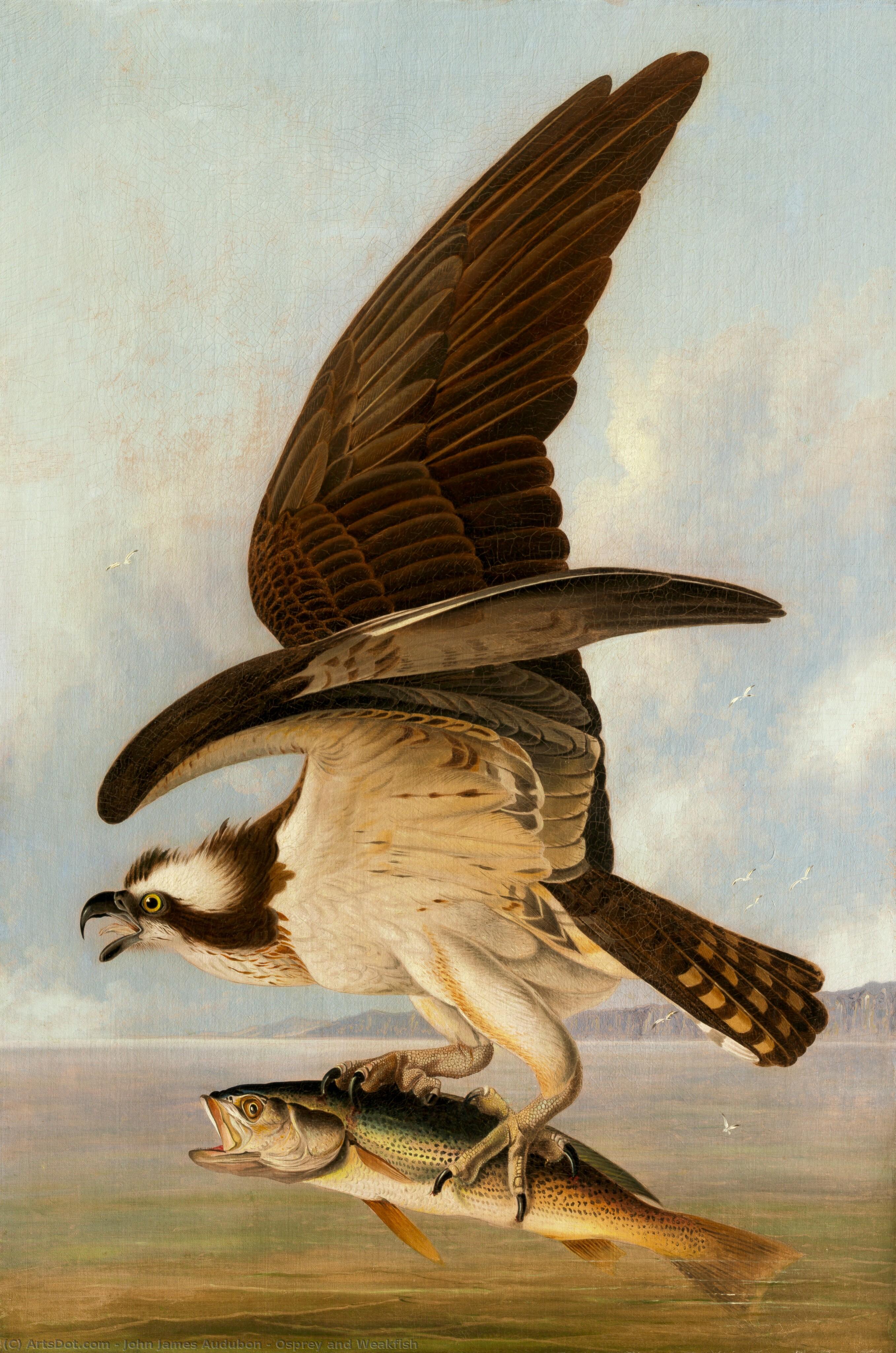
Osprey and Weakfish: A Naturalistic Masterpiece by John James Audubon
- Artist: John James Audubon
- Year: 1829
- Medium: Oil on Canvas
- Size: 127 x 95 cm
“Osprey and Weakfish” is a striking vertical painting by the renowned American naturalist and artist, John James Audubon. This piece exemplifies Audubon’s meticulous observation of wildlife and his dedication to capturing its essence with remarkable realism. The artwork depicts an osprey in mid-flight, powerfully gripping a shimmering weakfish within its talons against a backdrop of a hazy landscape. It is part of Audubon's larger project to document the birds of North America.
Detailed Description & Artistic Technique
The composition is dominated by the osprey and its prey, filling nearly the entire frame. The bird’s anatomy is rendered with incredible detail; each feather meticulously painted to convey texture and movement. Its wings are outstretched in a dynamic pose, showcasing the power of flight. The fish, equally detailed, appears almost alive, its scales reflecting light and water. Audubon's use of color is masterful – the vibrant emerald green of the weakfish contrasts beautifully with the darker tones of the osprey’s plumage. The background landscape, though less defined, provides a sense of depth and context, featuring distant cliffs and a sky filled with billowing clouds. The painting technique involves layering oil paints to achieve realistic textures and subtle gradations of light and shadow. Audubon's scientific approach is evident in his accurate depiction of both the bird and fish, demonstrating an understanding of their anatomy and behavior.
Historical Context & Significance
Created in 1829, “Osprey and Weakfish” belongs to a period when natural history illustration was gaining prominence. Audubon’s work stood out for its artistic merit and scientific accuracy, moving beyond the stylized depictions common at the time. His ambition was to create a comprehensive visual record of North American birds, culminating in his monumental "Birds of America" series. This painting reflects the growing interest in documenting the natural world during the 19th century, coinciding with increased exploration and scientific inquiry. Audubon’s work contributed significantly to both art and ornithology, influencing generations of artists and scientists.
Symbolism & Emotional Impact
Beyond its aesthetic appeal, “Osprey and Weakfish” carries symbolic weight. The osprey, a skilled predator known for its fishing prowess, represents skill, precision, and the power of nature. The act of hunting itself symbolizes the interconnectedness of life within an ecosystem – the delicate balance between predator and prey. The painting evokes a sense of awe at the beauty and efficiency of the natural world. Viewers are drawn into the scene, experiencing a moment of raw action and witnessing the drama of survival in its purest form. The artwork’s realism fosters a connection with nature, prompting reflection on our place within it.
About John James Audubon
- Born: Les Cayes, Haiti (1785)
- Died: 1851
John James Audubon stands as a pivotal figure in both American art and natural history. His early life was shaped by the vibrant Caribbean landscape. He developed an early fascination with birds, spending countless hours observing them in their habitats. While not formally trained, Audubon’s passion for nature combined with his artistic talent resulted in groundbreaking work that continues to inspire today.