A Vision of Sacred Narrative in American Academia
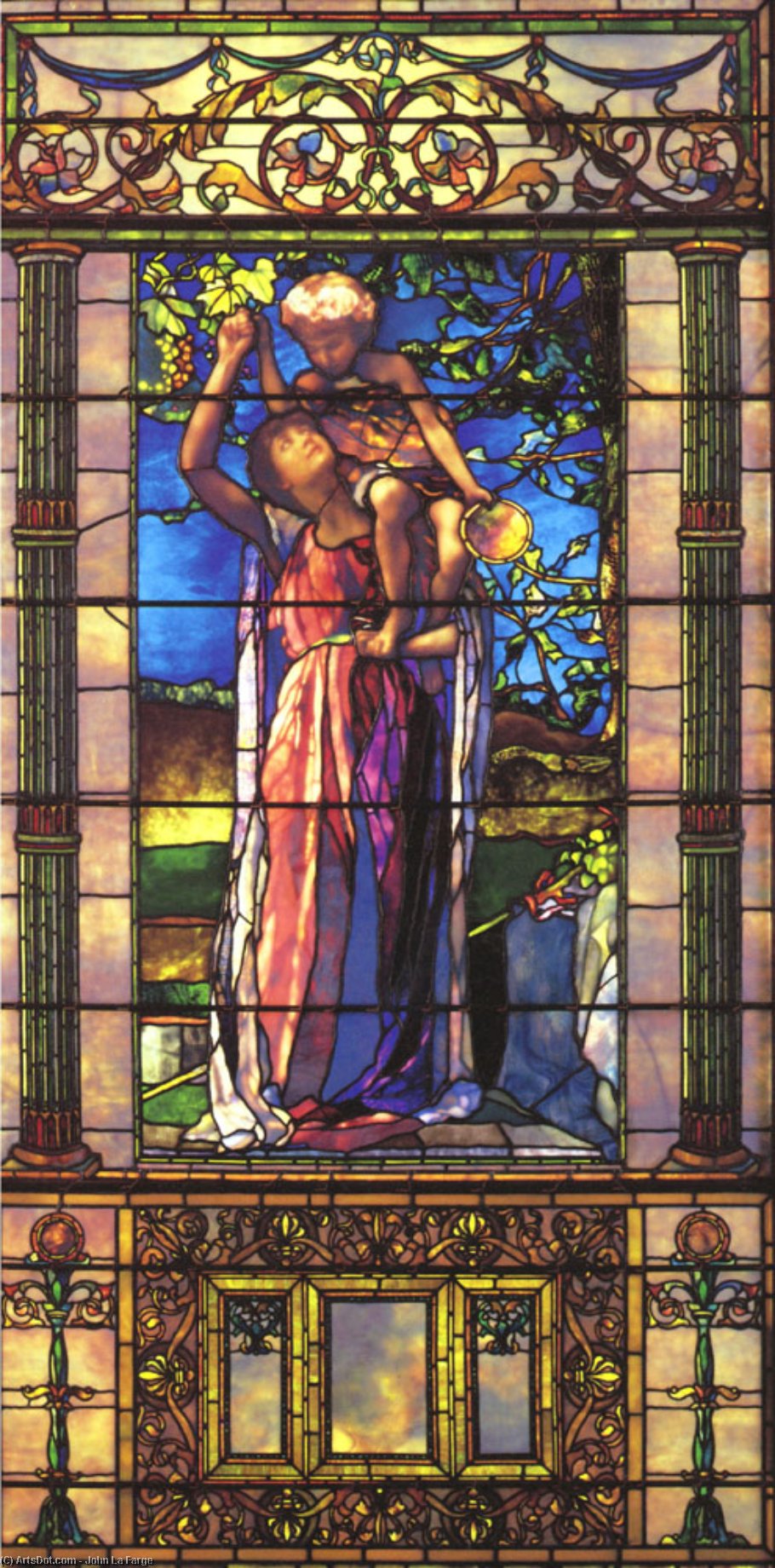
To gaze upon this depiction is to step back into a moment steeped in profound spiritual resonance, rendered with the characteristic grace and narrative depth of John La Farge’s hand. While the title suggests The Infant Bacchus, the visual evidence presents a scene echoing classical religious iconography—a tender grouping within a verdant woodland setting. The composition centers on a maternal figure, reminiscent of the Virgin Mary, cradling infants whose presence speaks volumes of divine lineage and earthly connection. La Farge, an artist whose life spanned the vibrant transition from 19th-century academicism into modern American art, imbued this scene with both meticulous detail and palpable emotion.
Mastery of Light and Woodland Symbolism
The technique employed here speaks to a high level of craftsmanship, typical of the period's finest decorative painting. Observe how the background forest is not merely a backdrop but an active participant in the narrative. The interplay between the deep greens of the foliage and the soft luminosity illuminating the figures suggests an almost ethereal quality, as if the divine light itself filters through the canopy. La Farge was renowned for his ability to integrate setting into story; here, the woods become a symbolic space—a place of revelation, purity, and quiet contemplation. The inclusion of peripheral figures and that watchful bird perched high above adds layers of visual storytelling, inviting the viewer's eye to wander and decipher the unspoken dialogue between the characters.
The Emotional Resonance for the Modern Collector
For the discerning collector or designer seeking art that elevates a space beyond mere decoration, this piece offers profound emotional depth. It captures that universal yearning for familial connection juxtaposed with the mystery of spiritual guidance. The gentle handling of the skin tones against the rich, saturated colors of the natural setting creates an immediate sense of intimacy. Reproducing such a work allows one to bring a piece of late 19th-century European and American artistic ambition into contemporary living quarters. It serves not just as art, but as a focal point for quiet reflection.
Historical Context and Artistic Legacy
John La Farge’s career was a testament to adaptation—from stained glass artistry to grand murals, his hand touched nearly every decorative surface of his time. This painting reflects that cosmopolitan sensibility; it honors the rigorous traditions learned in Paris while filtering them through an unmistakably American lens. Owning a reproduction connects one directly to this rich lineage, acknowledging the artist's journey from academic study to becoming a defining voice in American art history. It is a piece that speaks of enduring beauty, masterful technique, and timeless human narrative.