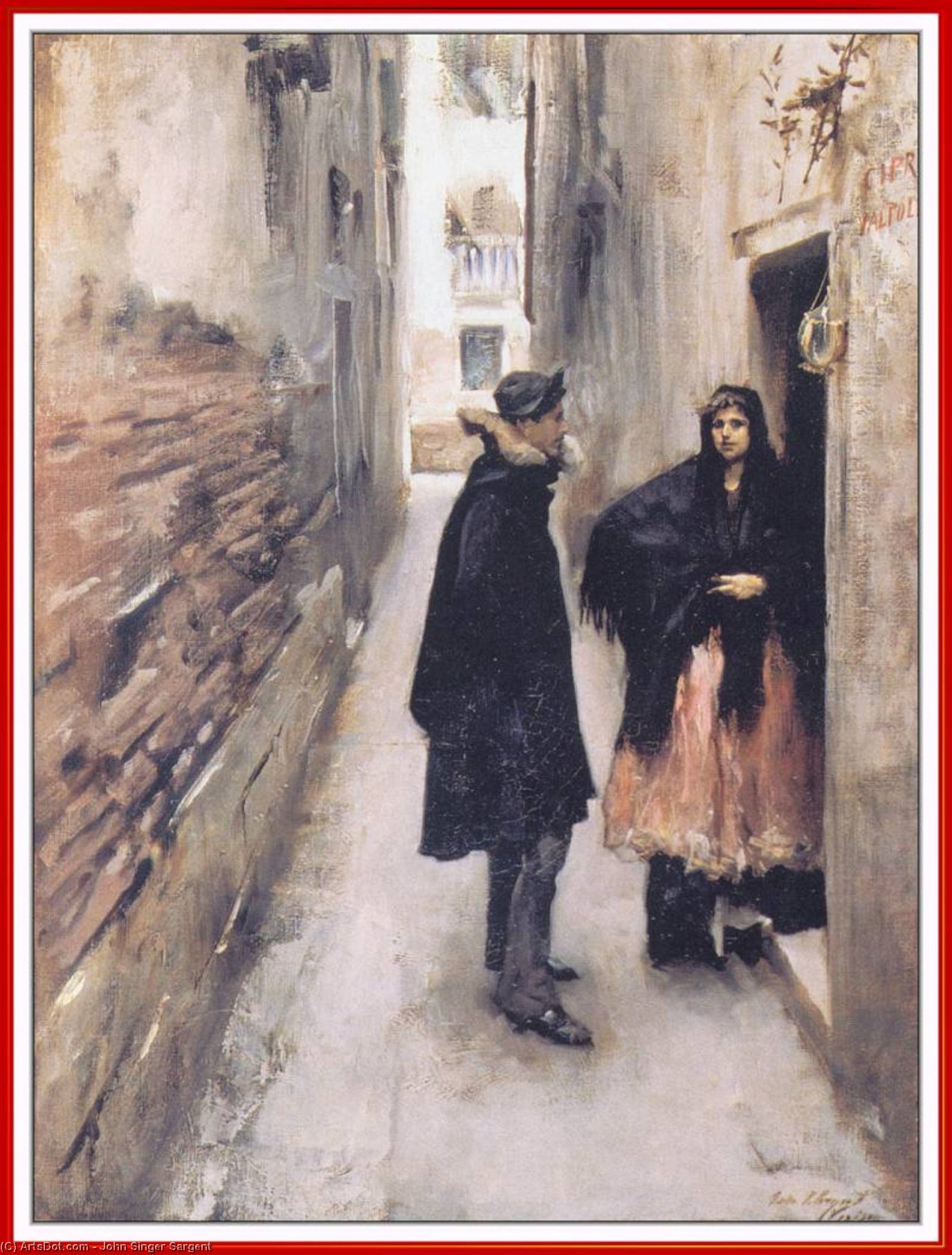
A Street in Venice

Captured in exquisite black and white by John Singer Sargent during the Belle Époque, this evocative street scene portrays a quiet moment of connection between a man and woman amidst Venetian architecture—a timeless portrait reflecting Sargent’s masterful technique and capturing the spirit of European society.


John Singer Sargent (1856 - 1925)

Explore the art of John Singer Sargent! Discover iconic portraits like 'Madame X', Impressionistic landscapes & Gilded Age elegance from this American master.

A Window Into Venetian Life

  • Subject Matter: Sargent’s “A Street in Venice” captures a quiet tableau of urban life—a man and woman standing on a sidewalk, bathed in diffused light emanating from an unseen doorway. The composition prioritizes intimacy, focusing on the figures themselves rather than grand architectural vistas typical of many Venetian paintings of the era.
  • Style: The painting exemplifies Sargent’s signature Impressionistic style, characterized by loose brushstrokes and a subtle blending of colors that prioritize capturing fleeting moments and atmospheric conditions. Unlike more polished academic portraits, this piece eschews meticulous detail in favor of conveying an overall sense of mood and feeling.
  • Technique: Sargent employed oil paint on canvas—a technique favored during his time—allowing for layering and blending to achieve a luminous effect. His masterful handling of light is particularly noteworthy; he skillfully renders the shadows cast by the doorway, creating depth and enhancing the drama of the scene.
  • Historical Context: Created in 1880, “A Street in Venice” reflects the burgeoning interest in plein air painting—the practice of working outdoors directly from nature—that was gaining momentum within the European avant-garde. It aligns with Sargent’s broader exploration of Impressionism and his desire to move beyond the conventions of traditional portraiture.
  • Symbolism: While seemingly simple, the scene holds subtle symbolic resonance. The positioning of the figures facing away from each other suggests a degree of detachment or unspoken communication—perhaps reflecting the complexities of human relationships. Furthermore, the doorway symbolizes transition and passage, hinting at the ongoing flow of life within the city.
  • Emotional Impact: “A Street in Venice” evokes a feeling of serene contemplation and understated elegance. The muted palette and soft brushstrokes contribute to an atmosphere of tranquility, inviting viewers to immerse themselves in the quiet beauty of everyday existence. It’s a painting that speaks volumes about capturing not just what is seen but also what is felt.