Arthur James Balfor

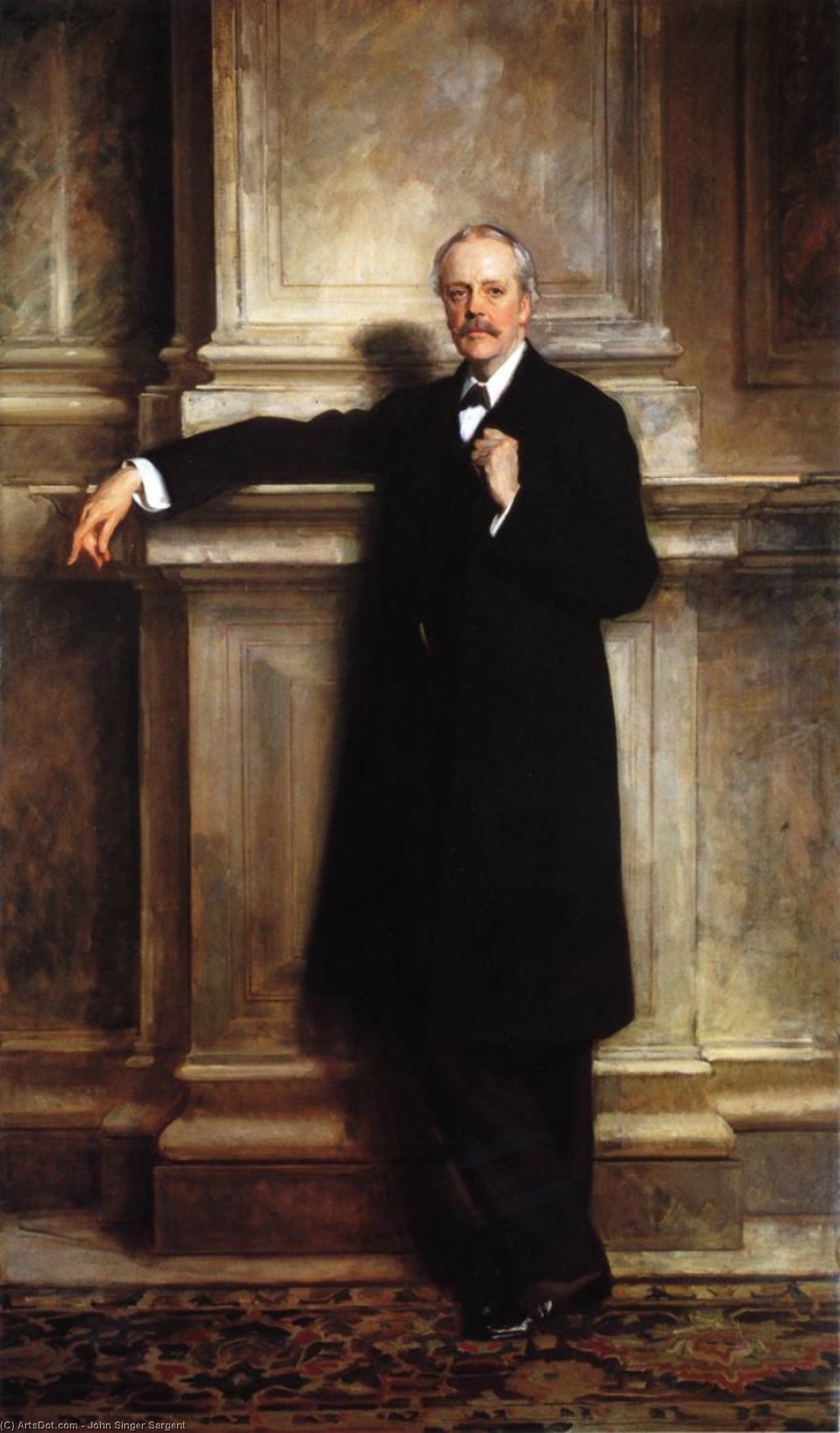
John Singer Sargent’s masterful portrait captures the dignified composure of Arthur James Balfor against a textured wall backdrop—a quintessential example of Impressionistic elegance from 1908.


John Singer Sargent (1856 - 1925)

Explore the art of John Singer Sargent! Discover iconic portraits like 'Madame X', Impressionistic landscapes & Gilded Age elegance from this American master.

A Portrait Steeped in Elegance: John Singer Sargent’s Arthur James Balfor

  • Subject Matter: This striking portrait depicts Arthur James Balfor, a prominent figure of his time – likely a businessman or perhaps an artist himself – captured in a moment of poised contemplation. The sitter stands confidently beside a wall adorned with decorative panels, emphasizing both his stature and the refined surroundings that define the era.
  • Style: Sargent’s masterful technique exemplifies Impressionistic realism. While rooted in observation, he transcends mere depiction, capturing not just what is seen but also conveying an intangible sense of character and atmosphere. The painting embodies the spirit of its time—a fascination with capturing fleeting impressions while maintaining meticulous attention to detail.
  • Technique: Sargent employed oil paints on canvas, utilizing a layering technique that builds up tonal gradations and subtle nuances of color. He skillfully blended brushstrokes to achieve an illusionistic depth, creating a surface texture that mimics the materiality of the wall and subtly enhances the sitter’s presence. The artist's meticulous attention to capturing light—particularly reflected off surfaces—is characteristic of Impressionism.
  • Historical Context: Painted in 1908, “Arthur James Balfor” resides firmly within the opulent milieu of the Gilded Age. This period witnessed unprecedented economic prosperity and social mobility in America and Europe, fostering a culture of artistic patronage and celebrating success through portraiture. Sargent’s work reflects this fascination with documenting prominent individuals against backgrounds that speak to their social standing.
  • Symbolism: The wall itself serves as more than just a backdrop; it symbolizes stability and refinement—values prized during the era depicted. Balfor's posture exudes confidence and composure, projecting an image of success and accomplishment. Furthermore, the subtle inclusion of decorative panels hints at the artistic sensibilities prevalent in society, mirroring Sargent’s own commitment to capturing beauty and conveying emotion.
  • Emotional Impact: The painting evokes a feeling of quiet dignity and understated elegance. Sargent's ability to convey psychological depth through visual cues—the sitter’s gaze, posture, and subtle facial expressions—creates an immersive experience for the viewer. It invites contemplation on themes of ambition, achievement, and the pursuit of beauty within a meticulously crafted composition.