Atlas and the Hesperides: A Neoclassical Masterpiece by John Singer Sargent
- Title: Atlas and the Hesperides
- Artist: John Singer Sargent
- Date: 1925
- Medium: Oil on Canvas
- Dimensions: Diameter, unframed: 120 inches
- Location: Museum of Fine Arts (MFA), Boston, Massachusetts
The Mythological Narrative
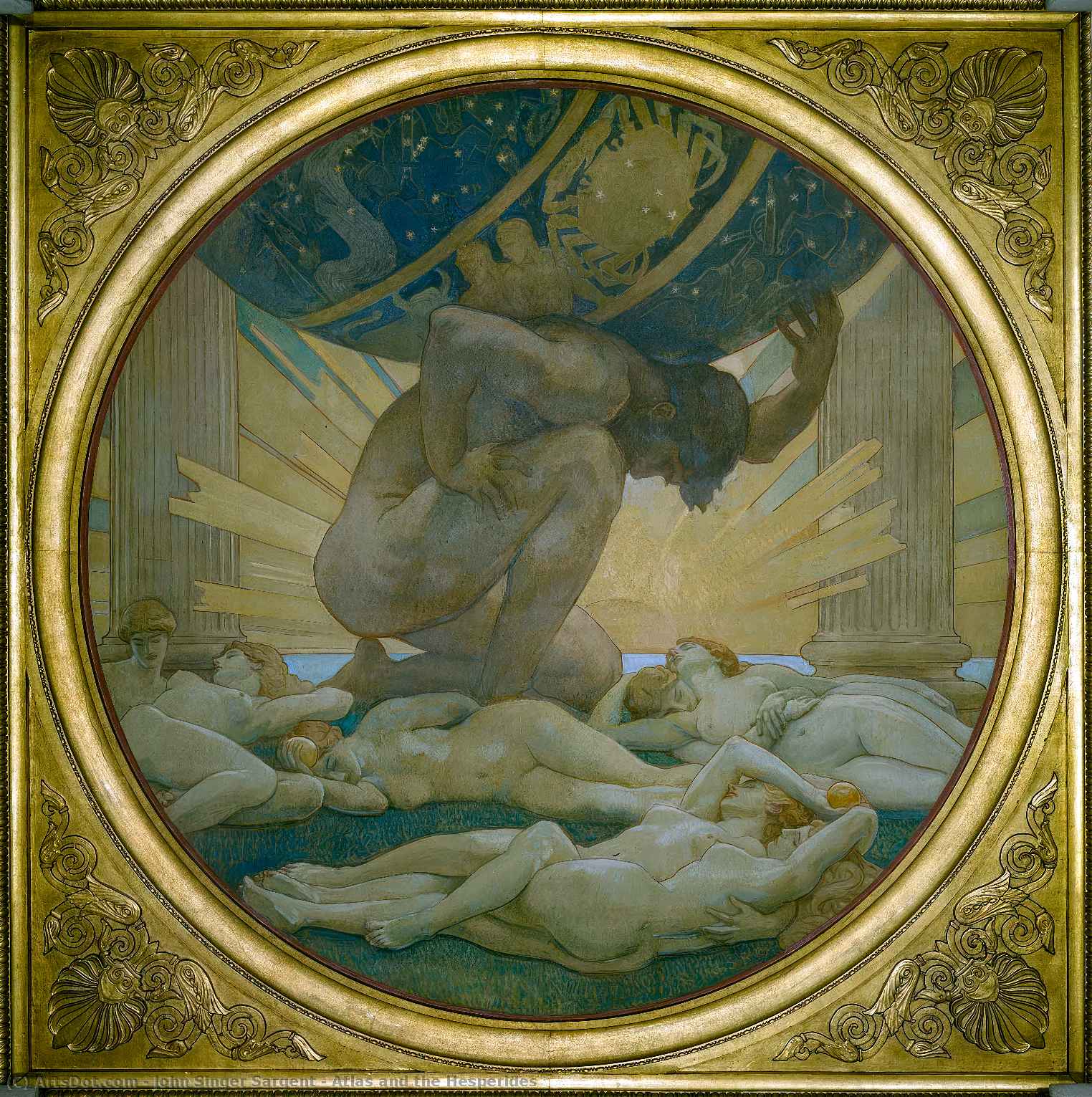
John Singer Sargent's "Atlas and the Hesperides" is a captivating neoclassical painting deeply rooted in Greek mythology. The artwork depicts Atlas, a titan condemned to bear the immense weight of the celestial sphere upon his shoulders – a symbol of unending burden and responsibility. Behind him, the Hesperides, nymphs associated with evening light and golden fruit, are portrayed in a state of tranquil repose beneath laden trees. This scene draws directly from ancient Greek myths where the Hesperides guarded the golden apples that granted immortality, representing eternal youth and divine favor.
Artistic Style and Technique
Sargent masterfully employs a muted color palette dominated by soft golds and bronze tones to create an atmosphere of timelessness and dreamlike serenity. The subtle treatment of light enhances this ethereal quality, emphasizing the paradoxical contrast between Atlas's arduous task and the Hesperides’ blissful tranquility. Sargent’s brushwork is characterized by its precision and detail, capturing the textures of skin, fabric, and foliage with remarkable accuracy. The painting is contained within an ornate, round (tondo) frame, further reinforcing its classical aesthetic.
Composition and Symbolism
The composition of "Atlas and the Hesperides" is intricate and carefully considered. Atlas's posture—crouched under the weight of the heavens—immediately conveys the immense physical strain he endures. The arrangement of the female figures, scattered across a layered platform, creates a dynamic interplay of movement and stillness. The classical column on the right adds architectural grandeur to the scene. Symbolically, the painting explores themes of duty, burden, reward, and the cyclical nature of existence. Atlas represents unwavering responsibility, while the Hesperides embody the promise of respite and eternal life.
Emotional Impact and Legacy
"Atlas and the Hesperides" is not merely a display of technical skill but also a profound exploration of human emotion and mythological narrative. Sargent’s ability to evoke both pathos and serenity within a single composition demonstrates his artistic versatility. The painting's enduring appeal lies in its capacity to resonate with viewers on multiple levels—as a testament to the power of myth, as an examination of human struggle, and as a celebration of beauty and grace. It remains a significant work within Sargent’s oeuvre and a treasured piece at the Museum of Fine Arts in Boston.