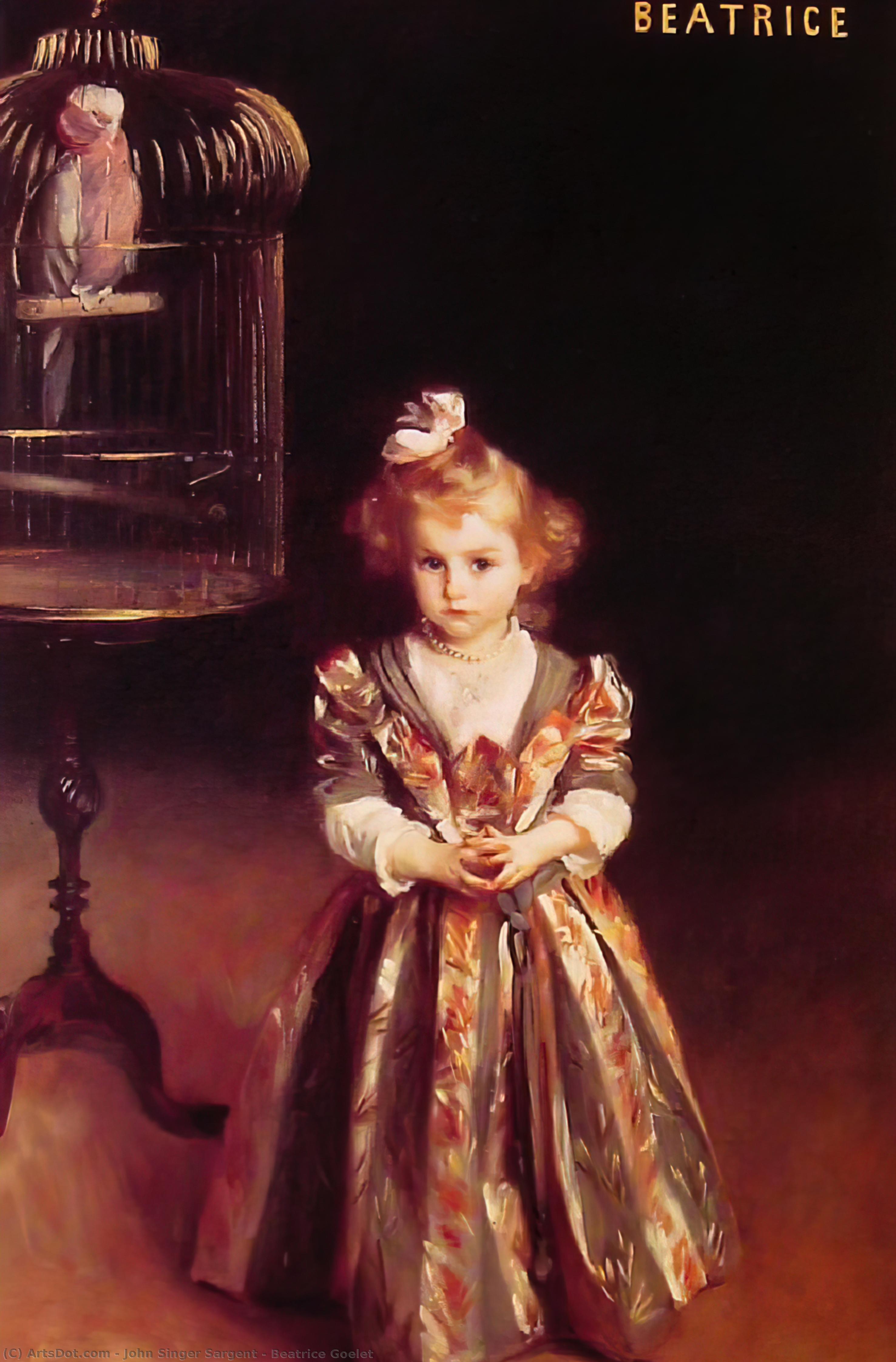
Beatrice Goelet, painted in 1890 by John Singer Sargent, exemplifies Impressionism's luminous realism. This portrait depicts a young girl dressed lavishly, gazing downward beside a birdcage – a testament to Sargent’s skill and Victorian refinement.
Admire Beatrice Goelet by John Singer Sargent – an iconic portrait capturing youthful innocence and subtle contemplation within Edwardian elegance. Ex
Explore the art of John Singer Sargent! Discover iconic portraits like 'Madame X', Impressionistic landscapes & Gilded Age elegance from this American master.
Beatrice Goelet: An Impressionistic Portrait of Innocence
The Beatrice Goelet painting, crafted by the masterful John Singer Sargent, stands as a quintessential example of Impressionism—a movement that sought to capture fleeting moments of light and emotion rather than striving for photographic realism. Completed in 1890, this oil on canvas portrait depicts Beatrice Goelet, niece of Ogden and Mary Goelet, prominent Newport socialites who resided at Ochre Court – a grand mansion overlooking Narragansett Bay. Sargent’s keen observation of light and color is immediately apparent; the muted hues of the dining room walls contrast beautifully with the vibrant shades of Beatrice's gown and accessories.
### Artistic Technique & Impressionistic Vision
Sargent’s technique exemplifies the core principles of Impressionism. He eschewed meticulous blending, opting instead for loose brushstrokes that create a shimmering surface texture—a characteristic hallmark of his style. Notice how Sargent captures the diffused light filtering through the window, illuminating Beatrice's face and highlighting the delicate folds of her dress. The artist skillfully renders the textures of fabric and porcelain, conveying a palpable sense of materiality without sacrificing artistic freedom. This deliberate disregard for traditional academic conventions reflects the broader intellectual climate of the late Victorian era, where artists were increasingly rejecting idealized representations in favor of subjective experience.
### Symbolism & Narrative Depth
Beyond its aesthetic beauty, Beatrice Goelet carries symbolic weight. The birdcage—a seemingly simple decorative element—represents confinement and observation, subtly hinting at Beatrice’s contemplative gaze downwards. Her posture conveys a quiet thoughtfulness, suggesting she is pondering something beyond the immediate scene. This isn't merely a depiction of a young girl; it’s an exploration of inner life—the artist capturing not just what Beatrice *looks* like but also what she *feels*. The necklace adorning her neck symbolizes wealth and status, reflecting the opulent lifestyle of Newport society during Sargent’s time.
### Historical Context & Legacy
Painted during the height of the Gilded Age, Beatrice Goelet embodies the spirit of its era—a fascination with beauty, refinement, and social prestige. Sargent's work aligns perfectly with the broader artistic trends of the period, which championed plein air painting (painting outdoors) and prioritized capturing atmospheric conditions. The portrait resides in the Speed Art Museum and Corcoran Gallery of Art, cementing Sargent’s place as one of America’s most celebrated Impressionist painters. For those seeking to immerse themselves further in his oeuvre, ArtsDot.com offers exceptional reproductions of masterpieces like Mr and Mrs Isaac Newton Phelps Stokes and Sketch of Santa Sophia – guaranteeing a glimpse into the enduring power of Sargent's artistic vision.
### Further Exploration: John Singer Sargent & Beyond
To delve deeper into Sargent’s life and work, visit https://ArtsDot.com or explore Wikipedia’s comprehensive resources on this iconic artist. His influence continues to inspire artists today, demonstrating the timeless appeal of capturing beauty and emotion with unparalleled skill.