A Portrait of Resilience: John Singer Sargent’s “Bedouin Mother”
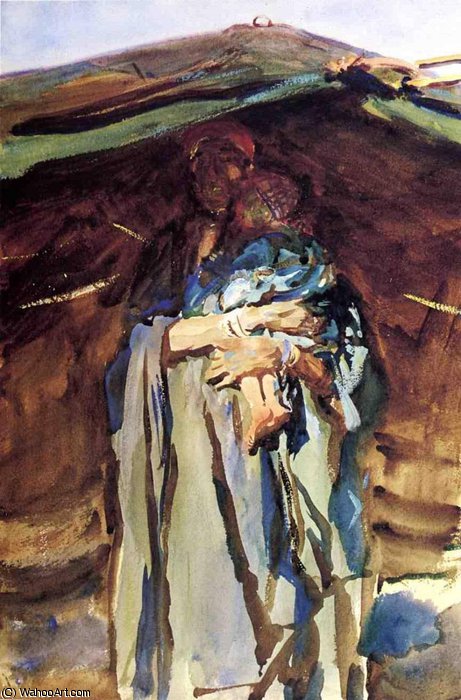
John Singer Sargent's "Bedouin Mother" is more than just a depiction of a woman and child; it’s a poignant meditation on survival, faith, and the enduring strength of human connection. Painted circa 1880, this evocative work captures a moment of quiet dignity within a harsh landscape, reflecting Sargent’s fascination with the lives of nomadic peoples during his extensive travels throughout North Africa and the Middle East. The painting's power lies not in grand gestures or dramatic lighting, but in the subtle details that speak volumes about the subject’s character and circumstance.
- Subject Matter: The central figure, a Bedouin woman, is cradling her infant child within a cave-like shelter. This intimate scene immediately draws the viewer into a world of vulnerability and protection – a universal theme amplified by the context of the Bedouins’ challenging environment.
- Setting: The rugged, almost desolate landscape surrounding the woman underscores the difficulties of her existence. The cave provides not only physical shelter but also symbolizes refuge from the elements and perhaps, a spiritual sanctuary.
Sargent's Impressionistic Technique
Sargent’s distinctive style is immediately recognizable in “Bedouin Mother.” He employs a loose, almost impressionistic technique, prioritizing capturing fleeting moments of light and atmosphere over precise detail. Notice the broken brushstrokes that define the textures of the woman’s dress, the rough stone of the cave walls, and the billowing fabric of the umbrella – a crucial element providing respite from the sun. This approach was influenced by his time spent studying the works of Claude Monet and other Impressionist painters, allowing him to create a sense of immediacy and movement within the scene.
- Color Palette: The muted tones of ochre, brown, and blue dominate the canvas, reflecting the natural colors of the desert environment. The woman’s blue dress provides a striking contrast, drawing attention to her as the focal point of the composition.
- Light and Shadow: Sargent masterfully uses light and shadow to create depth and volume, emphasizing the contours of the figures and the dramatic play of sunlight within the cave.
Symbolism and Historical Context
"Bedouin Mother" was created during a period of significant artistic exploration, as European artists sought inspiration beyond the confines of Western society. Sargent’s travels to North Africa provided him with unparalleled access to the lives of nomadic tribes, allowing him to depict their customs and traditions with respect and sensitivity. The umbrella itself is laden with symbolism – representing protection, hope, and perhaps a connection to a higher power. The inclusion of other figures in the background subtly suggests a community, reinforcing the importance of kinship and mutual support within Bedouin culture.
Historical Context: Painted during the height of Sargent’s career, this work exemplifies his growing interest in portraying non-Western cultures, reflecting broader European trends of ethnographic observation and artistic fascination with exotic locales.
Emotional Impact and Artistic Legacy
Ultimately, “Bedouin Mother” resonates deeply because it taps into fundamental human emotions – love, protection, and resilience. The woman’s gaze, direct and unwavering, conveys a sense of quiet strength and determination. This painting is a testament to Sargent's ability to capture not just the outward appearance of his subjects but also their inner spirit. As a hand-painted reproduction, this artwork offers an unparalleled opportunity to experience the beauty and emotional depth of Sargent’s vision firsthand.