A Glimpse into an English Summer Evening
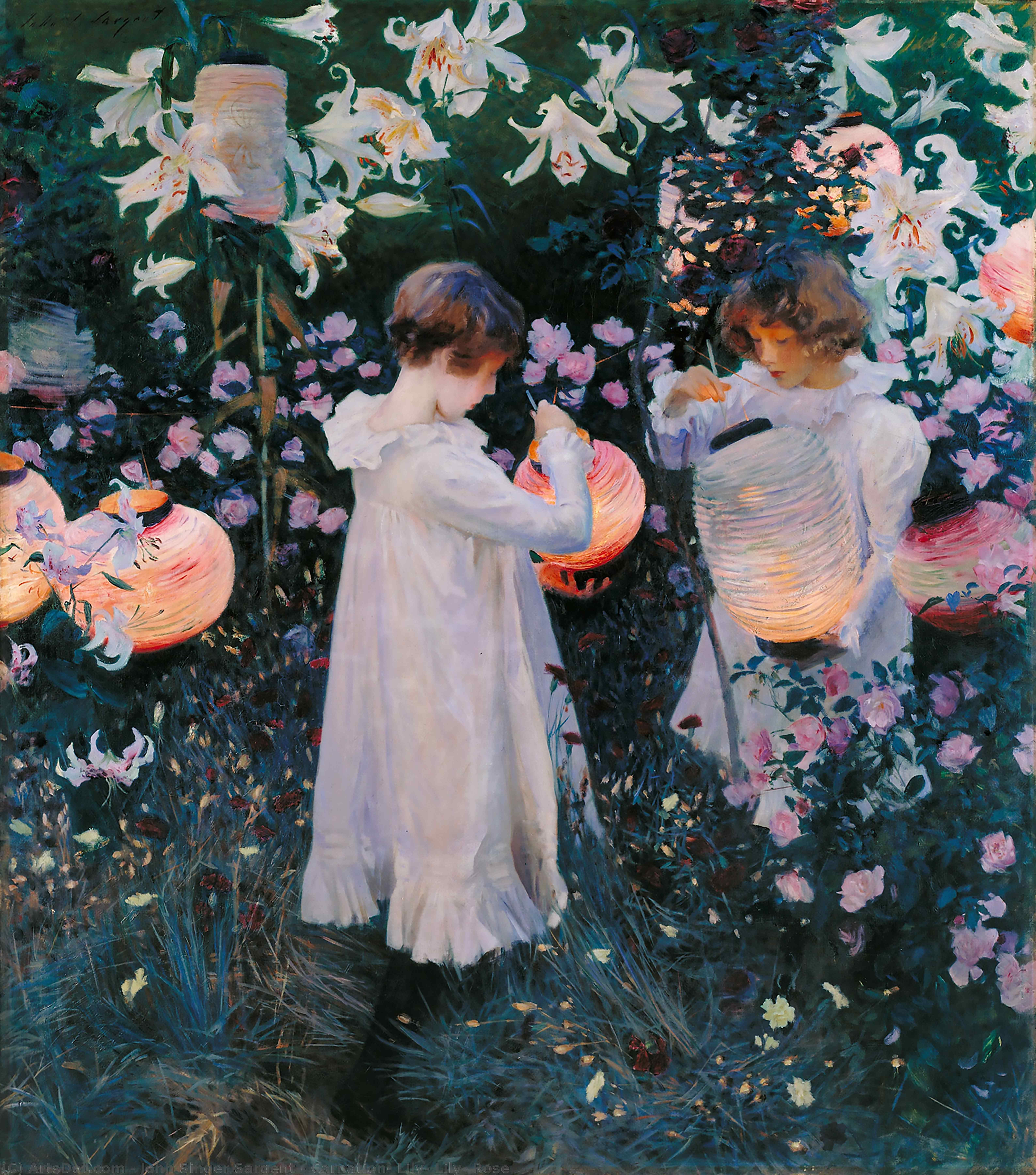
John Singer Sargent’s Carnation, Lily, Lily, Rose (1885-86) is a landmark achievement in late Impressionism, subtly infused with Symbolist undertones. More than just a depiction of two young girls in a garden, it's an atmospheric poem rendered in paint – a fleeting moment of childhood innocence and the tranquil beauty of dusk captured with remarkable sensitivity.
The Scene Unveiled: Dolly and Polly in Bloom
The painting portrays Dolly and Polly Barnard, daughters of illustrator Frederick Barnard and friends of Sargent, standing amidst a profusion of flowers at Farnham House in Broadway, Cotswolds, England. Dressed in pristine white dresses, they each hold illuminated Japanese-style lanterns, their soft glow partially illuminating their faces and creating an air of gentle mystery. The garden itself is a riot of color and texture, overflowing with carnations, lilies, and roses – the very flowers referenced in the painting’s evocative title.
Impressionistic Brushwork & Symbolist Echoes
Sargent masterfully blends en plein air Impressionistic techniques with subtle symbolic elements. He meticulously captured the quality of light at twilight, resulting in a distinctive purple hue that permeates the scene. The brushwork is loose and expressive, particularly evident in the foliage and flower petals, creating rich textures and a sense of movement. However, unlike pure Impressionism’s focus on objective reality, Sargent imbues the work with deeper meaning.
- The Lanterns: These aren't merely light sources; they symbolize hope, guidance, or perhaps the ephemeral nature of youth itself.
- Floral Symbolism: The abundance of flowers – carnations (love and fascination), lilies (purity and innocence), and roses (beauty and passion) – adds layers of meaning, representing growth, fleeting moments in time, and the beauty of life’s stages.
- Intentional Cropping: Sargent deliberately cropped the canvas, intensifying the intimacy of the scene and focusing attention on the figures and their immediate surroundings.
Historical Context & Artistic Influences
Painted after the controversy surrounding his Portrait of Madame X prompted his move from Paris to England, Carnation, Lily, Lily, Rose represents a period of artistic experimentation and personal reflection for Sargent. He drew inspiration from Robert Louis Stevenson’s poetry – particularly verses about childhood and gardens – as well as Japanese lanterns observed on the River Thames. The painting also reflects the Aesthetic Movement’s emphasis on beauty for its own sake, atmosphere, and evocative imagery.
Emotional Resonance & Lasting Legacy
The emotional impact of this masterpiece is profound. It evokes a sense of peace, nostalgia, and quiet contemplation. The obscured faces of the girls invite viewers to project their own memories and emotions onto the scene, creating a deeply personal connection. It’s a painting that lingers in the mind long after viewing.
Acquired by Tate Britain in 1887 – the first Sargent work to enter a public museum collection – it remains one of his most beloved masterpieces and a cornerstone of late 19th-century art. Its enduring appeal lies in its ability to transport viewers to a serene, dreamlike realm.
Bringing the Garden Home: Display & Collecting Recommendations
A reproduction of Carnation, Lily, Lily, Rose would be an exquisite addition to any collection, bringing a touch of Impressionistic beauty and tranquility. Its soft color palette and evocative imagery make it particularly well-suited for bedrooms, living rooms, or studies.
- Color Palette Pairing: Complement the painting’s delicate hues with lavender, sage green, cream, or muted rose tones in your interior design.
- Placement: Consider a prominent wall space where the artwork can become a focal point.
- Lighting: Soft, ambient lighting will enhance the painting's luminous quality and create a calming atmosphere.
- Style Compatibility: This piece complements both traditional and contemporary interiors, adding a touch of timeless elegance to any space. Its versatility makes it an ideal choice for a wide range of decorating styles.
Carnation, Lily, Lily, Rose is more than just a beautiful image; it’s an invitation to pause, reflect, and reconnect with the simple joys of life.