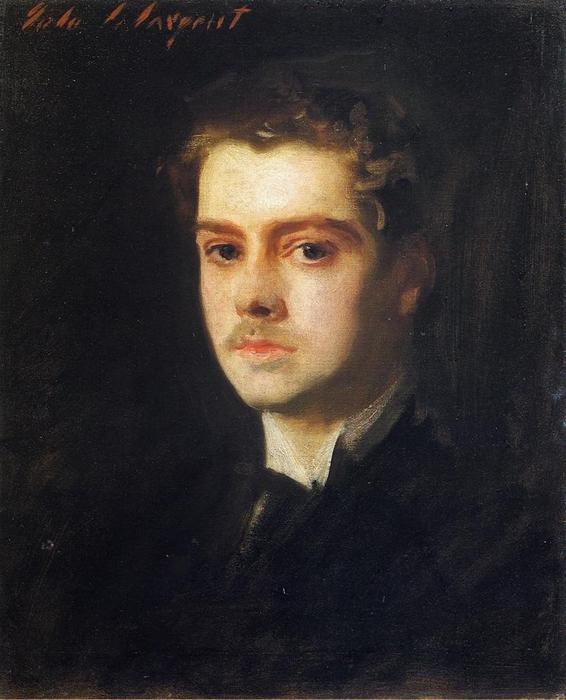
A captivating black and white portrait by John Singer Sargent from 1886 captures Charles Octavius Parsons in a dignified pose, reflecting the elegance of the Gilded Age. Discover this exquisite hand-painted reproduction and add timeless artistry to your collection.
Explore the art of John Singer Sargent! Discover iconic portraits like 'Madame X', Impressionistic landscapes & Gilded Age elegance from this American master.
A Portrait of Innovation: Examining John Singer Sargent’s Charles Octavius Parsons
This striking black and white portrait by John Singer Sargent, completed in 1886, transcends mere representation; it embodies the spirit of an era defined by audacious scientific breakthroughs and burgeoning social ambition. More than simply capturing the likeness of Charles Octavius Parsons – the ‘father of steam propulsion’ – Sargent’s masterpiece delves into the psychological landscape of a man who fundamentally reshaped the future of maritime transport and, arguably, industrial progress itself.
The Artist's Vision: Sargent’s Technique
John Singer Sargent possessed an unparalleled ability to distill emotion onto canvas through meticulous observation and masterful brushwork. His technique—characterized by loose, expressive strokes interwoven with painstaking detail—is immediately apparent in this portrait. Notice how he deftly renders the texture of Parsons’ suit, capturing the subtle sheen of his dark hair and skillfully sculpting shadows that illuminate his face. Sargent employed rapid, confident movements to convey dynamism, particularly evident in Parsons' hands – a deliberate choice reflecting the artist’s intention to portray not just appearance but also inner conviction. The strategic use of light is paramount; it highlights key facial features and establishes depth within the composition, guiding the viewer’s gaze and reinforcing the subject’s commanding presence.
A Moment Frozen in Time: Historical Context
Painted during Parsons' pivotal moment of invention – the development of the Turbinia, the world’s first steam turbine – Sargent’s portrait serves as a tangible emblem of the transformative energies swirling within Victorian society. This ambitious undertaking represented a radical departure from conventional propulsion methods and signaled the dawn of a new industrial age. The painting captures this intellectual fervor, reflecting Parsons' unwavering belief in technological advancement and his determination to propel Britain—and indeed the world—into an unprecedented era of innovation. Furthermore, the inclusion of two figures in the background subtly underscores the social milieu surrounding Parsons’ accomplishments – a gathering of influential minds engaged in shaping the contours of their time.
Symbolism Beneath Surface Elegance
Beyond its technical brilliance and historical significance lies a deeper layer of symbolic resonance. Sargent's restrained palette—primarily black and white—amplifies Parsons’ intellectual seriousness, mirroring the monochrome aesthetic favored by artists during this period as a means of conveying solemnity and contemplation. The direct gaze of Parsons confronts the viewer head-on, embodying confidence and self-assurance – qualities considered essential for leadership and innovation. These visual cues speak to Sargent's astute understanding of how art could communicate not only what is seen but also what is felt, cementing this portrait as a timeless testament to human ambition and intellectual prowess.
Emotional Resonance: Capturing the Essence of Genius
Ultimately, Sargent’s Charles Octavius Parsons succeeds in conveying an extraordinary emotional impact. It's more than just a portrait; it’s an encapsulation of intellect, determination, and visionary thinking—traits that continue to inspire admiration centuries later. The painting invites contemplation on the legacy of scientific progress and the enduring power of artistic representation to illuminate the human spirit. Its understated elegance speaks volumes about Sargent’s genius in capturing not merely form but also feeling, ensuring that Parsons' portrait remains a captivating centerpiece for collectors and interior designers alike.