A Portrait Steeped in Elegance: Exploring John Singer Sargent’s ‘Daisy, Princess of Pless’
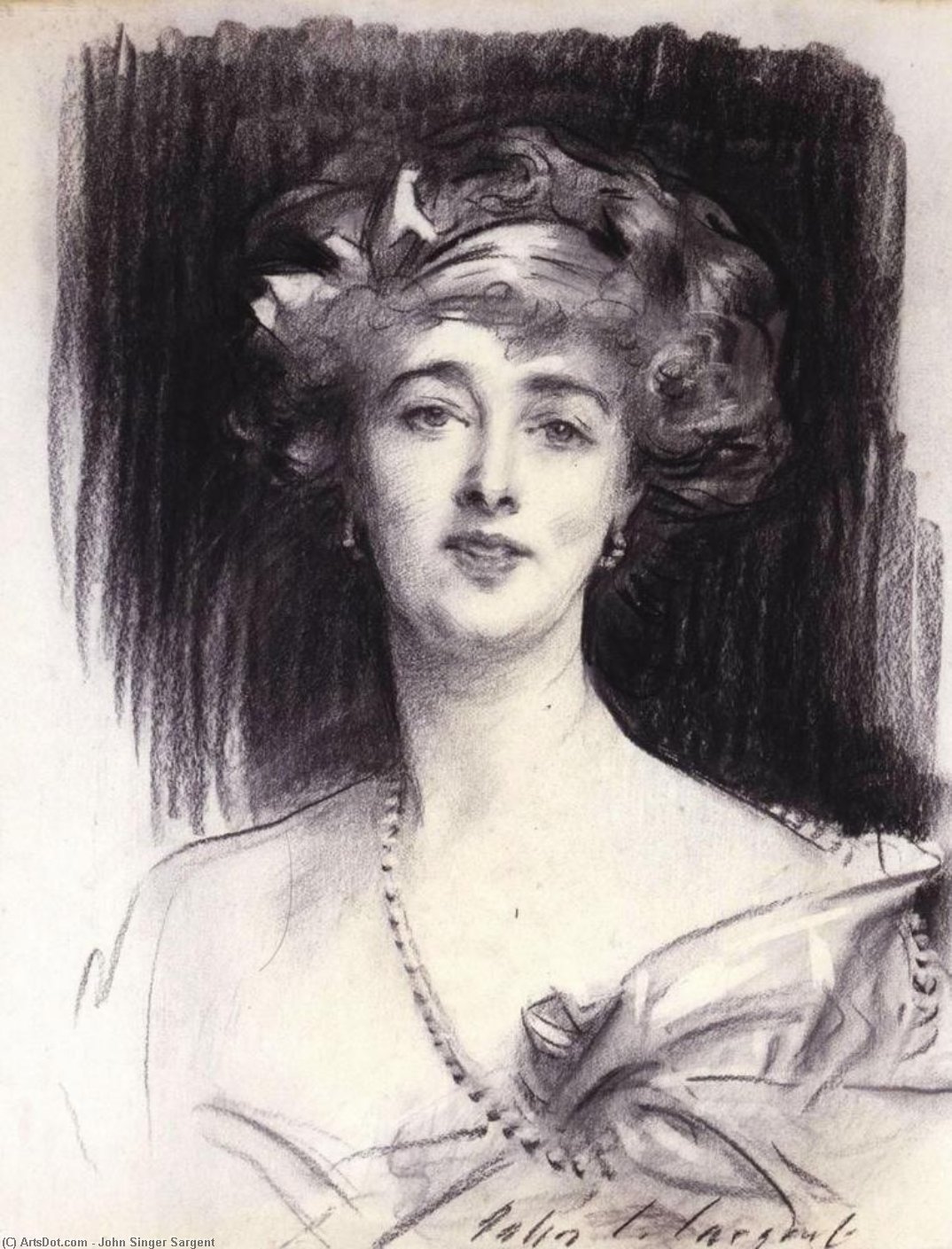
John Singer Sargent's “Daisy, Princess of Pless” transcends mere representation; it embodies the spirit of its era and whispers tales of refined beauty and fleeting moments captured with masterful precision. Completed around 1907, this charcoal drawing offers a glimpse into the opulent world of European aristocracy during the Belle Époque—a period characterized by artistic innovation alongside societal grandeur. Sargent’s reputation rested on his ability to distill emotion onto canvas, prioritizing immediacy and capturing the essence of his subjects rather than striving for photographic realism. This approach is vividly evident in “Daisy,” where the artist eschews meticulous detail in favor of expressive lines and tonal variations that convey a palpable sense of presence.
- Subject Matter & Context: The portrait depicts Daisy Warwick Astor, daughter of William Waldorf Astor III—a titan of American finance and one of New York’s wealthiest families. Her inclusion within the aristocratic circles of London speaks volumes about social status and familial legacy. Sargent skillfully portrays her as a symbol of feminine grace and sophistication, reflecting the prevailing ideals of beauty and refinement during his time.
- Style & Technique: Sargent's signature style—characterized by loose sketching and rapid tonal buildup—is brilliantly showcased in “Daisy.” He employs hatching and cross-hatching with remarkable dexterity to sculpt form from charcoal, creating a textured surface that mimics the subtle nuances of skin tone. The artist’s technique prioritizes capturing light and shadow, imbuing the portrait with an atmospheric quality reminiscent of Impressionism.
- Composition & Visual Elements: The composition centers on Daisy's head and shoulders, establishing a direct gaze that commands attention. The subtle inclusion of indistinct figures in the background reinforces the setting as an interior space—likely a salon or drawing room—further enhancing the sense of intimacy and sophistication. Notably, a floral arrangement adorning Daisy’s hair serves not merely as decorative embellishment but also symbolizes femininity and springtime – motifs frequently employed by artists during this period.
- Symbolism & Emotional Impact: Beyond its formal portraiture conventions, “Daisy” resonates with deeper symbolic meanings. Sargent's masterful rendering of Daisy’s expression conveys confidence and poise—qualities considered desirable in women of noble birth. The artwork invites contemplation on themes of beauty, grace, and the ephemeral nature of time, capturing a fleeting moment of serenity amidst the bustle of aristocratic life.
- Material & Reproduction Considerations: Executed on paper with charcoal, “Daisy” exemplifies Sargent’s commitment to capturing immediacy and conveying emotion. When commissioning a high-quality reproduction, collectors should prioritize archival paper stock and pigment binders that faithfully reproduce the original artwork's tonal range and textural qualities—essential elements in appreciating the artist’s genius.
Concluding Thoughts: “Daisy, Princess of Pless” stands as a testament to John Singer Sargent’s artistic prowess and his ability to encapsulate the spirit of an era. Its enduring appeal lies not only in its exquisite aesthetic qualities but also in its capacity to evoke feelings of elegance, sophistication, and quiet contemplation—a legacy that continues to inspire artists and collectors alike.