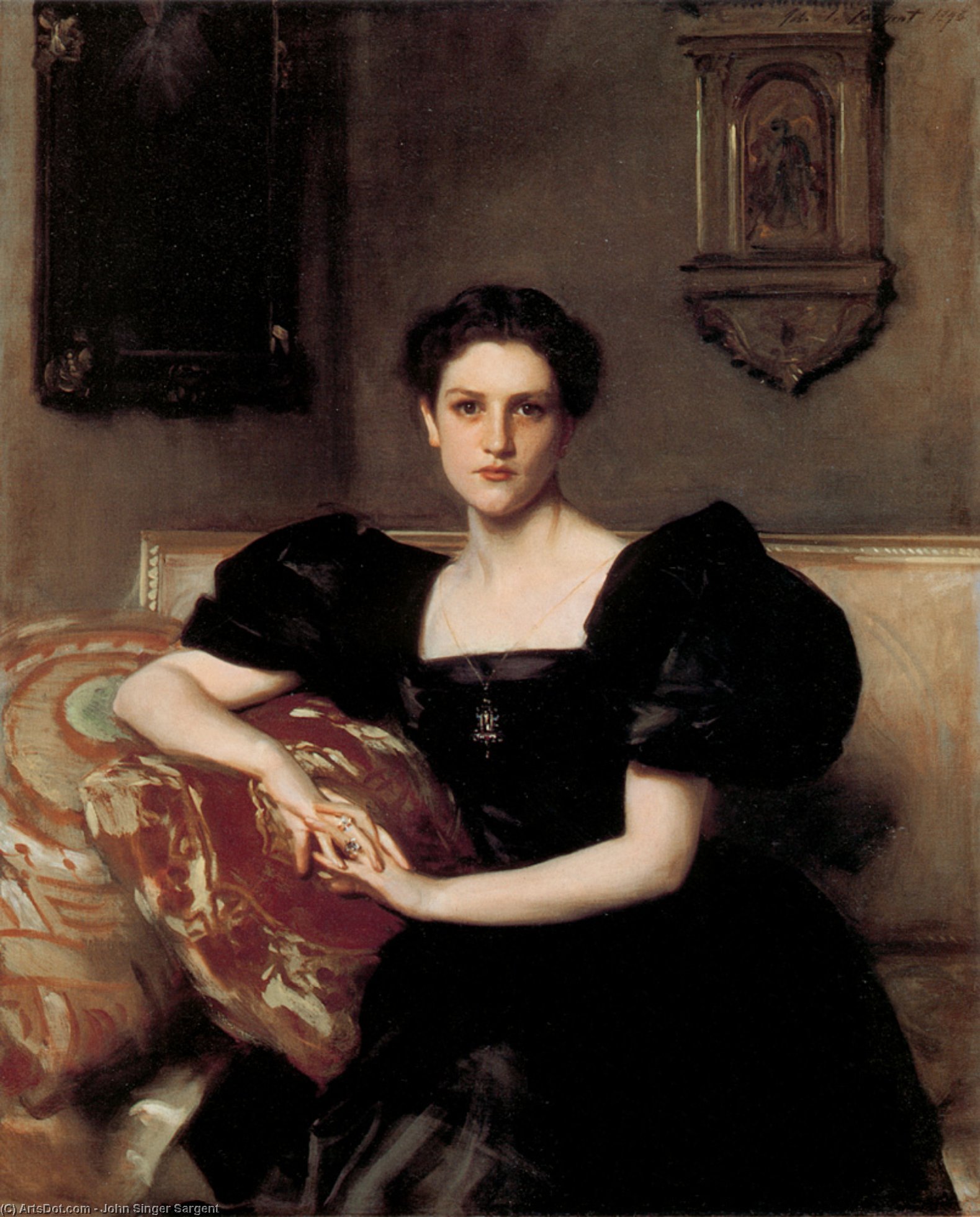
Capturing the serene elegance of the Gilded Age, John Singer Sargent's realistic portrait of Elizabeth Winthrop Chanler radiates Victorian splendor and invites you to explore this masterpiece of American art history.
Explore the art of John Singer Sargent! Discover iconic portraits like 'Madame X', Impressionistic landscapes & Gilded Age elegance from this American master.
A Portrait of Grace Amidst Victorian Splendor
Elizabeth Winthrop Chanler, painted in 1893 by John Singer Sargent, stands as an emblem of the American Gilded Age—a period defined by opulent wealth and refined social conventions. More than just a likeness of a woman seated on a couch, this oil on canvas masterpiece embodies Sargent’s mastery of realism and his profound understanding of capturing human emotion within meticulously crafted visual narratives. The painting resides in the Smithsonian American Art Museum's collection, ensuring its enduring presence as a cornerstone of American art history.
The Subject: Elizabeth Winthrop Chanler
Elizabeth Winthrop Chanler was a descendant of prominent New England families, embodying the social prestige and aristocratic ideals prevalent during Sargent’s era. Captured with remarkable sensitivity, Chanler exudes composure and grace as she rests on a plush couch, her hands clasped delicately before her. Sargent skillfully rendered her attire—a flowing black gown adorned with a luminous pearl necklace—reflecting the fashionable elegance of Victorian society. The subtle curve of her shoulders and the quiet stillness of her gaze convey an inner serenity that transcends mere physical representation.
Sargent’s Artistic Style: Realism Illuminated
John Singer Sargent's approach to portraiture was rooted in realism, yet elevated by a masterful command of technique and color. He eschewed theatrical poses or exaggerated expressions, prioritizing instead the honest portrayal of his subjects’ personalities. Sargent achieved this remarkable feat through painstaking observation—spending hours studying Chanler’s facial features, posture, and gestures before commencing the painting process. His brushstrokes were deliberate and controlled, layering pigments with precision to create textures that mimicked the materiality of fabrics and skin. The muted palette—dominated by shades of brown, gray, and ivory—served to illuminate Chanler's beauty rather than overwhelming it, aligning perfectly with Sargent’s aesthetic philosophy.
Historical Context: Victorian Society Reflected
The painting emerged from a milieu characterized by rigid social hierarchies and elaborate rituals of etiquette. The Victorian era witnessed an unprecedented accumulation of wealth among industrialists and financiers, fueling extravagant displays of luxury and fostering a culture obsessed with appearances. Sargent's depiction of Chanler reflects these societal values—emphasizing refinement, modesty, and familial lineage. Furthermore, the inclusion of a fireplace and two other figures subtly underscores the importance of domesticity and social connection within Victorian life.
Symbolism: Pearls and Quiet Contemplation
The pearl necklace worn by Elizabeth Winthrop Chanler carries symbolic significance beyond its aesthetic appeal. Pearls represent purity, innocence, and virtue—qualities considered essential for women in Victorian society. Their luminous sheen captures the light of inner beauty and reinforces Chanler’s dignified demeanor. Equally noteworthy is the woman's posture—seated calmly with her hands clasped—suggesting introspection and contemplation. This gesture embodies a desire for stillness amidst the frenetic pace of Victorian life, conveying a profound sense of peace and serenity.
Emotional Impact: A Moment Frozen in Time
Ultimately, Elizabeth Winthrop Chanler transcends mere visual representation; it evokes an emotional response in the viewer. Sargent’s masterful technique captures not only Chanler's physical likeness but also her inner spirit—a quiet grace that speaks to the timeless beauty of human dignity and composure. The painting serves as a poignant reminder of a bygone era—one defined by elegance, restraint, and an unwavering belief in moral virtue. It remains a testament to Sargent’s artistic genius and a captivating glimpse into the soul of Victorian America.