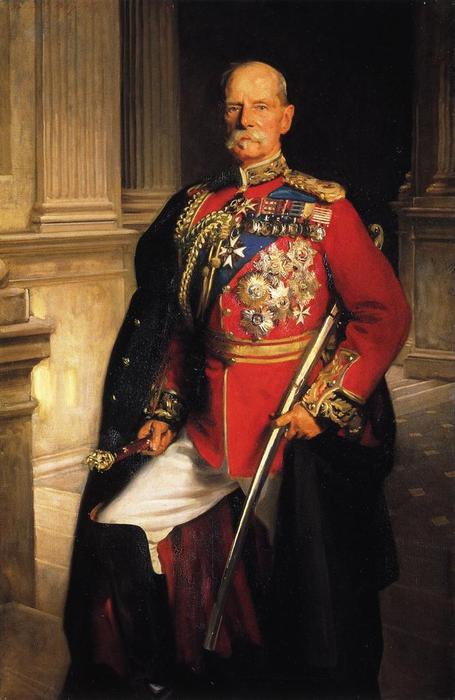
Field Marshal Earl Roberts, K.G., V.C.: A Portrait of Authority and Victorian Grandeur
John Singer Sargent’s 1906 portrait of Field Marshal Earl Roberts is more than simply a likeness; it's a carefully constructed embodiment of military power, dignity, and the burgeoning confidence of the Edwardian era. This oil on canvas masterpiece, currently residing in the National Portrait Gallery in London, exemplifies Sargent’s unparalleled ability to capture not just physical appearance but also the very essence of his subject – a man who commanded respect both on the battlefield and within the highest echelons of British society.
Roberts himself was a towering figure, literally and figuratively. As Commander-in-Chief of India, he had led British forces through significant campaigns, including the Boer War, earning him the Victoria Cross – a testament to his bravery and tactical acumen. Sargent skillfully renders this stature, presenting Roberts with a regal bearing that speaks volumes about his rank and experience. The artist’s bold use of color—rich browns, deep blues, and subtle greens—creates a sense of depth and solidity, reinforcing the subject's imposing presence. Notice particularly the masterful handling of light and shadow, sculpting Roberts’ form and emphasizing the strength in his posture.
Technical Brilliance: Sargent’s Signature Style
Sargent’s technique is immediately apparent in this work. The artist employs a layered approach to paint application, building up texture through meticulous brushwork – a hallmark of his style. This isn't merely a smooth representation; it’s a tactile experience, inviting the viewer to almost feel the weight of Roberts’ uniform and the solidity of his stance. The use of oil on canvas allows for an incredible level of detail, from the intricate stitching of his military attire to the subtle sheen of his polished boots. The artist's attention to detail extends beyond mere representation; it elevates the portrait into a study of material and form.
Furthermore, observe the way Sargent captures Roberts’ expression – a carefully controlled blend of authority and quiet contemplation. It is not an overtly aggressive or boastful gaze, but rather one that conveys experience, wisdom, and a certain reserve. This subtlety is crucial to the portrait's overall impact, demonstrating Sargent’s profound understanding of human psychology.
Symbolism and Context: A Reflection of an Era
The painting was created during a period of significant imperial expansion for Britain, and Roberts’ position as Commander-in-Chief reflected this power. The uniform itself is laden with symbolic meaning – the scarlet tunic, the gold braid, the sword – all emblems of military rank and authority. The inclusion of the umbrella, a detail often overlooked, adds another layer to the symbolism; it suggests both protection from the elements and perhaps, a subtle nod to Roberts’ status as a protector of the Empire.
Sargent's work, like much portraiture of the period, reflects the values of Victorian society – respect for tradition, duty, and military service. It is a testament to the enduring fascination with heroic figures and the desire to capture their essence on canvas. The painting’s placement within the National Portrait Gallery underscores its significance as a key work in Sargent's oeuvre and a valuable record of a pivotal figure in British history.
Owning a Piece of History
ArtsDot offers a meticulously crafted, hand-painted reproduction of Field Marshal Earl Roberts, K.G., V.C., allowing you to bring this iconic portrait into your own space. This is not simply a print; it’s a faithful recreation of Sargent's original masterpiece, executed with the same dedication and skill. Possessing this artwork offers a unique opportunity to connect with art history, appreciate the genius of John Singer Sargent, and celebrate the grandeur of the Edwardian era.