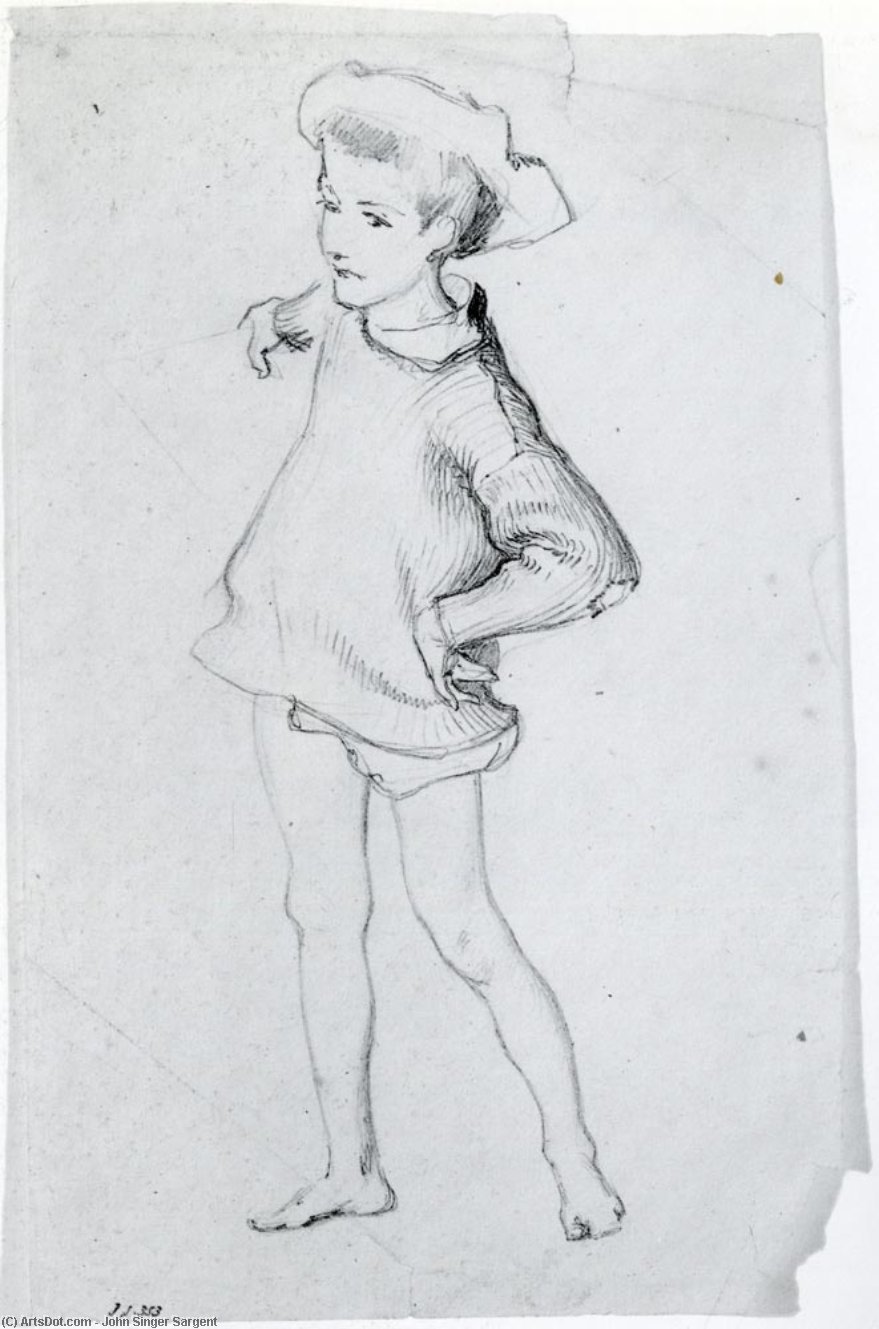
A Moment Captured in Graphite: The Soul of a Study
In the quiet intimacy of John Singer Sargent’s 1877 graphite sketch, Figure of a Child, we find ourselves peering into the very heartbeat of the creative process. Often recognized as a preparatory study for his larger, more vibrant work, The Oyster Gatherers of Cancale, this drawing offers an unfiltered glimpse into the artist's mind before the grander drama of oil and canvas takes hold. There is a profound, almost breathless immediacy in these lines; it is not merely a depiction of a young boy, but a record of a fleeting moment of observation. The subject sits in a pose that feels both candid and contemplative, his form emerging from the paper through a series of gestural, expressive strokes that bypass the need for rigid perfection to achieve something far more elusive: truth.
The composition is centered with a striking simplicity, focusing our gaze entirely on the youthful figure. Through the masterful use of varying line weights and delicate hatching, Sargent breathes volume into the boy’s limbs and torso. One can almost feel the weight of the child's posture and the soft texture of his skin through the rhythmic application of graphite. The lighting, appearing to descend from above and slightly to the side, casts subtle shadows that define the anatomy, creating a sense of three-dimensional presence that transcends the two-dimensional plane. It is this interplay of light and shadow—the chiaroscroll of a simple pencil—that lends the piece its enduring emotional resonance.
The Intersection of Realism and Impressionistic Spirit
While Sargent is globally celebrated as the preeminent portraitist of the Gilded Age, this particular work reveals his deep engagement with the burgeoning Impressionist movement. Though the technique remains rooted in a disciplined realism—evident in the anatomical accuracy of the boy's frame—the execution is decidedly loose and atmospheric. Rather than pursuing photographic precision, Sargent utilizes cross-hatching and organic shapes to suggest form and movement. This approach allows the viewer’s eye to complete the image, inviting a participatory experience that makes the drawing feel alive and breathing.
This stylistic duality serves as a bridge between the academic traditions of his training and the modern, sensory-focused art of his era. The sketch does not demand attention through spectacle; instead, it commands it through nuance. For the discerning collector or interior designer, this piece offers a sophisticated understatedness. It possesses a quiet strength that can anchor a room, providing a focal point that is intellectually stimulating yet visually soothing. The monochromatic palette and the aged, tactile quality of the paper evoke a sense of timelessness, making it an ideal selection for spaces that value historical depth and classical elegance.
A Legacy of Observation and Artistic Vision
To look upon this study is to understand the formative years of a master. Created during a productive summer in the Breton fishing town of Cancale, the work reflects Sargent’s intense period of plein-air observation. This was a time when he was honing his ability to capture the essence of light and life directly from nature. The boy in this sketch is more than just a model; he is a vessel for Sargent's exploration of form, texture, and the ephemeral nature of childhood innocence.
For those seeking to surround themselves with art that tells a story, Figure of a Child serves as an exquisite testament to the beauty of the unfinished. It celebrates the raw, the spontaneous, and the deeply human. Whether displayed in a private study or a grand gallery, a high-quality reproduction of this masterpiece brings with it the prestige of Sargent’s legacy and the intimate, whispered magic of a master at work.