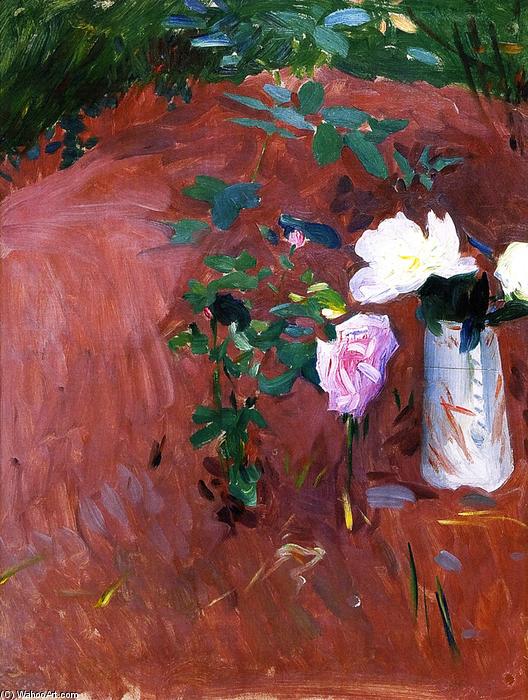
A serene garden scene bathed in light, captured by John Singer Sargent's masterful brushstrokes. Featuring vibrant pink and white flowers against earthy red clay dirt, this Impressionistic masterpiece embodies elegance and beauty.
A Moment Frozen in Time: Exploring John Singer Sargent’s Garden Sketch
The Garden Sketch by John Singer Sargent remains an enduring testament to Impressionism's ability to capture fleeting beauty and evoke profound emotion. Painted in 1890, this oil on canvas masterpiece resides within the Weatherspoon Art Museum’s impressive collection of American art—a place where visitors can immerse themselves in the legacy of Sargent’s artistic vision. More than just a depiction of a garden, it's an invitation to contemplate stillness and observe the subtle interplay between light and color, qualities that define Sargent’s signature style.
The Impressionistic Vision: Light and Color as Narrative
Sargent’s approach to painting departed significantly from academic conventions prevalent during his era. Rather than meticulously recreating a scene with precise detail—a hallmark of traditional art—he prioritized conveying the atmosphere and sensations experienced by the eye. This is brilliantly achieved in The Garden Sketch through a masterful manipulation of color palettes. Notice how Sargent utilizes warm reds and yellows to illuminate the terracotta soil, creating an earthy foundation for the vibrant blossoms dominating the foreground. These hues aren’t merely decorative; they actively contribute to the painting's narrative, suggesting warmth, vitality, and perhaps even the promise of summer days. The artist skillfully blends brushstrokes—a technique known as alla prima—allowing color to merge organically on the canvas, resulting in luminous effects that capture the ephemeral quality of sunlight filtering through foliage.
A Composition Steeped in Symbolism: Plants as Embodiments of Life
Beyond its technical brilliance, The Garden Sketch is rich in symbolic resonance. Sargent’s choice of flowers – predominantly pink and white blooms—holds significance beyond their aesthetic appeal. Flowers universally represent beauty, fragility, and renewal, mirroring themes frequently explored by Impressionist artists. Their placement within the garden setting reinforces this symbolism, suggesting an idealized vision of nature untouched by time or hardship. Furthermore, the inclusion of potted plants adds another layer of meaning. These containers serve as reminders of human intervention in the natural world—a deliberate contrast to the serene expanse of the garden itself. They subtly underscore the importance of cultivating beauty and appreciating the delicate balance between artifice and authenticity.
Historical Context: Sargent’s Place Within the Gilded Age
Painted during the height of the Gilded Age, The Garden Sketch reflects the prevailing social values of its time—a fascination with luxury, refinement, and idealized landscapes. Sargent himself was a celebrated portraitist, capturing the faces of prominent figures from society's elite circles. However, he also possessed an unwavering passion for plein air painting—working outdoors directly onto canvas—a practice championed by Impressionists like Claude Monet and Pierre-Auguste Renoir. This commitment to capturing natural light and color aligns perfectly with the artistic spirit of the era, demonstrating Sargent’s desire to transcend mere social status and engage in a deeper exploration of human experience.
Emotional Resonance: Capturing Tranquility and Beauty
Ultimately, The Garden Sketch succeeds in transporting viewers to a moment of profound tranquility. Its muted palette—dominated by earthy tones punctuated by bursts of floral color—promotes contemplation and invites us to savor the simple pleasures of observation. Sargent’s meticulous attention to detail—particularly his rendering of light and shadow—creates an illusion of depth that draws us into the garden scene, fostering a sense of immersion and wonder. Like many Impressionist paintings, The Garden Sketch lingers in the memory long after viewing, serving as a reminder of the transformative power of art to elevate our senses and enrich our understanding of beauty.