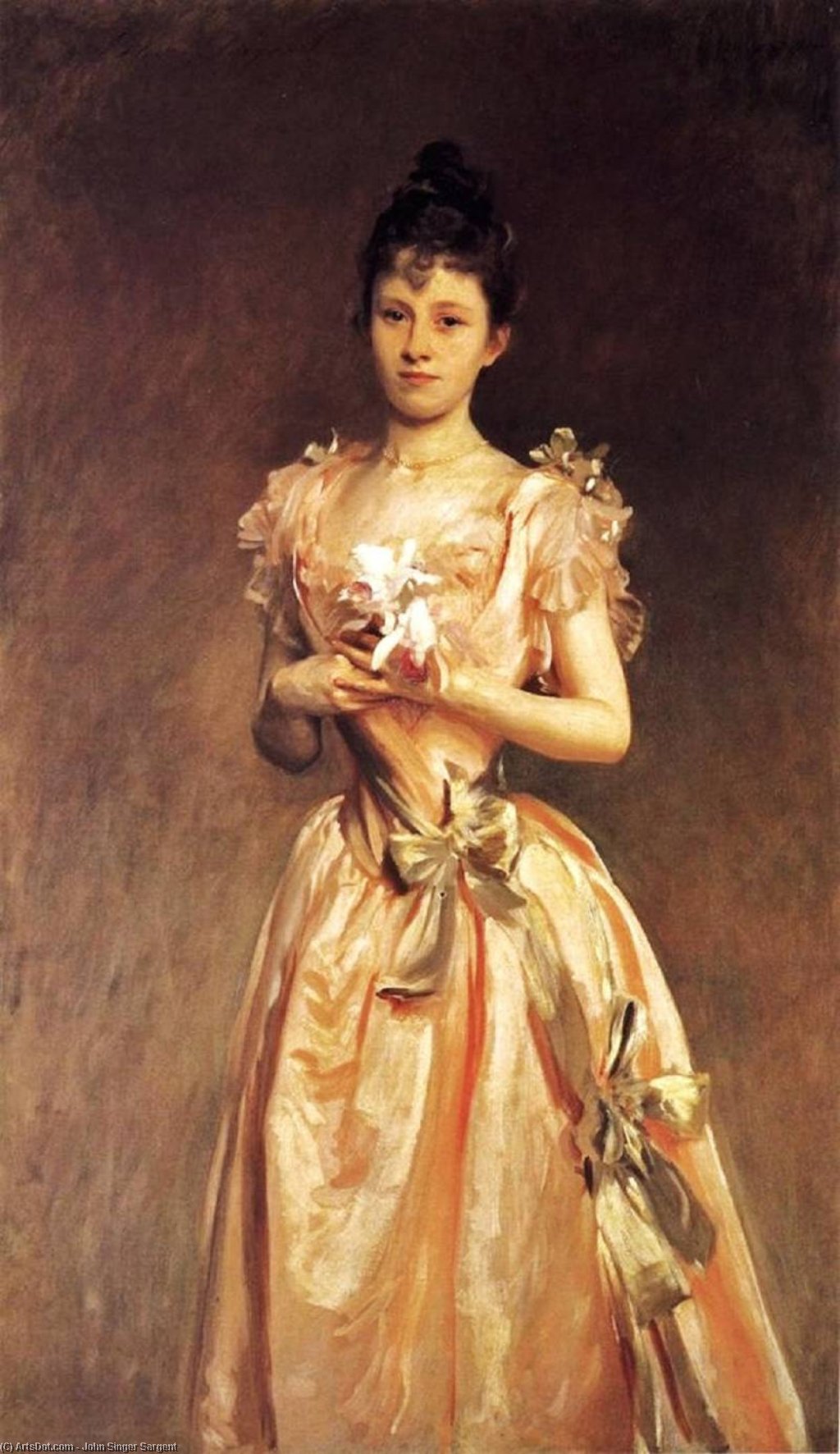
Grace Woodhouse: A Portrait of Refined Elegance by John Singer Sargent
John Singer Sargent’s “Grace Woodhouse,” completed in 1890, stands as a quintessential emblem of the Gilded Age – an era defined by opulent wealth and aristocratic sensibilities. Currently residing at the National Gallery of Art in Washington D.C., this oil on canvas painting transcends mere representation; it captures a moment of serene poise and embodies Sargent’s masterful ability to distill emotion into visual form.
Subject Matter & Composition: The portrait depicts Grace Woodhouse, a young woman radiating grace and composure. Sargent skillfully positioned her figure from the knees up, allowing for an intimate gaze toward the viewer—a hallmark of his approach to portraiture. Her posture exudes confidence, subtly angled to our left, creating a dynamic interplay between stillness and movement.
Style & Technique: Sargent’s signature Impressionistic style is evident in “Grace Woodhouse.” Loose brushstrokes imbue the canvas with luminosity and texture, capturing the subtle nuances of light and shadow. The artist employed glazing techniques—applying thin layers of translucent color over underlying pigments—to achieve remarkable depth and vibrancy. This meticulous layering contributes to the painting’s ethereal quality.
Historical Context: Painted during Sargent’s prolific period in Paris, “Grace Woodhouse” reflects the artistic fervor of its time. The Impressionists were challenging academic conventions, prioritizing subjective experience and capturing fleeting moments of beauty. Sargent embraced this spirit, elevating portraiture beyond mere likeness to convey psychological insight.
Symbolism & Emotional Impact: Beyond its aesthetic merits, “Grace Woodhouse” resonates with symbolic significance. The woman’s attire—a peach satin gown adorned with delicate floral patterns and embellished with a pearl necklace—represents wealth and refinement. Her flowers symbolize beauty and innocence, mirroring her youthful spirit. Sargent's masterful use of color – particularly the peach hue dominating the dress – evokes feelings of warmth and tranquility.
Further Exploration: To appreciate “Grace Woodhouse” fully, consider comparing it to other portraits by Sargent, such as “Madame X” and “Mrs. Joseph Chamberlain.” These works showcase his unwavering dedication to capturing the essence of his subjects—a legacy that continues to inspire artists and collectors alike.