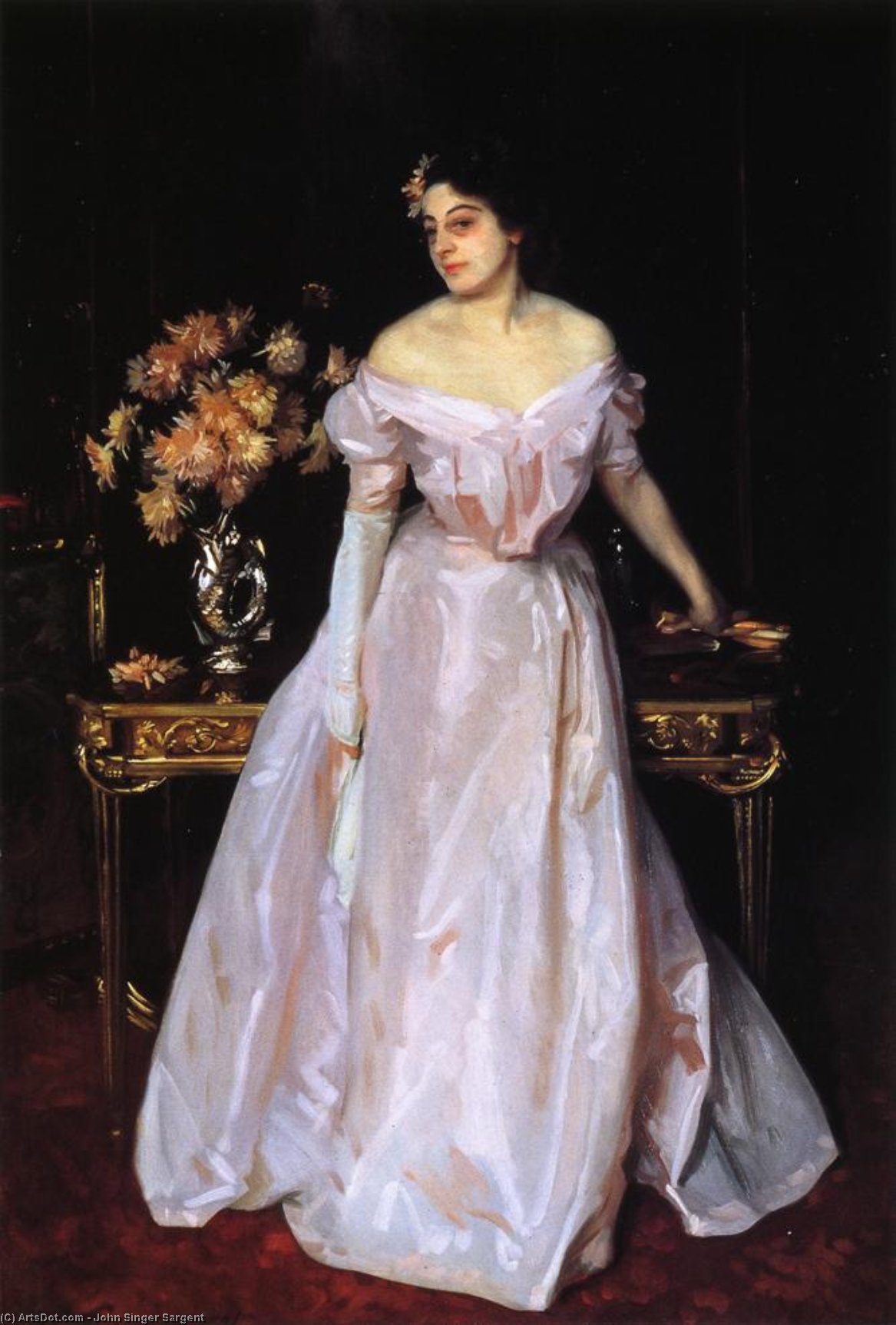
A Moment Frozen in Time: John Singer Sargent’s “Hylda, Daughter of Asher and Mrs. Wertheimer”
John Singer Sargent's "Hylda, Daughter of Asher and Mrs. Wertheimer," painted in 1901, isn’t merely a portrait; it’s a carefully constructed tableau of youthful grace and quiet contemplation. This oil on canvas, currently residing within the hallowed halls of the Tate Gallery in London, offers a rare glimpse into the artist's masterful ability to capture not just likeness but also an elusive sense of inner life. The painting immediately draws the viewer in with its muted palette – soft pinks, creams, and subtle greens – creating an atmosphere of intimacy that feels remarkably modern despite being rooted firmly in the opulent world of the early 20th century.
Sargent’s technique is a testament to his dedication to realism, yet infused with a distinctly subjective approach. He eschews harsh outlines or dramatic lighting, instead favoring delicate brushstrokes and subtle gradations of color that mimic the play of light on skin and fabric. Notice how he renders Hylda's dress – a simple pink confection – not as a static object but as a shimmering surface reflecting the ambient light. The flowers in her hand aren’t simply decorative; they are carefully chosen to contribute to the overall composition, their delicate hues echoing those within the room and adding a touch of natural beauty to the scene.
The Portraiture of an Age: Sargent and the Gilded Age
To fully appreciate “Hylda,” it’s crucial to understand the context in which it was created – the height of the American Gilded Age. Sargent, having established himself as a leading portrait painter in London and Paris, was deeply embedded within this world of wealth, privilege, and social maneuvering. His subjects were invariably members of the elite, and his portraits served not just as records of appearance but also as subtle commentaries on status, power, and societal expectations. “Hylda” is no exception; it’s a study in refined elegance, reflecting the values and aesthetics of its time.
The inclusion of Hylda's parents, subtly suggested in the background, speaks volumes about the importance of lineage and social standing within this era. Sargent skillfully integrates them into the composition without disrupting the central focus on his young subject, highlighting the interconnectedness of family and social circles. The painting is a visual embodiment of the carefully constructed narratives that defined life for the wealthy during this period.
Symbolism in Serenity: Flowers, Light, and the Unspoken
Beyond its technical brilliance, “Hylda” is rich with symbolic detail. The flowers themselves – lilies, roses, and forget-me-nots – carry layers of meaning. Lilies often represent purity and innocence, while roses symbolize love and beauty. The inclusion of forget-me-nots suggests a wistful remembrance or a cherished memory. Furthermore, the soft, diffused light bathing Hylda’s face is deliberately gentle, creating an aura of serenity and vulnerability. It's as if Sargent has captured a fleeting moment of quiet contemplation – a pause in the relentless pursuit of social perfection.
The composition itself contributes to this sense of introspection. Hylda sits on a simple bench, seemingly detached from the surrounding world, lost in her own thoughts. Her expression is enigmatic; she’s not smiling overtly, but there's a subtle hint of melancholy in her eyes – a suggestion that beneath the surface of youthful beauty and grace lies a deeper complexity.
A Legacy Preserved: Reproductions and Artistic Inspiration
Today, “Hylda, Daughter of Asher and Mrs. Wertheimer” stands as a testament to John Singer Sargent’s enduring legacy. Its exquisite detail and evocative atmosphere continue to captivate viewers more than a century after its creation. ArtsDot.com offers meticulously crafted reproductions that faithfully capture the painting's nuances, allowing art lovers to experience its beauty firsthand. These high-quality prints are perfect for adorning walls in homes or offices, bringing a touch of timeless elegance and artistic sophistication to any space.
For those seeking to delve deeper into Sargent’s life and work, we encourage you to explore the resources provided – including links to the Tate Gallery website and Wikipedia. And if you're looking for a truly unique piece of art history, consider acquiring a reproduction of “Hylda” today. It’s more than just an image; it’s a window into a bygone era, a celebration of beauty, and a poignant reminder of the enduring power of portraiture.