A Moment of Serene Reflection: John Singer Sargent’s “Interior of a Bath House”
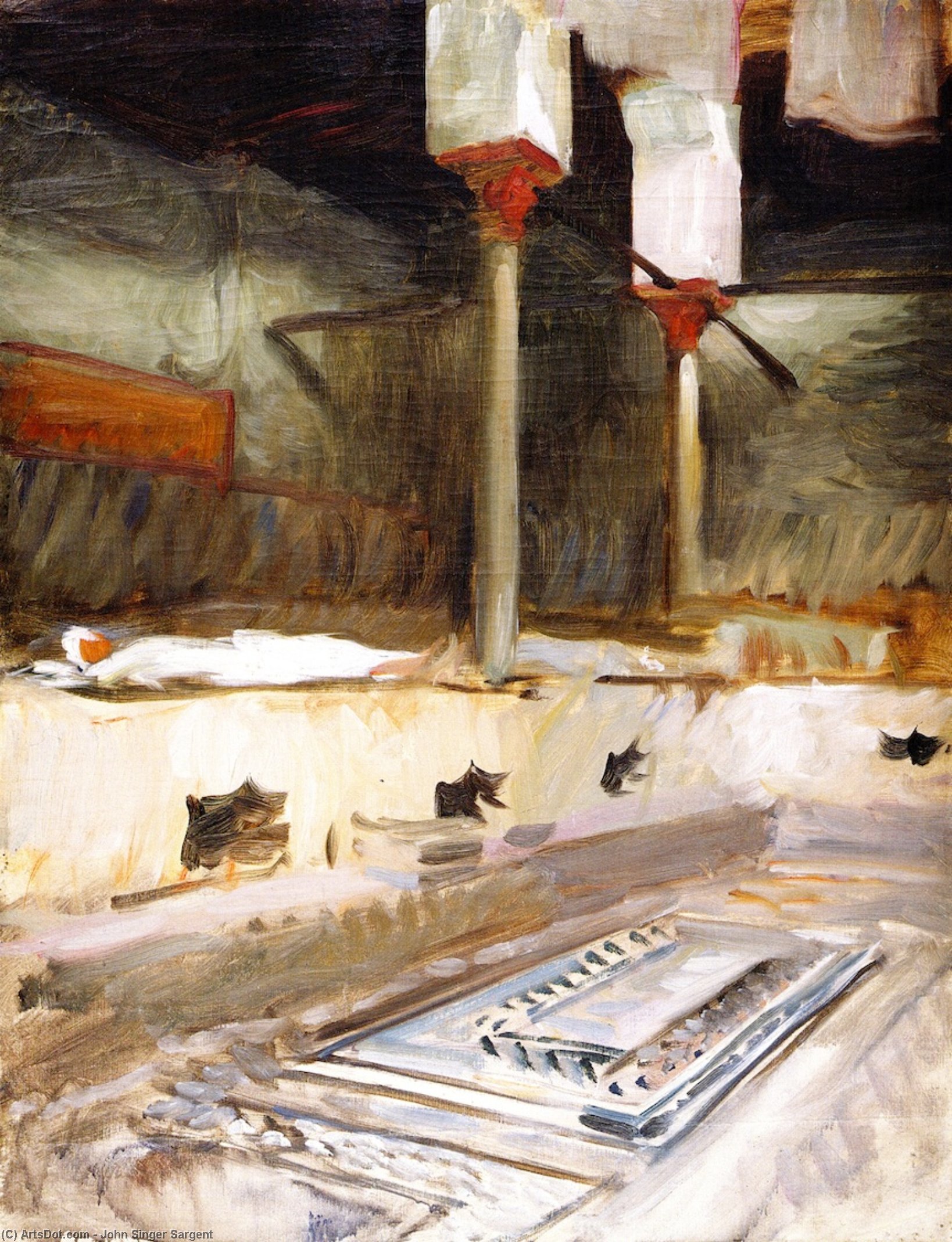
John Singer Sargent's "Interior of a Bath House," painted in 1891, is more than just a depiction of an empty room; it’s a masterclass in capturing atmosphere and evoking a profound sense of tranquility. Housed within the prestigious Fogg Art Museum in Cambridge, this oil on canvas invites us into a space stripped bare of human presence, yet brimming with subtle details that speak volumes about light, composition, and the very nature of contemplation. Sargent's ability to transform a seemingly simple scene – a bath house rendered vacant – into a powerfully evocative work is a testament to his exceptional artistic skill.
The painting’s core lies in its deliberate emptiness. The large white structure dominates the space, radiating an almost ethereal quality. This absence of figures isn't a flaw; it’s a calculated choice that forces the viewer to engage with the architecture itself and the play of light. It creates a stage upon which the artist can explore texture, color, and movement without distraction, fostering a feeling of quiet solitude – a rare and precious commodity in Sargent’s oeuvre.
The Language of Light and Birdsong
Sargent's manipulation of light is undeniably central to the painting’s impact. He employs a soft, diffused illumination that washes over the walls and floor, creating an atmosphere of warmth and comfort. This technique, characteristic of Impressionism yet executed with Sargent’s precise hand, avoids harsh shadows and instead fosters a sense of gentle realism. The muted color palette – predominantly whites, creams, and subtle earth tones – further enhances this tranquil effect, contributing to the overall feeling of serenity.
Adding another layer of complexity are the carefully placed birds and cats. Several birds, some perched on the walls, others in flight, introduce a dynamic element into the stillness. Their presence isn’t merely decorative; they subtly animate the scene, suggesting a life beyond the immediate space. The two cats – one near the left side, another closer to the center – add an unexpected touch of domesticity and warmth, grounding the composition while simultaneously reinforcing the sense of quiet observation.
Technique and Context: A Gilded Age Masterpiece
Sargent’s technical skill is evident in every brushstroke. His meticulous attention to detail—the textures of the walls, the delicate feathers of the birds, the soft fur of the cats—adds a remarkable depth and realism to the scene. The painting showcases his mastery of oil paint, allowing him to build up layers of color and texture with incredible precision. This level of control is particularly noticeable in the way he renders light reflecting off surfaces, creating an illusion of three-dimensionality.
Created during the height of the Gilded Age, “Interior of a Bath House” reflects Sargent’s position as one of the era's leading portrait painters. While known for his portraits of wealthy patrons, this work demonstrates his broader artistic interests and his ability to capture everyday scenes with elegance and sophistication. As John Singer Sargent himself was noted, "his oeuvre documents worldwide travel," and this painting exemplifies his keen eye for detail and his ability to translate complex visual experiences onto canvas. It’s a poignant reminder that even in the most seemingly simple of settings, profound artistic expression can be found.
Bringing “Interior of a Bath House” into Your Space
A hand-painted reproduction of "Interior of a Bath House" offers a unique opportunity to bring this serene masterpiece into your home or office. The meticulous detail and masterful use of light and color will transform any space, creating an atmosphere of quiet contemplation and understated elegance. Whether you are an art collector, an interior designer seeking to evoke tranquility, or simply someone who appreciates beauty, this reproduction is a timeless addition to any collection.