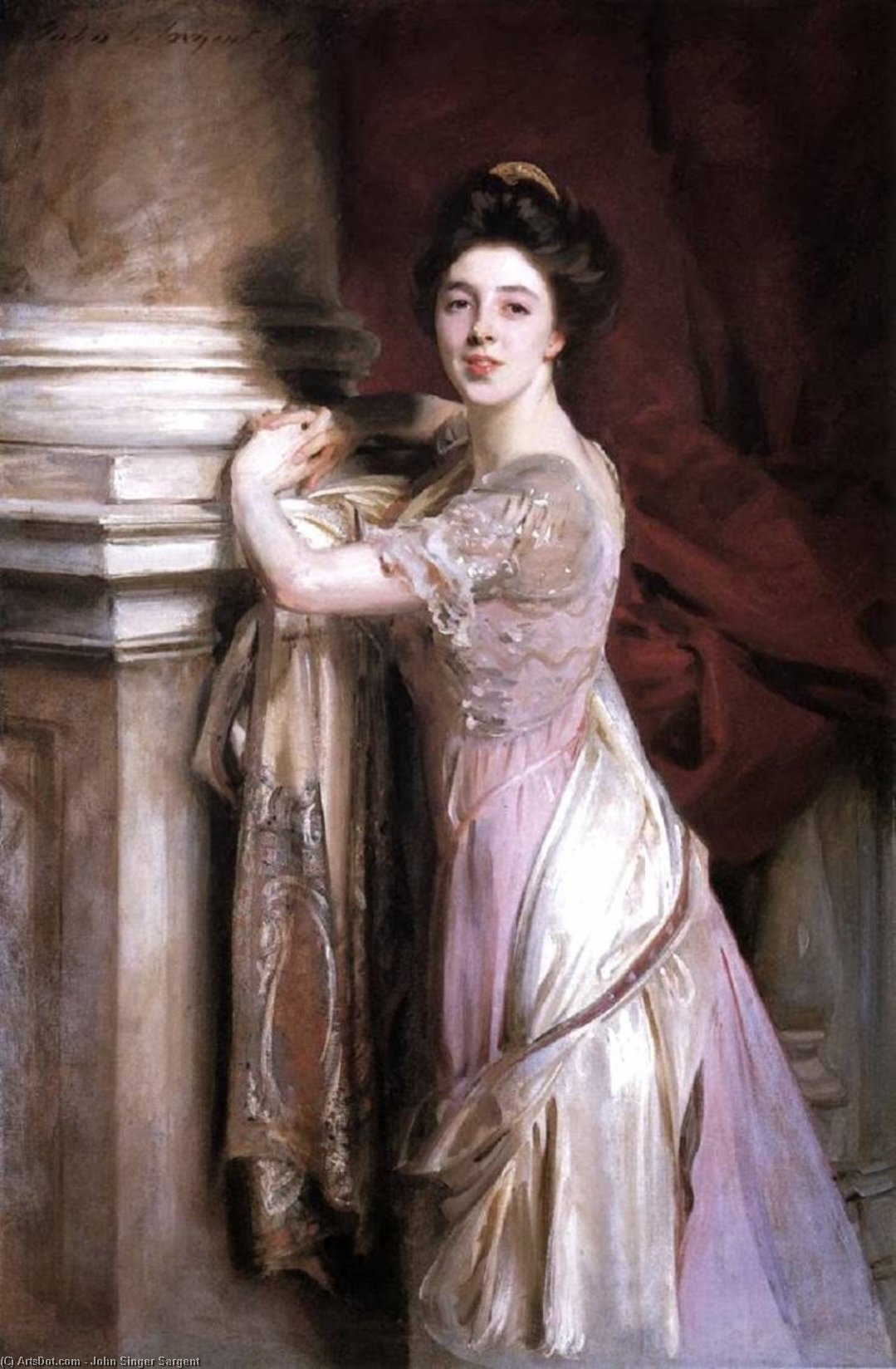
John Singer Sargent's Izme Vickers, 1907 – A captivating portrait by the renowned American artist depicting Izmé Vickers in a pink dress and white sash against a neoclassical backdrop, showcasing meticulous detail and capturing the elegance of Belle Époque.
Explore the art of John Singer Sargent! Discover iconic portraits like 'Madame X', Impressionistic landscapes & Gilded Age elegance from this American master.
John Singer Sargent’s Izme Vickers, 1907
The painting “Izme Vickers” by John Singer Sargent stands as an exemplar of the artist's signature style—a masterful blend of realism and psychological insight that captures a fleeting moment of aristocratic grace. Executed in 1907 during his prolific Parisian period, this portrait transcends mere representation; it’s an immersive experience into the opulent world of Belle Époque society and a testament to Sargent’s unparalleled ability to convey emotion through visual language.
Subject Matter and Composition
At its core lies Izmé Vickers, a young woman radiating confidence and poise as she stands beside a pillar adorned with intricate carvings. Sargent skillfully employs a pyramidal composition, anchoring the figure centrally while subtly directing the viewer's gaze upwards towards the pillar’s apex. Two elegant dogs flank Vickers, adding warmth and domesticity to the scene—a deliberate choice reflecting the Victorian ideals of family life prevalent at the time. A handbag rests on the floor below, providing a grounding element that balances the upward movement of the composition. The artist’s meticulous attention to detail extends beyond the subject herself; the pillar's ornamentation and the textures of the fabrics contribute significantly to the painting’s overall atmosphere.
Style and Technique: Sargent’s Impressionistic Realism
Sargent’s approach defies easy categorization, embodying what critics termed “impressionistic realism.” He eschewed traditional academic conventions—such as harsh outlines and meticulous blending—favoring instead a looser brushstroke technique that captures the immediacy of observation. Layers of translucent glazes imbue the canvas with luminosity, mimicking the way light refracts through air and illuminates surfaces. Sargent’s masterful use of color is particularly noteworthy; he employs subtle tonal variations to sculpt form and create depth, subtly hinting at the contours beneath the surface. The palette leans towards muted hues—primarily pinks and creams—creating a serene backdrop that enhances Vickers's beauty and reinforces the painting’s sense of tranquility.
Historical Context and Symbolism
Painted during the height of Sargent’s artistic career, “Izme Vickers” reflects the broader cultural landscape of Edwardian England. The portrait speaks to the fascination with aristocratic families and their lifestyles—a preoccupation that fueled countless commissions during this era. Vickers herself embodies ideals of femininity and refinement—characteristics valued by Victorian society. Beyond these social considerations, Sargent incorporates symbolic elements into the composition. The pillar represents stability and grandeur, mirroring Vickers’s inner strength and composure. The dogs symbolize loyalty and companionship, reinforcing the painting's theme of domestic harmony. Furthermore, the careful positioning of the figures contributes to a narrative arc that suggests an unspoken connection between subject and sitter—a hallmark of Sargent’s psychological portraiture.
Emotional Impact and Legacy
“Izme Vickers” continues to captivate viewers with its understated elegance and profound emotional resonance. Sargent's ability to distill complex psychological states into visual form is remarkable, conveying a sense of serenity and inner grace that transcends time. The painting serves as an enduring reminder of the artist’s genius—a testament to his unwavering commitment to capturing the essence of human experience through masterful technique and evocative imagery. Its influence can be seen in subsequent portraiture traditions, cementing Sargent's place among the most celebrated artists of his generation.