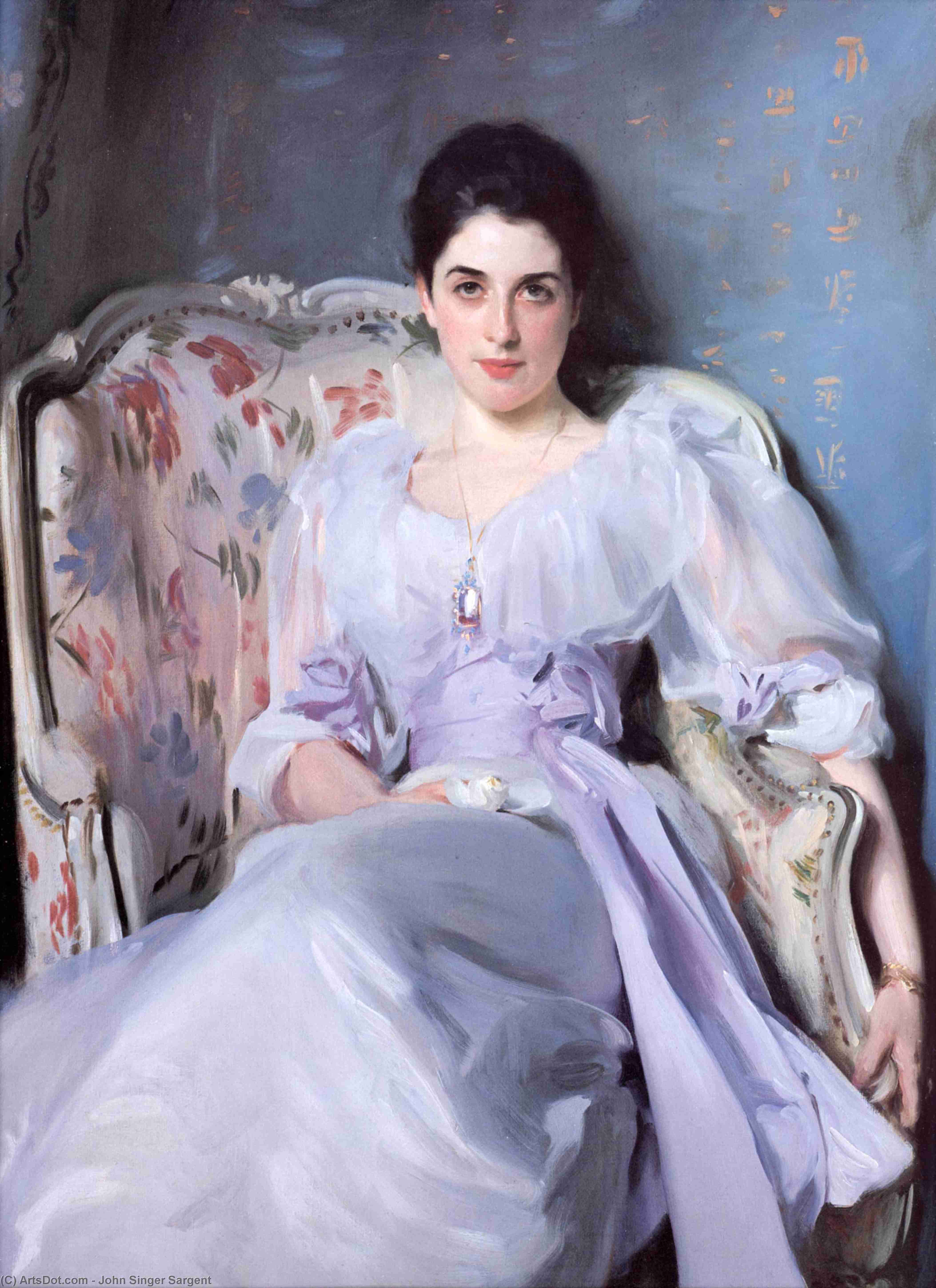
A Portrait of Edwardian Grace: John Singer Sargent’s Lady Agnew of Lochnaw
- The Subject: John Singer Sargent's “Lady Agnew of Lochnaw” (1892-93) is more than just a portrait; it’s a snapshot of a society on the cusp of change. The sitter, Gertrude Vernon, later Lady Agnew, embodies the poised elegance and burgeoning social influence of Edwardian England. Commissioned by her husband, Andrew Noel Agnew, this painting captures her at the height of her beauty and youth – a testament to Sargent’s ability to immortalize not just physical likeness but also the spirit of his subjects.
- Sargent's Technique: Sargent was renowned for his rapid brushwork and masterful use of light. In “Lady Agnew,” he employs a loose, almost impressionistic technique, particularly evident in the rendering of the flowing fabrics and the subtle gradations of color. This approach creates a sense of movement and immediacy, drawing the viewer into the scene with remarkable realism. The artist’s ability to capture fleeting moments – Gertrude's direct gaze, her relaxed posture – is a hallmark of his style.
Historical Context: A Rising Star
Painted in 1892-93, “Lady Agnew of Lochnaw” emerged during a period of significant social and artistic transformation. Sargent was rapidly establishing himself as the leading portraitist of his time, capturing the essence of Edwardian society – its wealth, ambition, and increasingly liberal attitudes. The painting’s exhibition at the Royal Academy in 1898 catapulted him to international fame, earning him comparisons to Sir Anthony Van Dyck, a testament to Sargent's skill and influence. This commission was pivotal not only for Sargent’s career but also for Lady Agnew herself, establishing her as a prominent figure within London society.
Symbolism and Composition
- The Direct Gaze: Gertrude Vernon’s direct gaze is arguably the most striking element of the portrait. It conveys confidence, intelligence, and an almost defiant spirit – qualities that were increasingly valued in women during this era. This bold approach was a departure from the more passive poses often favored in earlier portraits.
- Color and Texture: The use of lilac and purple hues within the dress creates a sense of luxury and refinement, reflecting the Agnew family’s wealth and status. Sargent's skillful manipulation of texture – particularly in depicting the fabric – adds to the painting’s tactile quality, inviting the viewer to almost reach out and touch it.
- The Setting: The simple background—a chair, a couch, and two cups—contributes to the portrait's intimacy. It suggests a private moment of reflection or conversation, further enhancing the sense of connection between the viewer and the subject.
Legacy and Collection
"Lady Agnew of Lochnaw" remains a captivating work of art, celebrated for its technical brilliance and psychological insight. Currently residing in the collection of the National Gallery of Scotland, this painting exemplifies Sargent’s genius and his ability to capture the spirit of an age. A hand-painted reproduction offers a unique opportunity to experience the beauty and power of this iconic portrait firsthand.