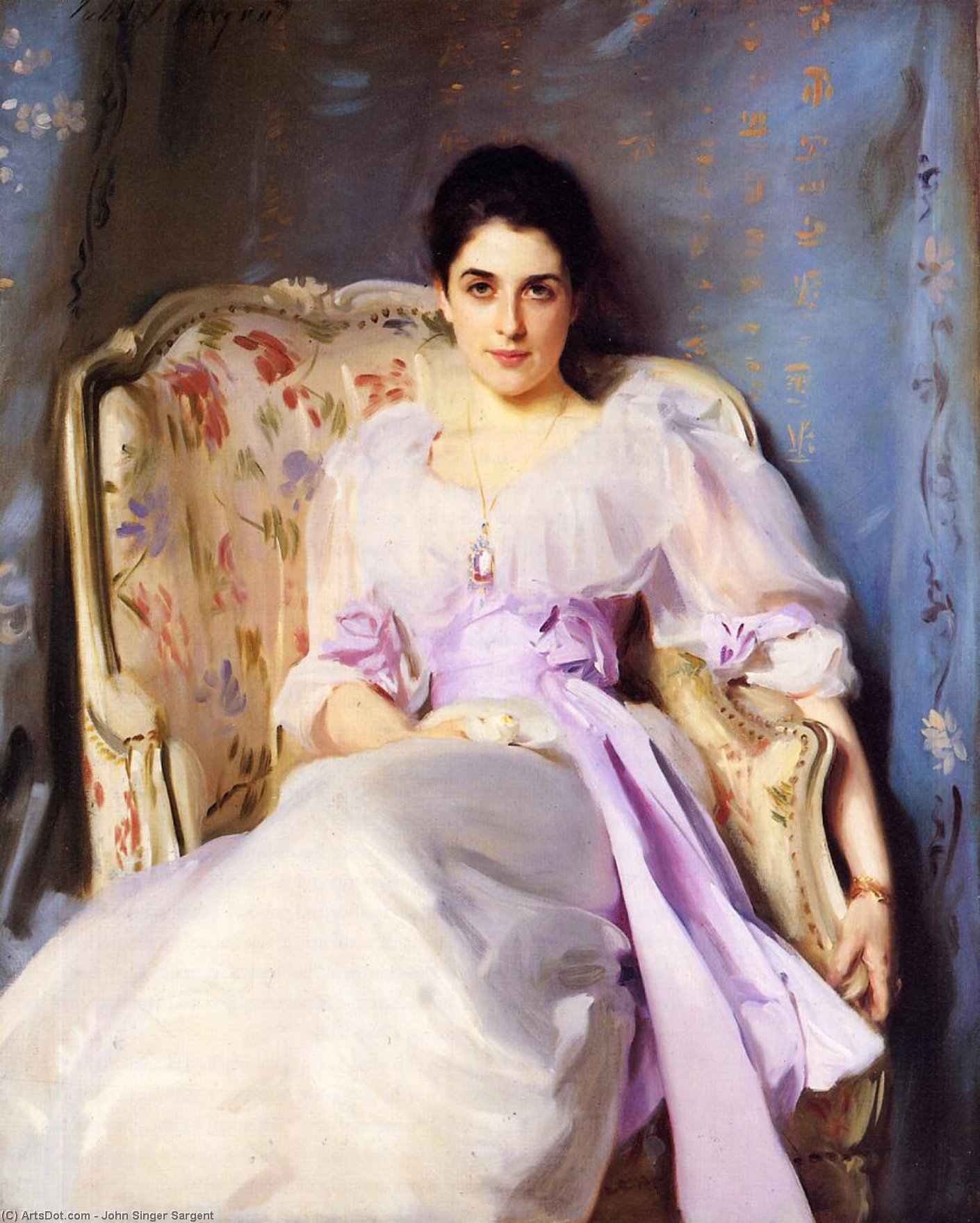
John Singer Sargent’s exquisite Lady Agnew of Lochnaw captures the serene beauty of Victorian elegance through masterful brushstrokes and luminous color palettes. This portrait showcases a woman in opulent purple attire, radiating grace amidst intricate floral ornamentation—a timeless masterpiece to adorn your walls.
A Portrait Steeped in Refinement: Lady Agnew of Lochnaw by John Singer Sargent
- Subject Matter: This captivating portrait depicts Lady Agnew of Lochnaw, a prominent Scottish socialite and philanthropist. Her serene gaze directs the viewer’s attention, conveying an aura of composure and dignity – qualities characteristic of Sargent's favored subjects.
- Style & Technique: Sargent’s masterful brushwork exemplifies Impressionistic tendencies while retaining a meticulous realism. He skillfully captures the subtle nuances of light and shadow, creating an illusionistic depth that draws the eye into Lady Agnew’s presence. The artist employs glazing techniques—thin layers of translucent paint applied over underlying colors—to achieve luminous effects and enhance the richness of tonal variations.
- Historical Context: Painted in 1893 during Sargent's prolific Parisian period, “Lady Agnew” reflects the opulent tastes and social conventions of the Belle Époque. The painting captures a moment frozen in time—a woman seated comfortably in her chair, embodying the idealized femininity celebrated by artists of the era.
- Symbolism: Beyond its aesthetic beauty, the artwork carries symbolic weight. The floral ornamentation adorning Lady Agnew’s chair speaks to themes of domestic tranquility and aristocratic heritage. Furthermore, the positioning of Lady Agnew—facing directly at the viewer—is a deliberate gesture intended to establish an intimate connection between subject and observer, emphasizing her status as a figure worthy of admiration.
- Emotional Impact: Sargent’s ability to convey emotion through subtle facial expressions is remarkable. The lady's calm countenance radiates confidence and grace, inviting contemplation on themes of beauty, femininity, and social standing. It serves as an enduring testament to Sargent’s artistic prowess and his capacity to capture the essence of human character.
Detailed Examination of Composition & Color Palette
Sargent's compositional choices contribute significantly to the painting's impact. The chair itself—a lavishly decorated piece—acts as a visual anchor, grounding Lady Agnew within her surroundings and subtly reinforcing her aristocratic identity. The placement of the supporting figures in the background provides context without distracting from the central subject. Equally important is Sargent’s masterful use of color. Predominantly dominated by muted tones – particularly shades of mauve and plum – the palette evokes a sense of understated elegance. However, flashes of warmer hues—such as gold leaf accents on the chair—introduce visual interest and highlight Lady Agnew's wealth and status.
The Artist’s Legacy & Influence
John Singer Sargent cemented his place in art history through a prolific output of portraits that redefined standards of elegance and psychological realism. His influence extended far beyond the confines of his own time, inspiring generations of artists to explore similar approaches to capturing human emotion and portraying refined social life. “Lady Agnew,” alongside numerous other works, exemplifies Sargent’s unwavering commitment to artistic innovation while upholding traditions of portraiture—a legacy that continues to resonate with collectors and art enthusiasts today.