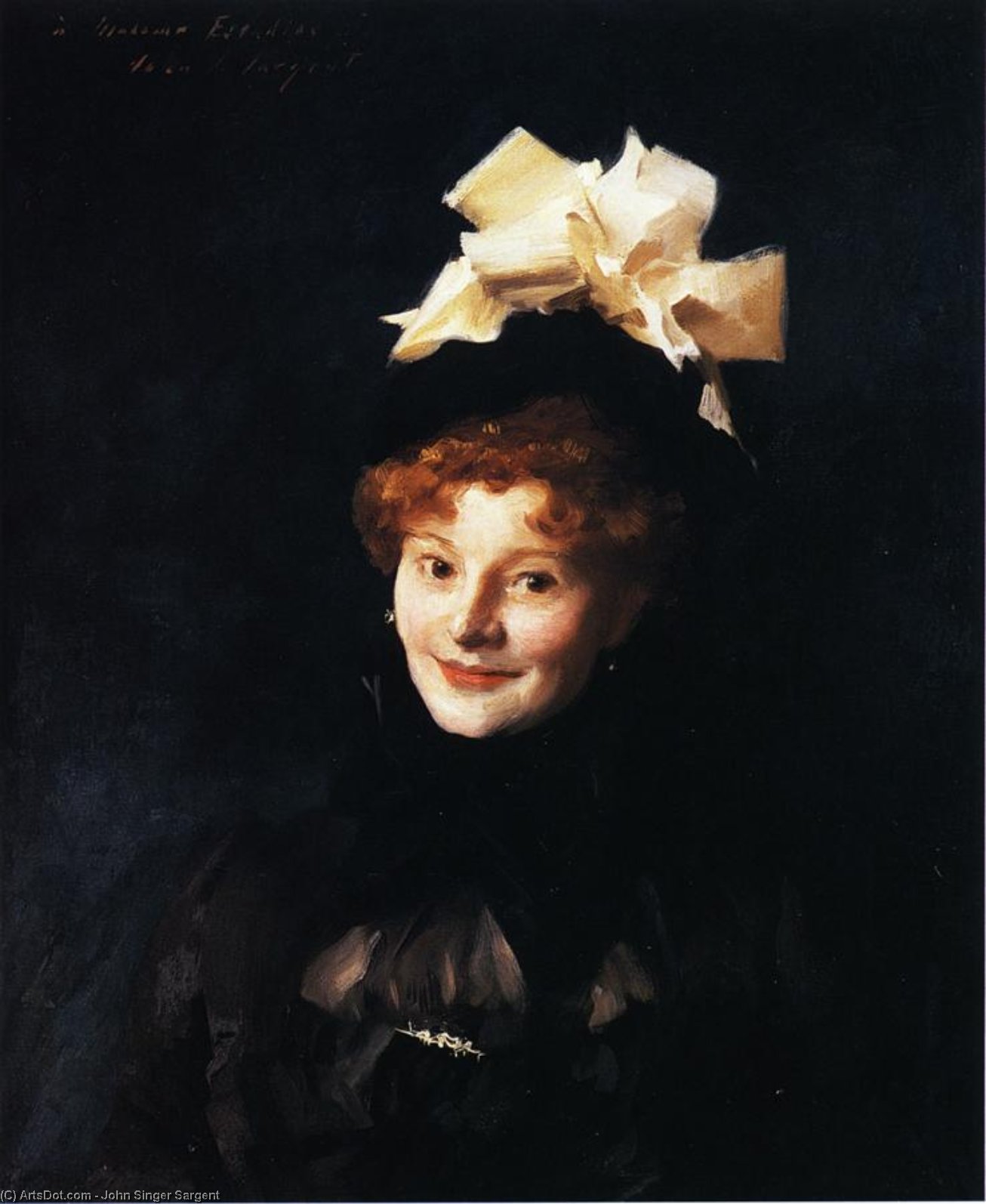
Madame Paul Escudier by John Singer Sargent (1882) captures the refined beauty of Edwardian society through meticulous Realism. This portrait showcases a woman adorned in black and white, embodying grace and poise within a social setting. Admired at The Sterling & Francine Clark Art Institute.
Madame Paul Escudier: A Portrait of Refined Elegance
John Singer Sargent’s “Madame Paul Escudier,” completed in 1882, stands as a quintessential exemplar of the Realism movement within Impressionism. More than just a likeness of a woman—a prominent Parisian socialite—the painting embodies the spirit of its era and speaks to enduring themes of beauty, composure, and societal status.
- Subject Matter: The portrait depicts Madame Escudier, seated gracefully against a muted backdrop. Her gaze is direct yet subtly averted, conveying an air of quiet confidence rather than overt vanity.
- Style & Technique: Sargent’s masterful brushwork—characterized by loose, blended strokes—captures the nuances of light and texture with remarkable precision. He eschewed the vibrant palette favored by Impressionists, opting for a restrained tonal range that emphasizes form and atmosphere.
The painting's historical context is inextricably linked to the burgeoning social scene of Belle Époque Paris. Sargent meticulously documented this period’s aristocratic circles, capturing not merely appearances but also the psychological complexities inherent in human relationships. The subtle smile on Escudier’s face hints at an inner life beyond the confines of polite conversation—a reflection of the anxieties and aspirations prevalent during a time of rapid social transformation.
- Symbolism: The white bow in Escudier's hair serves as a visual symbol of purity and femininity, aligning with Victorian ideals of decorum. Similarly, the muted colors contribute to an overall sense of serenity and sophistication, reflecting the aristocratic taste for understated elegance.
- Emotional Impact: “Madame Paul Escudier” transcends mere representation; it evokes feelings of admiration for beauty and tranquility. The painting’s stillness invites contemplation, prompting viewers to consider not only Escudier's physical presence but also her inner character—a testament to Sargent’s ability to convey profound emotional resonance through visual artistry.
Currently residing in the Sterling and Francine Clark Art Institute in Williamstown, Massachusetts, this masterpiece continues to inspire artists and collectors alike. Its enduring appeal lies in its unwavering commitment to capturing the essence of human experience—a timeless achievement that secures Sargent’s place among the most celebrated portraitists of his generation.
- Similar Works: Sargent's oeuvre includes “Mademoiselle Boussenet Duclos,” “Venetian Bead Stringers,” and “Madame Paul Poirson”—all showcasing his signature Realism style and capturing the spirit of European society during the late nineteenth century.
- Resources for Further Exploration: Interested in delving deeper into Sargent’s artistic vision? Visit ArtsDot.com to discover reproductions of his paintings and learn more about his life and legacy. Explore Viacheslav Onischenko's work, a contemporary artist known for his realistic landscapes.