A Portrait Steeped in Shakespearean Drama: John Singer Sargent’s ‘Miss Ellen Terry as Lady Macbeth’
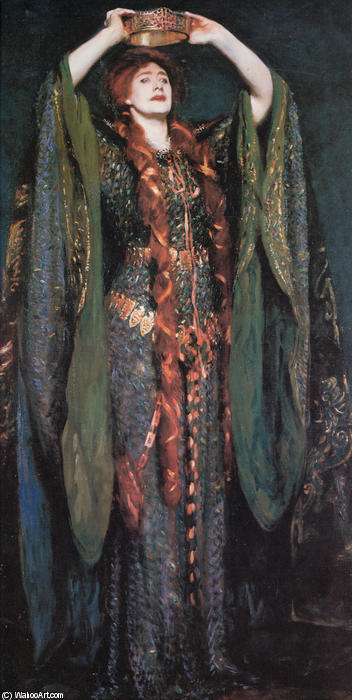
The painting “Miss Ellen Terry as Lady Macbeth,” executed by American artist John Singer Sargent in 1889, stands as a cornerstone of Impressionistic portraiture and a masterful embodiment of Victorian theatrical sensibilities. Currently residing within the Tate Gallery in London, this monumental oil on canvas – measuring an impressive 220 x 114 cm – transcends mere likeness; it captures not just Ellen Terry’s physical appearance but also her inner turmoil, channeling the psychological complexities inherent in Shakespeare's iconic Lady Macbeth character. Sargent’s reputation rested firmly upon his ability to distill emotion onto canvas with breathtaking precision, and this portrait exemplifies that talent superbly.
The Artist’s Vision: Impressionistic Realism
Sargent’s artistic approach defied categorization, blending elements of Impressionism with a rigorously observant realism. Unlike many of his contemporaries who prioritized fleeting impressions of light and color, Sargent meticulously rendered textures and tonal gradations—particularly evident in Terry’s gown—creating an illusion of palpable depth and materiality. This technique wasn't merely stylistic; it served to convey the character’s emotional state. The subtle shading around Terry’s face suggests a profound contemplation, hinting at the weighty burdens of ambition and guilt that Lady Macbeth carries throughout Shakespeare’s play. His meticulous attention to detail—the delicate folds of fabric, the sheen of perspiration—demonstrates an unwavering commitment to capturing the essence of his subject with unparalleled accuracy.
A Stage Actress Captured in Time
Ellen Terry was arguably the most celebrated interpreter of Lady Macbeth during her era, and Sargent skillfully captured this theatrical persona. Terry’s regal posture and upward gaze convey a sense of defiance and determination—qualities that mirrored Lady Macbeth's unwavering resolve to seize power regardless of moral consequence. The emerald green gown chosen by Sargent is symbolic of royalty and ambition, mirroring the character’s aspirations for dominion. Furthermore, the crown perched atop Terry’s head serves as a visual reminder of her elevated status within the theatrical world and underscores the painting’s broader commentary on societal expectations and gender roles during Victorian England.
Color Palette and Technique: Luminosity and Texture
Sargent employed a vibrant color palette—dominated by shades of green, gold, and crimson—to heighten the emotional impact of the portrait. These colors weren't applied randomly; they were carefully considered to evoke feelings of grandeur, passion, and unease. The artist’s masterful brushwork contributes significantly to the painting’s textural richness. Sargent utilized short, broken strokes to build up layers of pigment, creating a surface that appears luminous and alive—a hallmark of Impressionistic technique. This layering process allows for subtle variations in tone and color, enhancing the illusion of depth and capturing the nuances of Terry's expression.
Legacy and Enduring Appeal
“Miss Ellen Terry as Lady Macbeth” continues to resonate with audiences today because it transcends its historical context. It speaks to universal themes of ambition, guilt, and psychological complexity—themes that remain relevant across generations. The painting’s exquisite craftsmanship—combined with Sargent's ability to convey profound emotion—solidifies its place among the finest portraits of the Victorian period. Its enduring appeal lies in its capacity to inspire contemplation about the human condition and to celebrate the transformative power of art. Collectors and interior designers alike recognize its exceptional quality and its ability to imbue any space with an aura of sophistication and dramatic beauty.
- Artist: John Singer Sargent
- Year: 1889
- Medium: Oil on Canvas
- Location: Tate Gallery, London