John Singer Sargent
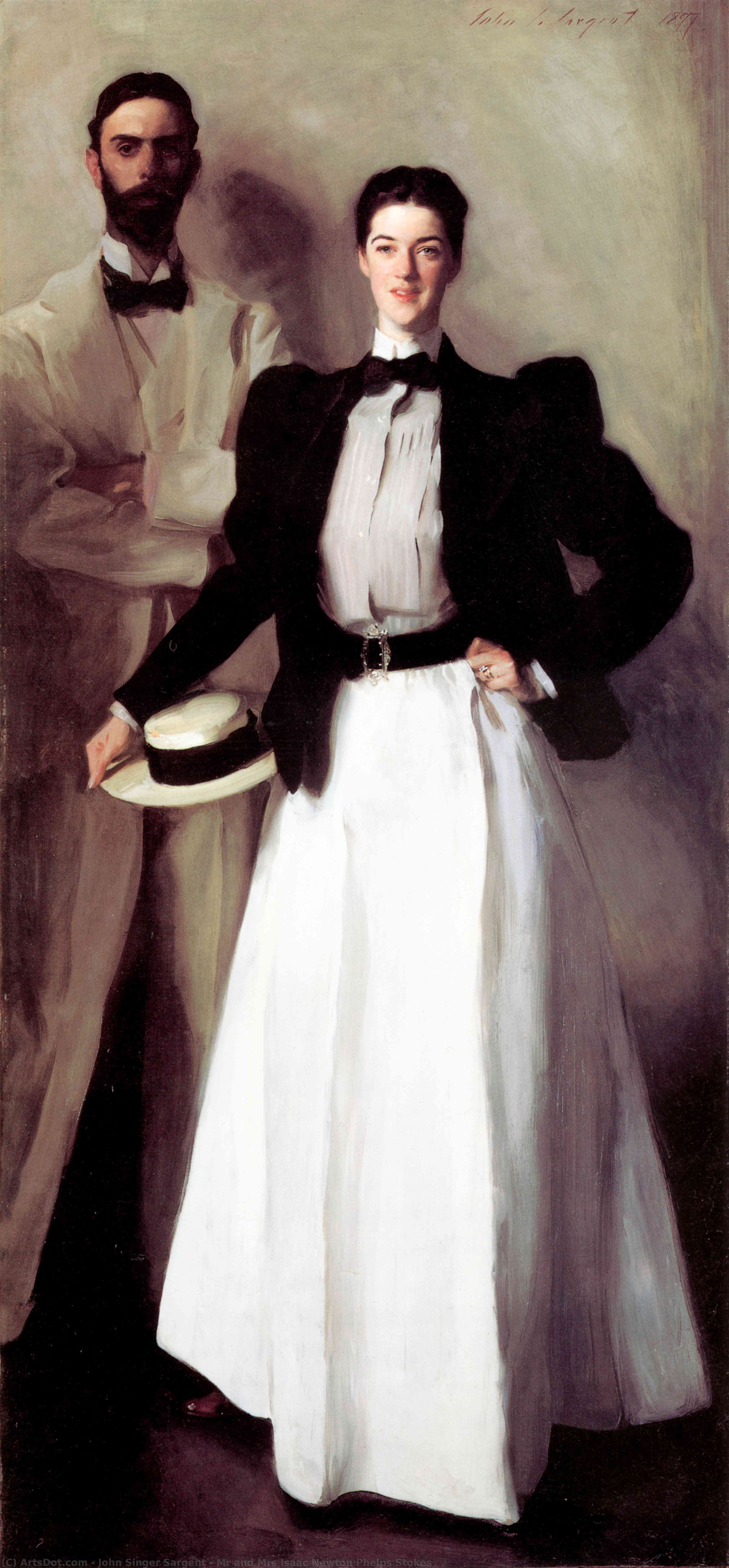
Mr and Mrs Isaac Newton Phelps Stokes
Born in Florence, Italy, John Singer Sargent received an unconventional education focused on museums and artistic heritage before establishing himself as a celebrated portrait painter in Paris and London. His work spanned from formal commissions to plein air landscapes, demonstrating versatility and reflecting evolving artistic sensibilit
Explore the art of John Singer Sargent! Discover iconic portraits like 'Madame X', Impressionistic landscapes & Gilded Age elegance from this American master.
Mr. and Mrs Isaac Newton Phelps Stokes: A Portrait of Refined Elegance
John Singer Sargent’s “Mr. and Mrs. Isaac Newton Phelps Stokes,” completed in 1897, stands as a quintessential exemplar of the American expatriate artist's mastery during the opulent Edwardian period. More than just a likeness, it’s an exquisitely crafted tableau that encapsulates the social aspirations and artistic sensibilities of its time—a testament to Sargent’s unparalleled ability to translate visual perception into enduring beauty.
Subject Matter and Composition
The painting depicts Isaac Newton Phelps Stokes and his wife, Eliza Stewart Phelps Stokes, posed formally against a subtly textured backdrop. Mr. Stokes, dressed in a dark suit accented by a striking paisley tie, exudes confidence with his hands resting on his hips—a posture conveying both authority and understated grace. Mrs. Phelps Stokes is equally captivating, adorned in a lavish gown embellished with lace and pearls, her gaze directed towards the viewer with an air of serene composure. The inclusion of two additional figures – Eliza’s niece and a lady assisting with her handbag – adds depth to the scene, subtly reinforcing the social hierarchy inherent in Edwardian society while simultaneously highlighting Sargent's meticulous attention to detail.
Stylistic Influences: Grand Manner Meets Impressionistic Hints
Sargent’s artistic style embodies a fascinating fusion of influences. Rooted firmly in the “Grand Manner,” prevalent during his formative years, he adhered to conventions established by artists like Joshua Reynolds and Thomas Lawrence—emphasizing idealized form and meticulous draughtsmanship. However, Sargent wasn't solely bound by tradition; he absorbed elements from Impressionism, particularly evident in the soft brushstrokes that lend a luminous quality to the drapery and contribute to an overall atmosphere of diffused light. This duality reflects Sargent’s own artistic sensibilities – his desire for technical precision tempered by a sensitivity to fleeting moments and atmospheric effects.
Technique and Materials
Executed in oil paint on canvas, “Mr. and Mrs. Phelps Stokes” showcases Sargent's exceptional skill with the medium. He employed layering techniques—building up color gradually—to achieve remarkable tonal richness and depth. The artist’s masterful handling of light and shadow creates a palpable sense of realism, capturing not only the physical appearance of his subjects but also their psychological states. Furthermore, Sargent’s meticulous blending and glazing processes ensured that the surface of the canvas shimmered with subtle variations in hue—a hallmark of his distinctive artistic approach.
Historical Context: The Edwardian Aristocracy and Artistic Patronage
The painting emerged during a period characterized by considerable social stability and economic prosperity within Britain's aristocratic circles. Wealthy families like the Phelps Stokeses actively engaged in supporting the arts, commissioning portraits from celebrated artists such as Sargent to solidify their status and commemorate familial legacies. “Mr. and Mrs. Phelps Stokes” exemplifies this cultural milieu—a reflection of the values and aspirations that defined Edwardian England.
Symbolism and Emotional Resonance
Beyond its formal beauty, the portrait carries symbolic significance. The pose of Mr. and Mrs. Phelps Stokes conveys dignity and composure—representing ideals of Victorian masculinity and femininity. The subtle gestures and expressions convey a quiet intimacy between the couple, hinting at the complexities of marital life within a rigidly structured social framework. Ultimately, “Mr. and Mrs. Phelps Stokes” transcends mere representation; it evokes an emotional response – admiration for artistic skill and appreciation for the elegance and refinement of Edwardian society.