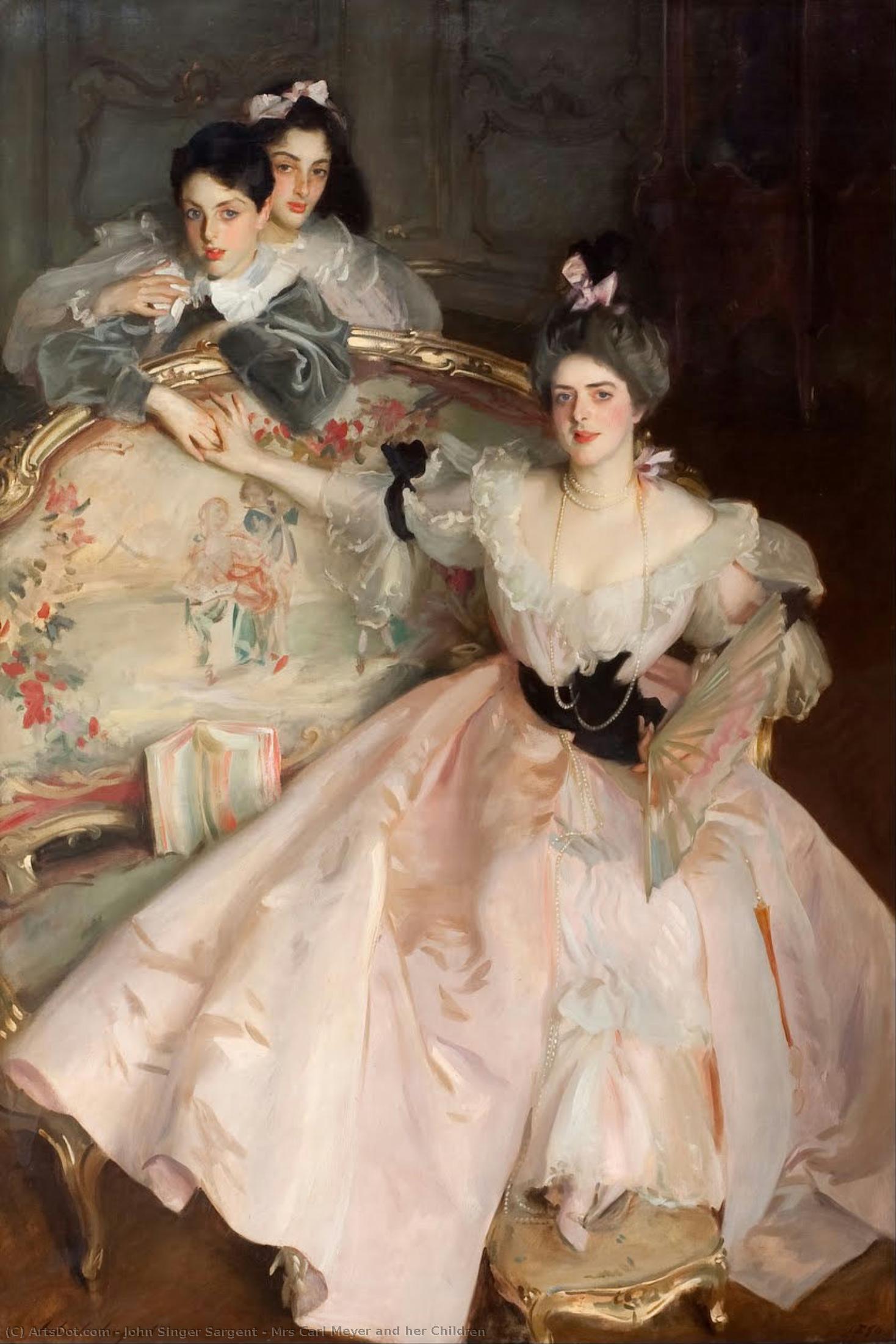
A Glimpse into Gilded Age Elegance
In the luminous realm of John Singer Sargent’s 1896 masterpiece, “Mrs Carl Meyer and her Children,” the viewer is not merely observing a portrait but is being invited into a private moment of Edwardian grace. This captivating work transcends the traditional boundaries of portraiture to become an evocative window into the domestic tranquility of a prosperous American family. As the eyes wander across the canvas, one is immediately struck by the profound sense of warmth and familial intimacy that radiates from the three women seated upon an opulent, richly upholstered couch. The matriarch, Mrs. Carl Meyer, commands the scene with a poised self-assurance, her gaze meeting the viewer with a gentle yet confident strength. Flanking her are her daughters, whose youthful innocence and soft smiles provide a tender counterpoint to their mother’s sophisticated composure, creating a harmonious tableau of maternal love and generational continuity.
The painting serves as a breathtaking testament to the social landscape of the late 19th century, capturing the very essence of the Gilded Age. Through Sargent's lens, we see more than just individuals; we witness the embodiment of Victorian ideals regarding femininity and the sanctity of the home. The careful arrangement of the figures—nestled closely within their luxurious surroundings—speaks to a period where the domestic sphere was viewed as a sanctuary of stability and refinement. Every detail, from the delicate textures of their dresses to the ornate decorations of the furniture, reinforces the family's secure and elevated position within society, making this piece an essential inspiration for those looking to infuse their interiors with a sense of historical prestige and timeless class.
Mastery of Light and Impressionistic Realism
Technically, the work is a triumph of Impressionistic Realism, a style where Sargent masterfully balances the fleeting effects of light with a meticulous attention to detail. Utilizing the alla prima technique—applying paint directly onto the canvas without the traditional layers of underpainting—Sargent achieved a vibrant immediacy and a textural richness that is nothing short of extraordinary. His brushstrokes, though often loose and fluid, possess an incredible intelligence, capable of rendering the shimmering silk of a gown or the soft glow of skin with equal brilliance. This method allows light to dance across the surface of the painting, creating an illusionistic depth that draws the observer into the very heart of the room.
For the discerning collector or interior designer, the emotional impact of this piece lies in its ability to balance grandeur with intimacy. The interplay of light and shadow does more than just define form; it sets a mood of serene contemplation. Whether placed in a grand salon or a quiet study, a high-quality reproduction of this work brings with it an atmosphere of sophisticated calm. It is a painting that does not merely decorate a wall but breathes life into a space, offering a continuous dialogue between the historical elegance of the past and the modern aesthetic of the present. To possess such a work is to hold a fragment of art history, a beautifully rendered moment of peace captured forever in oil.