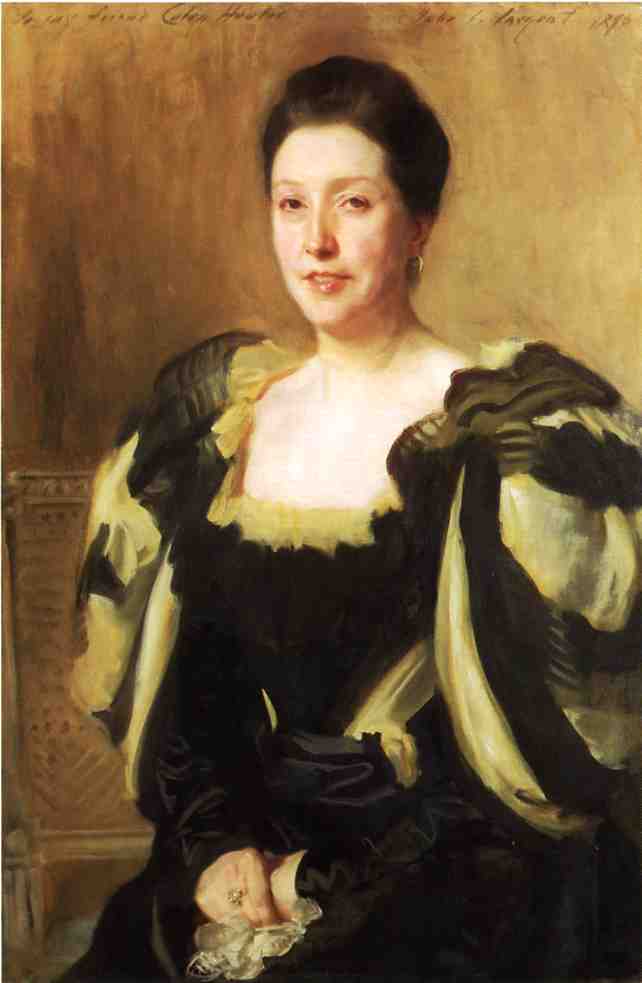
The Mrs. Colin Hunter painting by John Singer Sargent exemplifies Realism art with meticulous detail capturing the woman's serene posture and expressive gaze. Executed in 1896, this oil on canvas masterpiece showcases Sargent’s mastery of light and color—a stunning portrait housed at Tate Gallery London.
Explore the art of John Singer Sargent! Discover iconic portraits like 'Madame X', Impressionistic landscapes & Gilded Age elegance from this American master.
A Portrait Steeped in Victorian Dignity: Exploring John Singer Sargent’s Mrs. Colin Hunter
The painting “Mrs. Colin Hunter,” completed by John Singer Sargent in 1896, transcends mere representation; it embodies the spirit of its era and offers a glimpse into the complexities of human emotion rendered with breathtaking precision. Located at Tate Gallery London, this oil on canvas masterpiece continues to fascinate viewers with its masterful execution and subtle psychological depth.
The Subject: A Woman Defined by Presence
At the heart of Sargent’s composition is Mrs. Walter Bacon (Virginia Purdy Barker), a woman whose gaze holds an arresting stillness. Captured in a black dress adorned with a crisp white collar, she exudes an aura of quiet confidence—a characteristic prevalent within Victorian society where decorum and restraint were paramount. Her hands are clasped together, symbolizing composure and inner strength, reflecting the societal expectations placed upon women during this period. Sargent skillfully captures not just her physical appearance but also conveys a sense of dignified introspection.
Style and Technique: The Language of Realism
Sargent’s artistic approach aligns perfectly with the tenets of Realism—a movement that sought to depict subjects truthfully, eschewing idealized forms in favor of capturing observable reality. He achieved this goal through meticulous observation and painstaking brushwork. Sargent employed a technique known as “alla prima,” meaning "at first sight," applying paint directly onto the canvas without preliminary sketches or underlayers. This method allowed him to capture fleeting moments of light and shadow, resulting in an astonishingly luminous surface that imbues the portrait with palpable warmth. The artist’s masterful handling of color—particularly the interplay between black and white—creates a striking visual contrast that emphasizes Mrs. Bacon's facial features and contributes significantly to the painting’s emotional impact.
Historical Context: Victorian Society Under Scrutiny
“Mrs. Colin Hunter” emerged during a time of considerable social upheaval in Britain. The Victorian era witnessed rapid industrialization, urbanization, and evolving gender roles—transformations that challenged traditional norms and fueled debates about morality and propriety. Sargent’s portrait reflects these anxieties by portraying Mrs. Bacon as an embodiment of Victorian ideals – refined manners, domestic tranquility, and unwavering virtue. However, beneath the surface of outward composure lies a subtle suggestion of inner turmoil—a poignant acknowledgment of the psychological pressures faced by women navigating societal expectations.
Symbolism: Gesture and Expression Beyond Appearance
Beyond its visual splendor, “Mrs. Colin Hunter” is laden with symbolic significance. The clasped hands represent not only physical stillness but also spiritual fortitude—a gesture that speaks to Mrs. Bacon’s inner resilience in the face of external pressures. Sargent's careful attention to facial expression—particularly the slight tilt of her head—reveals a depth of emotion that transcends mere visual representation. This subtle nuance invites viewers to contemplate the complexities of human experience and underscores the artist’s ability to convey psychological states with remarkable sensitivity.
Emotional Impact: A Moment Frozen in Time
Ultimately, “Mrs. Colin Hunter” succeeds in capturing a profound emotional resonance—a snapshot of Victorian dignity rendered with unparalleled artistry. The painting compels us to consider not just what we see but also what lies beneath the surface of outward appearances. It serves as a reminder that true beauty resides not only in form but also in expression—in conveying the innermost thoughts and feelings of the subject matter. Sargent’s masterpiece continues to inspire admiration for its technical brilliance and enduring psychological insight, cementing its place among the finest portraits of the Victorian era.