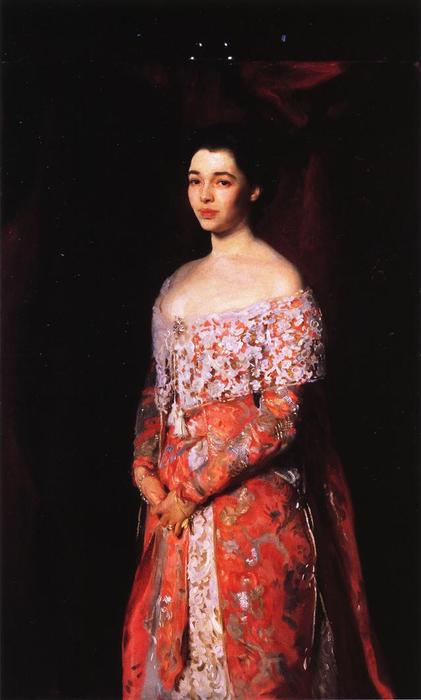
Mrs. Leopold Hirsch

John Singer Sargent’s masterful portrait captures Mrs. Leopold Hirsch in opulent attire against a crimson curtain—a testament to the artist's signature Impressionistic style and the refined tastes of the early 20th century. Explore this exquisite reproduction and bring timeless beauty into your home.


John Singer Sargent (1856 - 1925)

Explore the art of John Singer Sargent! Discover iconic portraits like 'Madame X', Impressionistic landscapes & Gilded Age elegance from this American master.

A Portrait Steeped in Elegance: John Singer Sargent’s Mrs. Leopold Hirsch

  • Subject Matter: This captivating portrait depicts Mrs. Leopold Hirsch, a woman of considerable social standing and beauty, captured in a moment of poised contemplation. The sitter exudes confidence and grace as she stands with her hands at her sides, suggesting an awareness of the gaze of the artist – a hallmark of Sargent’s masterful approach to portraiture.
  • Style: Sargent's signature style is characterized by its luminous realism—a technique he honed during his formative years absorbing the influences of Impressionism and Post-Impressionism. Unlike many artists of his time who prioritized idealized representations, Sargent sought to convey an honest portrayal of his subject’s character and physicality.
  • Technique: Executed in oil on canvas, “Mrs. Leopold Hirsch” exemplifies Sargent's meticulous brushwork. He employed a layering technique—building up thin glazes over underpaintings—to achieve remarkable tonal depth and subtle color variations. This painstaking process resulted in an image that glows with internal light, capturing the nuances of skin texture and drapery folds.
  • Historical Context: Painted in 1902, “Mrs. Leopold Hirsch” reflects the opulent atmosphere of Edwardian England—a period defined by aristocratic patronage and a fascination for documenting the lives of prominent figures. Sargent’s commissions frequently catered to wealthy clients who wished to immortalize their families' status and heritage.
  • Symbolism: The crimson curtain serves as more than just a decorative element; it symbolizes privacy and theatrical grandeur, framing Mrs. Hirsch against a backdrop that elevates her presence. Furthermore, the woman’s posture—direct gaze and relaxed hands—communicates composure and self-assurance – qualities valued in Victorian society.
  • Emotional Impact: Sargent's masterful rendering captures not only Mrs. Hirsch’s physical appearance but also her inner spirit. The painting evokes a sense of quiet dignity and timeless beauty, inviting viewers to contemplate the complexities of human experience and the enduring power of portraiture as an art form.