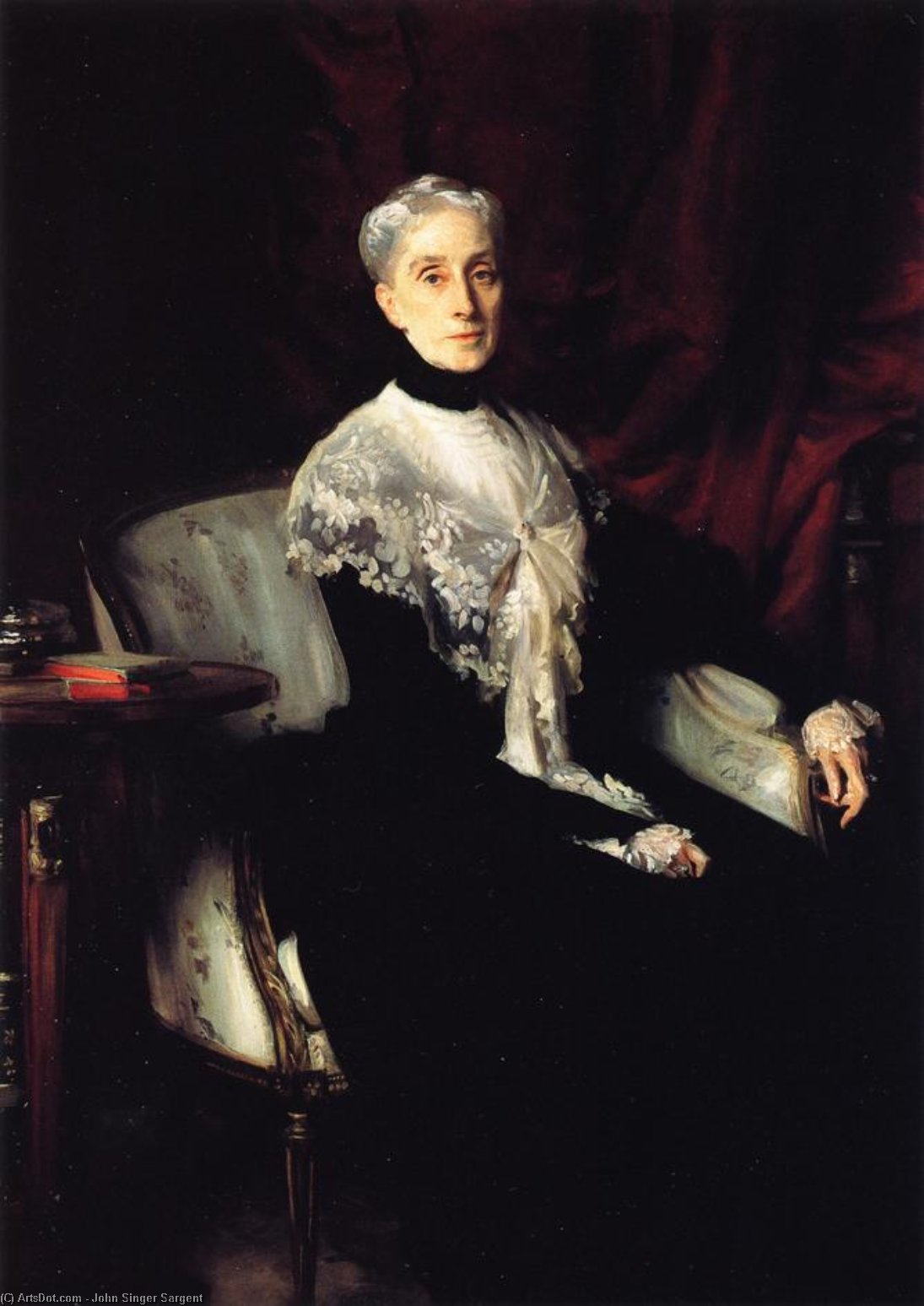
A Vision of Refined Grace: The Soul of Mrs. William Crowninshield Endicott
To encounter John Singer Sargent’s “Mrs. William Crowninshield Endicott” is to step into a world where the boundaries between social elegance and profound introspection dissolve. Painted in 1901, this oil on canvas masterpiece does far more than record the likeness of a prominent Bostonian; it captures an entire era's pursuit of aesthetic perfection. As the viewer gazes upon the seated figure, there is an immediate sense of being invited into a private, quiet moment. The subject, Ellen Peabody Endicott, rests with a poised, contemplative stillness that suggests a mind far more active than her outward composure might reveal. This is not merely a portrait of wealth, but a study of character, rendered with a sensitivity that breathes life into the very fabric of the Gilded Age.
The brilliance of Sargent’s technique lies in his ability to balance alla prima spontaneity with a sophisticated layering of light. Eschewing the stiff, overly meticulous details common in traditional Victorian portraiture, Sargent utilized rapid, confident brushstrokes to capture the fleeting interplay of shadow and luminosity. Through the masterful application of translucent glazes, he achieved a depth of color that makes the textures—from the delicate lace of her collar to the heavy, dark drapery—seem almost tactile. This technique creates an ethereal glow, imbuing the scene with a sense of atmosphere that feels both grounded in reality and elevated by a dreamlike, Impressionistic quality.
Symbolism and the Art of the Domestic Sphere
Every element within the composition serves a narrative purpose, weaving a complex tapestry of meaning. The dining table, scattered with books and adorned with floral arrangements, acts as a profound symbol of the subject's intellectual and social identity. These objects are not mere decorations; they represent the intersection of the domestic sphere and the life of the mind. The presence of literature suggests a woman of substance and progressive thought, while the flowers introduce an element of the ephemeral, reminding us of the transient beauty of the moment. This careful arrangement reflects the ideals of the Aesthetic Movement, where beauty, art, and daily life were intended to exist in perfect, harmonious unity.
For the discerning collector or interior designer, this painting offers an unparalleled sense of prestige and emotional depth. It possesses a unique ability to anchor a room, providing a focal point that is both commanding and serene. Whether placed in a formal library, a sophisticated dining hall, or a contemporary living space, a high-quality reproduction of this work brings with it a legacy of cultural refinement. The painting’s dark, rich palette and masterful use of light make it an ideal centerpiece for those looking to infuse their environment with a sense of timelessness, history, and an enduring, quiet luxury.