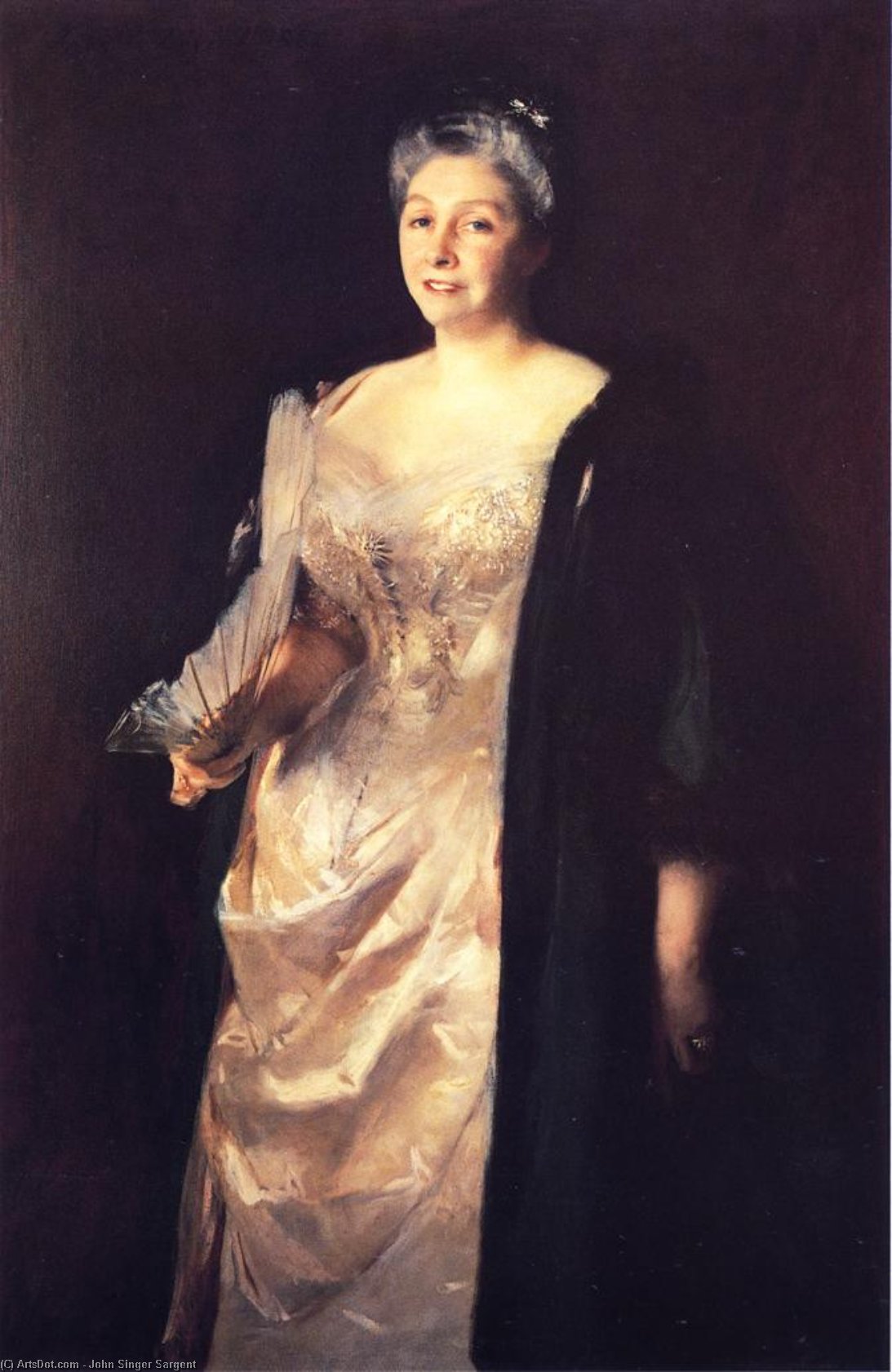
John Singer Sargent's elegant 1887 portrait, "Mrs. William Playfair," captures a woman in prayerful contemplation within a richly detailed interior scene, showcasing the artist’s mastery of light and social realism during the Gilded Age – discover this exquisite masterpiece.
A Portrait of Quiet Contemplation: John Singer Sargent’s “Mrs. William Playfair”
John Singer Sargent's "Mrs. William Playfair," painted in 1887, is more than just a portrait; it’s a carefully constructed tableau of Victorian sensibility and understated emotion. Measuring 153 x 99 cm, this work immediately draws the viewer into a scene of quiet intimacy, capturing the essence of a woman lost in thought within the refined confines of her domestic space. Sargent's masterful handling of light and shadow, coupled with his keen observation of human expression, elevates the painting beyond a simple likeness to a powerful study of character.
- Subject & Composition: The central figure, Mrs. William Playfair, is presented in a three-quarter pose, her hands clasped together – a gesture universally understood as representing prayer or deep reflection. This posture immediately invites the viewer to share in her private moment of contemplation. The inclusion of two secondary figures—one on the left and another receding into the background on the right—adds layers of narrative complexity, suggesting a family scene and hinting at the social dynamics of the era.
- Technical Brilliance: Sargent’s technique is characterized by his loose, almost impressionistic brushwork layered over a meticulously constructed underpainting. He employs rapid strokes to capture the play of light on fabric – particularly evident in the folds of Mrs. Playfair's dress and coat – creating a shimmering effect that imbues the scene with a sense of luxuriousness. The subtle gradations of tone contribute significantly to the painting’s atmospheric quality, drawing the eye deeper into the composition.
The Gilded Age and Portraiture
"Mrs. William Playfair" is firmly rooted in the context of the late 19th-century Gilded Age, a period marked by immense wealth, social upheaval, and a burgeoning interest in portraiture as a means of establishing status and identity. Sargent was at the forefront of this trend, producing numerous commissions for wealthy American families who sought to immortalize themselves within the opulent aesthetic of the time. The painting’s restrained elegance reflects the Victorian ideal of feminine grace and decorum, while simultaneously capturing the subtle anxieties and complexities of women navigating a rapidly changing social landscape.
- Social Context: Portraits during this era were not merely representations of individuals; they were carefully crafted statements about family lineage, wealth, and social standing. Sargent skillfully navigated these expectations, creating works that were both flattering to his subjects and reflective of the broader cultural trends of the period.
- Sargent’s Style: Sargent's style was evolving rapidly during this time, moving away from the more formal and rigid portraiture of earlier generations towards a looser, more expressive approach. This is evident in "Mrs. Playfair," where he prioritizes capturing the sitter’s personality and mood over strict adherence to convention.
Symbolism and Emotional Resonance
Beyond its technical merits, “Mrs. William Playfair” resonates with a profound sense of emotional depth. The woman's closed-hand gesture suggests vulnerability and introspection, inviting the viewer to empathize with her private thoughts. The neutral color palette – dominated by browns, creams, and subtle blues – contributes to the painting’s contemplative mood. The carefully arranged chair in the background further reinforces this feeling of stillness and solitude.
- Color Palette: Sargent's use of muted colors creates a sense of quiet dignity and restraint, reflecting the subject's character and the era's aesthetic sensibilities.
- Gesture & Expression: The subtle nuances in Mrs. Playfair’s expression – a hint of melancholy perhaps, or simply a moment of peaceful reflection – are rendered with remarkable sensitivity by Sargent, making her an instantly relatable figure.
A Timeless Masterpiece for Your Collection
This hand-painted reproduction of John Singer Sargent's “Mrs. William Playfair” offers a unique opportunity to own a piece of art history. Its exquisite detail and evocative atmosphere will undoubtedly enhance any interior space, bringing a touch of Victorian elegance and quiet contemplation into your home or office. Perfect for collectors, interior designers, and anyone seeking a timeless work of art that speaks volumes about human emotion and artistic skill.