A Portrait of Grace: John Singer Sargent’s ‘Mrs. William Shakespeare (Louise Weiland)’
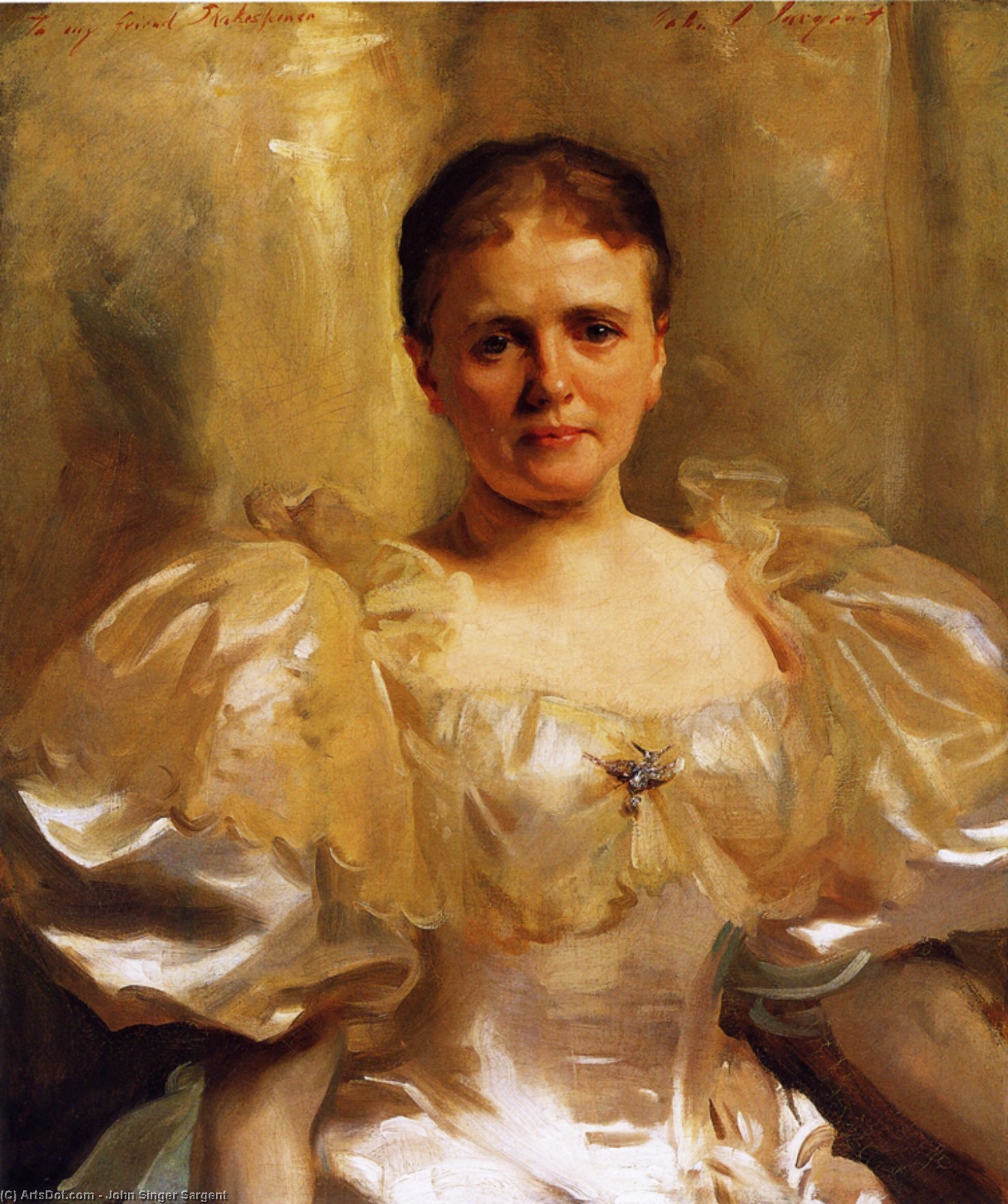
John Singer Sargent's “Mrs. William Shakespeare (Louise Weiland),” painted in 1896, is more than just a portrait; it’s a carefully constructed tableau of elegance and quiet contemplation. This captivating work, currently residing at the Memorial Art Gallery of the University of Rochester, offers a glimpse into the refined social circles of late Victorian England through the discerning eye of one of its most celebrated artists. Sargent's ability to capture not just physical likeness but also an underlying mood is strikingly evident in this piece, revealing a woman poised between youthful vitality and the established grace expected of her station.
- Subject & Context: The sitter, Louise Weiland, was married to William Shakespeare, a prominent figure within London’s artistic and social elite. Sargent's choice to depict her in such a formal setting speaks volumes about the importance placed on lineage, wealth, and social standing during this era. The painting wasn’t merely documenting a woman; it was solidifying an identity within a complex network of relationships.
- Technical Mastery: Executed in oil on canvas, the portrait showcases Sargent's unparalleled skill with light and shadow. Note the subtle modeling of Louise’s face – the delicate curve of her cheekbone, the slight furrow of her brow – all rendered with meticulous precision. His brushwork is loose yet controlled, creating a sense of depth and texture that draws the viewer into the scene.
The Language of Form: Composition and Style
Sargent’s compositional choices are deliberate and contribute significantly to the painting's overall impact. The central focus remains firmly on Louise Weiland, her direct gaze engaging the viewer with an almost unnerving intensity. However, the inclusion of two indistinct figures in the background – one on the left, another on the right – introduces a layer of narrative ambiguity. These shadowy presences suggest a life beyond the portrait’s immediate frame, hinting at social interactions and unspoken stories. They are not meant to be fully defined, but rather serve as subtle reminders of the broader context within which Louise operates.
The painting adheres closely to Sargent's signature style – characterized by its realism tempered with a remarkable sensitivity to atmosphere. He doesn’t simply replicate what he sees; he interprets it, imbuing it with emotion and meaning. The careful arrangement of her white dress, the lace collar framing her neck, and the soft light illuminating her face all contribute to an impression of refined beauty and quiet dignity.
Symbolism and Emotional Resonance
Beyond its technical brilliance, “Mrs. William Shakespeare (Louise Weiland)” is rich in symbolic meaning. The white dress, a traditional symbol of purity and innocence, underscores Louise’s youth and desirability. Her direct gaze, while seemingly straightforward, can also be interpreted as a subtle assertion of her own agency within a society that often confined women to passive roles. The lack of overt emotion on her face – a carefully controlled expression – reflects the societal expectations placed upon women of her class.
Sargent masterfully evokes a sense of melancholy and introspection, inviting the viewer to contemplate the complexities of human relationships and the constraints imposed by social convention. The painting’s quiet stillness suggests a moment of private reflection, a pause in the relentless pace of Victorian life.
A Legacy of Elegance
“Mrs. William Shakespeare (Louise Weiland)” stands as a testament to John Singer Sargent's genius and his ability to capture the essence of human experience. It’s a portrait that transcends mere representation, offering a profound meditation on beauty, social status, and the enduring power of art. Sargent’s influence continues to resonate today, inspiring artists and collectors alike with his masterful technique and his unwavering commitment to portraying the world around him with both accuracy and emotional depth. For those seeking a piece that embodies timeless elegance and quiet contemplation, this portrait remains an exceptional example of Sargent's remarkable talent.