A Moment of Quietude: John Singer Sargent’s *Pater Harrison aka Siesta*
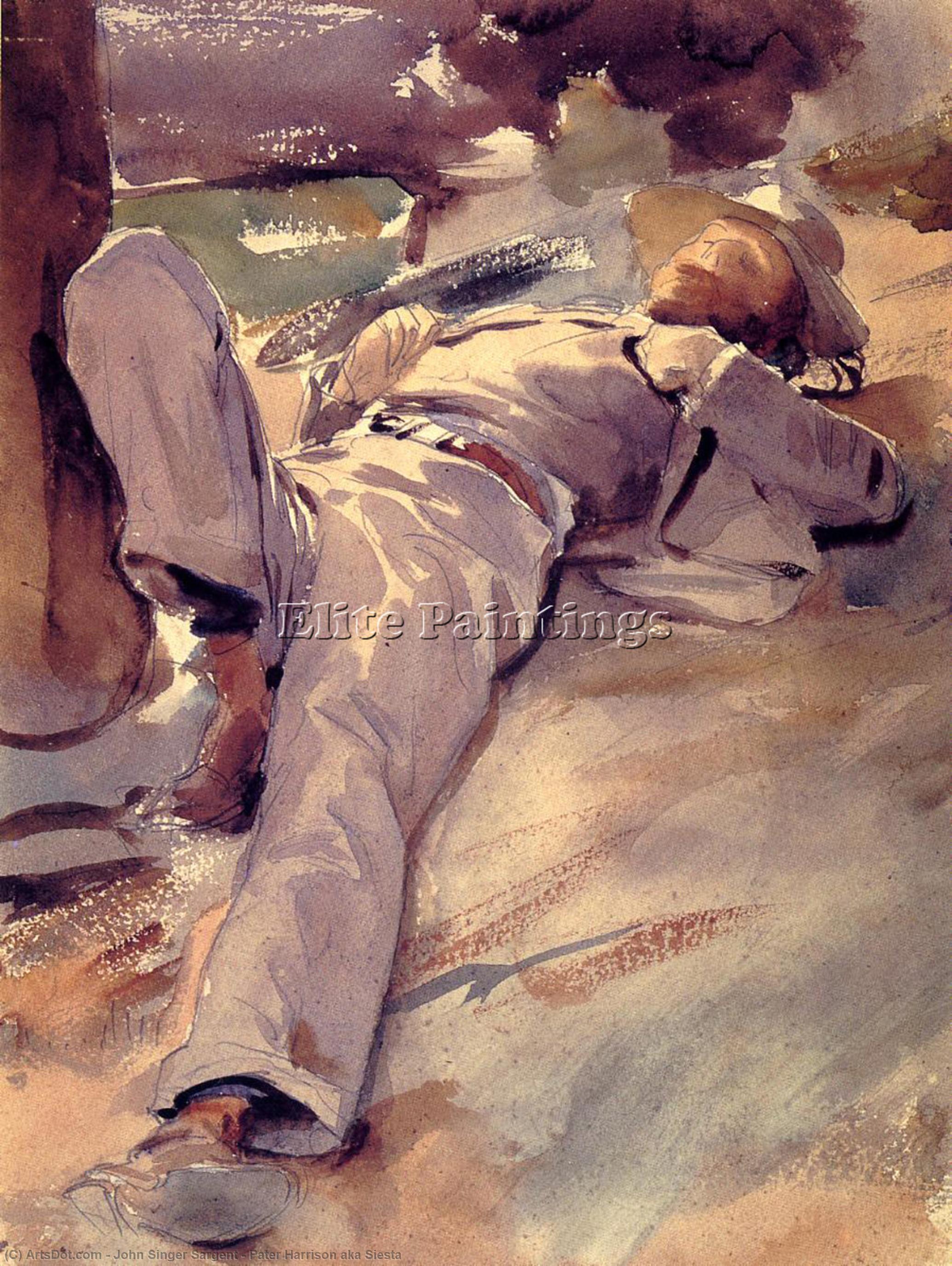
John Singer Sargent's Pater Harrison aka Siesta, a seemingly simple depiction of a man reclining beneath a tree, is in fact a masterclass in capturing fleeting moments and the subtle nuances of human experience. Painted around 1902, this work exemplifies Sargent’s remarkable ability to translate atmosphere and emotion onto canvas with an almost photographic precision. The subject, identified as “Pater Harrison” – a moniker suggesting a cultivated gentleman – is presented in a state of relaxed repose, his head resting on his hand, evoking a profound sense of tranquility. This isn't merely a portrait; it’s a carefully constructed tableau designed to elicit contemplation and invite the viewer into the scene.
- Subject & Composition: The central figure dominates the composition, drawing our eye immediately with his posture of quiet surrender. The inclusion of two secondary figures – one standing attentively and another receding into the background – adds a layer of narrative complexity, hinting at social interactions and perhaps even unspoken stories.
- Technique - The Sargent Touch: Sargent’s signature technique is instantly recognizable in Pater Harrison. He employs loose, fluid brushstrokes to render the fabric of the man's suit, creating a shimmering effect that captures the play of light and shadow. His use of color is restrained yet masterful, relying on subtle gradations to build depth and volume. The rendering of skin tones is particularly noteworthy – capturing not just appearance but also the impression of warmth and vulnerability.
The Gilded Age Portrait & Societal Observation
Painted during the height of the American Gilded Age, Pater Harrison aka Siesta reflects the era’s fascination with leisure, wealth, and social status. Sargent was a keen observer of society, and his portraits often served as windows into the lives of the elite. The man's attire – a tailored suit, tie, and hat – speaks to his position within this world, while his relaxed posture suggests a desire for respite from its demands. This painting isn’t simply a likeness; it’s a commentary on the values and aspirations of the time.
Sargent's background as an American expatriate undoubtedly influenced his perspective. Having spent much of his life in Europe, he possessed a unique ability to bridge cultures and capture the essence of both American and European sensibilities. The scene itself – a man enjoying a moment of solitude in nature – speaks to a universal desire for peace and reflection, transcending social boundaries.
Symbolism & Emotional Resonance
The title “Siesta” immediately evokes connotations of rest, relaxation, and the afternoon’s drowsy calm. The setting – a tree-lined area – further reinforces this sense of tranquility. The man's pose, with his head resting on his hand, is universally recognized as a symbol of repose and contemplation. It invites us to share in his moment of quietude, fostering an emotional connection between the viewer and the subject.
The painting’s power lies not just in its technical brilliance but also in its ability to evoke a profound sense of peace and serenity. It's a reminder that even amidst the hustle and bustle of modern life, there is always time for a moment of stillness – a chance to reconnect with oneself and appreciate the beauty of nature.
A Timeless Masterpiece: Reproduction Possibilities
ArtsDot.com offers meticulously crafted hand-painted reproductions of Pater Harrison aka Siesta, ensuring that you possess an authentic representation of this iconic work. Our skilled artisans employ traditional techniques and archival materials to faithfully recreate Sargent’s masterful brushwork and nuanced color palette. Whether for your private collection or as a striking addition to your interior design scheme, our reproduction captures the essence of this timeless masterpiece, bringing its beauty and serenity into your space.