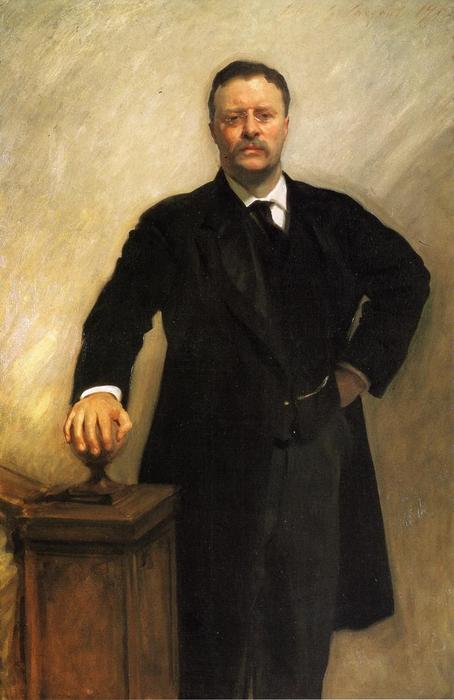
A Portrait of Power and Presence: John Singer Sargent’s Theodore Roosevelt
John Singer Sargent's "Portrait of Theodore Roosevelt," painted in 1903, is more than just a likeness; it’s a carefully constructed embodiment of the American president’s formidable character. Executed in his signature oil on canvas technique, the painting captures Roosevelt not as a politician, but as an intellectual titan and a man of undeniable presence. The blurred background, devoid of any extraneous detail, serves to amplify the subject's importance, drawing the viewer’s eye immediately to the powerfully rendered figure before us. Sargent masterfully utilizes light and shadow to sculpt Roosevelt’s features – the strong jawline, the piercing gaze, the neatly trimmed mustache – conveying a sense of resolute determination and quiet authority.
- Style: The painting exemplifies Sargent's mastery of the "salon portrait," a style popular during the Gilded Age that prioritized capturing not just physical appearance but also the sitter’s personality and social standing.
- Technique: Sargent’s brushwork is remarkably smooth, almost velvety in its application, particularly evident in the rendering of Roosevelt's suit and tie. This technique contributes to the painting’s luxurious feel, reflecting the era’s fascination with wealth and status.
The Context of a Nation’s Confidence
Painted in 1903, at the height of Theodore Roosevelt’s presidency, the portrait reflects a nation brimming with confidence and ambition. Roosevelt was a dynamic figure – a champion of conservation, a progressive reformer, and a forceful advocate for American interests on the world stage. Sargent skillfully captures this dynamism, presenting Roosevelt as a man who embodies both strength and intellect. The year itself is significant; it marks a period of rapid industrialization, westward expansion, and growing international influence for the United States – themes powerfully reflected in Roosevelt’s leadership.
Symbolism and the Portraiture Tradition
The inclusion of spectacles adds another layer to the portrait's symbolism. In this era, eyeglasses were often associated with intellectual pursuits and a scholarly demeanor, aligning perfectly with Roosevelt’s reputation as a learned and thoughtful leader. The formal attire – the dark suit and tie – speaks to the conventions of portraiture at the time, emphasizing Roosevelt’s position within the upper echelons of American society. Sargent's careful attention to detail in these elements underscores his understanding of the visual language of power and prestige.
Emotional Impact and Lasting Legacy
"Portrait of Theodore Roosevelt" remains a compelling study in portraiture, offering a glimpse into both the man himself and the spirit of an era. The painting’s enduring appeal lies not only in Sargent's technical skill but also in his ability to capture a complex personality – a blend of strength, intelligence, and ambition – that continues to resonate with viewers today. This reproduction offers a chance to own a piece of American history, a testament to the power of portraiture to immortalize both individuals and moments in time.