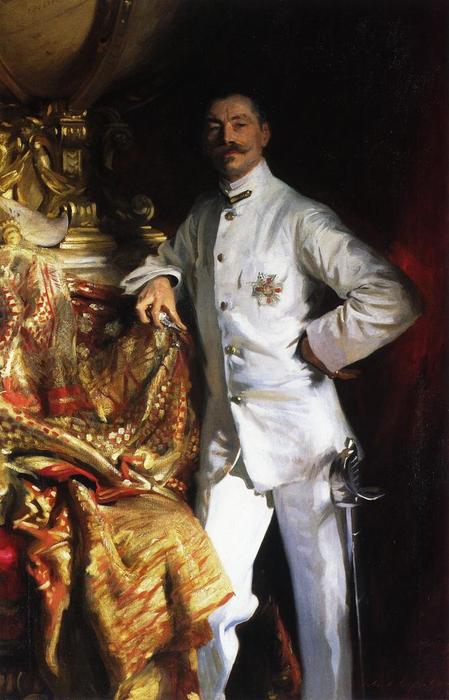
A Portrait Steeped in Elegance: Sir Frank Athelstane Swettenham by John Singer Sargent
John Singer Sargent’s “Sir Frank Athelstane Swettenham” stands as an emblem of the Belle Époque, capturing not merely a likeness but also the spirit of British colonial administration at the turn of the century. Painted in 1904, this oil on canvas portrait exemplifies Sargent's mastery of realism—a style characterized by meticulous observation and luminous tonal gradations—and cemented his reputation as one of the era’s foremost artists. The National Portrait Gallery houses this masterpiece, offering visitors a chance to contemplate its enduring beauty and consider the broader cultural landscape it reflects.
- Subject Matter: The portrait depicts Sir Frank Athelstane Swettenham (1862–1930), a prominent diplomat and administrator serving in Egypt during Sargent’s time. He is portrayed in formal attire—a crisp white uniform accented by a dark waistcoat—reflecting his position within the British Empire.
- Style & Technique: Sargent employed a technique that prioritized capturing subtle nuances of expression and texture. His brushstrokes are loose yet controlled, blending seamlessly to create an illusion of depth and luminosity. The artist skillfully utilized light and shadow to sculpt Swettenham’s face and torso, conveying both dignity and introspection.
Symbolism Within the Frame
Beyond its depiction of a distinguished gentleman, “Sir Frank Swettenham” is laden with symbolic elements. The backdrop—a globe encircled by a chair draped in Malayan brocades—references Swettenham’s involvement in colonial endeavors and underscores the grandeur of British imperial ambition. The inclusion of a red blanket adds warmth to the composition, subtly hinting at comfort and domestic tranquility amidst the complexities of international politics.
Historical Context: Sargent's Parisian Salon Debut
Sargent’s artistic journey began in earnest with his debut at the Paris Salon in 1887. His ambitious portrait “Madame X,” featuring Madame Violette Lenormand—a celebrated Parisian courtesan—caused a sensation, sparking considerable controversy due to its nude depiction and perceived lack of conventional decorum. This event propelled Sargent into the spotlight and established him as a leading figure within the avant-garde art scene of Paris.
Emotional Resonance: Capturing Inner Character
Ultimately, “Sir Frank Swettenham” transcends mere visual representation; it aspires to convey Swettenham’s inner character. Sargent's ability to capture a gaze imbued with thoughtfulness and quiet confidence speaks volumes about his artistic vision—a commitment to portraying not just what is seen but also what lies beneath the surface.
- Conservation Status: Currently housed at The National Portrait Gallery, London
- Reproductions Available: High-quality reproductions are available from ArtsDot.com – Explore our collection of handmade oil painting reproductions!
Learn More: Visit https://ArtsDot.com to delve deeper into Sargent’s artistic legacy and discover stunning prints.