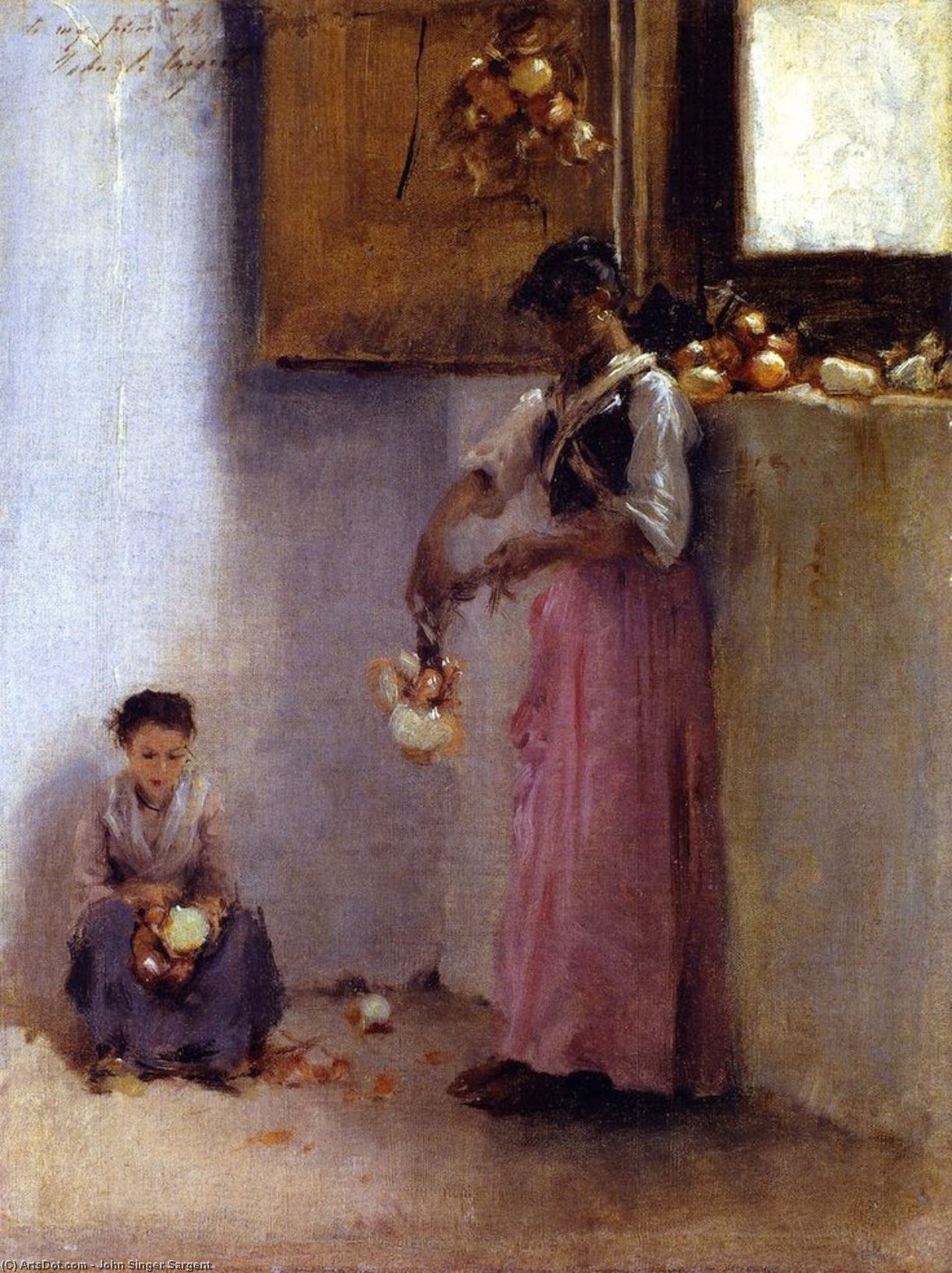
Experience the beauty of Sargent’s ‘Stringing Onions’! This captivating Capri interior showcases Impressionistic brushstrokes & luminous colors, depicting everyday elegance in a serene Italian kitchen.
Stringing Onions by John Singer Sargent captures an intimate glimpse into daily life – two women tending to fruit and apples within a sunlit Capri kitchen, embodying Impressionism's focus on light
Explore the art of John Singer Sargent! Discover iconic portraits like 'Madame X', Impressionistic landscapes & Gilded Age elegance from this American master.
Stringing Onions: An Impressionistic Portrait of Domestic Tranquility
The painting “Stringing Onions,” attributed to John Singer Sargent, isn’t merely a depiction of a kitchen scene; it's an exquisitely crafted distillation of Impressionism itself—a moment frozen in time, bathed in diffused light and imbued with a palpable sense of serenity. Completed in 1878 during Sargent’s prolific Parisian period, this oil on canvas captures two women engaged in the seemingly mundane task of preparing fruit – specifically onions and apples – offering a glimpse into the domestic life of upper-class society at the turn of the century.
Composition and Technique: Embracing Fleeting Light
Sargent's masterful technique exemplifies the Impressionistic ethos. He eschews meticulous detail, prioritizing instead the expressive qualities of brushstrokes—bold, loose strokes that capture the shimmering luminescence of sunlight filtering through the windowpane. Notice how Sargent skillfully blends colors to create an illusion of depth and atmosphere; the pale yellows and oranges of the fruit contrast subtly with the muted greens and browns of the kitchen walls, guiding the viewer’s eye across the canvas. The placement of the figures—one woman standing near the window, holding a basket overflowing with onions and apples, while the other seated on the floor surrounded by similar produce—creates a harmonious balance that reinforces the painting's tranquil mood.
Historical Context: Sargent's Parisian Salon Years
Sargent’s involvement in the Parisian Salon circuit during his formative years profoundly influenced his artistic sensibilities. The Salon was the dominant art exhibition of its time, representing the pinnacle of artistic prestige and patronage. Artists like Sargent sought recognition within this influential institution by presenting scenes from everyday life—a deliberate departure from the grand historical narratives favored by earlier generations of painters. “Stringing Onions” reflects this trend, aligning with Sargent’s broader ambition to portray the beauty and complexity of modern existence. It speaks to a fascination with capturing fleeting impressions – the subtle nuances of light, color, and gesture – that would become hallmarks of Impressionism's legacy.
Symbolism: Beyond the Fruit Basket
While ostensibly depicting a simple domestic activity, “Stringing Onions” harbors deeper symbolic resonances. The onions themselves—often associated with resilience and fortitude—represent strength and perseverance amidst the challenges of daily life. Furthermore, the abundance of fruit symbolizes prosperity and fertility – themes prevalent in Impressionistic art’s exploration of nature's transformative power. The woman standing by the window embodies contemplation and observation, while her companion signifies comfort and repose. Together, these figures convey a sense of harmonious coexistence—a celebration of beauty found within the ordinary.
Emotional Impact: A Moment Preserved
Ultimately, “Stringing Onions” succeeds in transporting the viewer to a specific moment—a quiet afternoon bathed in sunlight, filled with the scent of fruit and the gentle murmur of domestic conversation. Sargent’s ability to evoke emotion through visual language is remarkable; he captures not just what he sees but also how it feels—a profound appreciation for beauty and tranquility that resonates across time. It's a painting that invites contemplation and encourages us to savor the simple pleasures of life, cementing Sargent’s place as one of Impressionism’s most enduring champions.