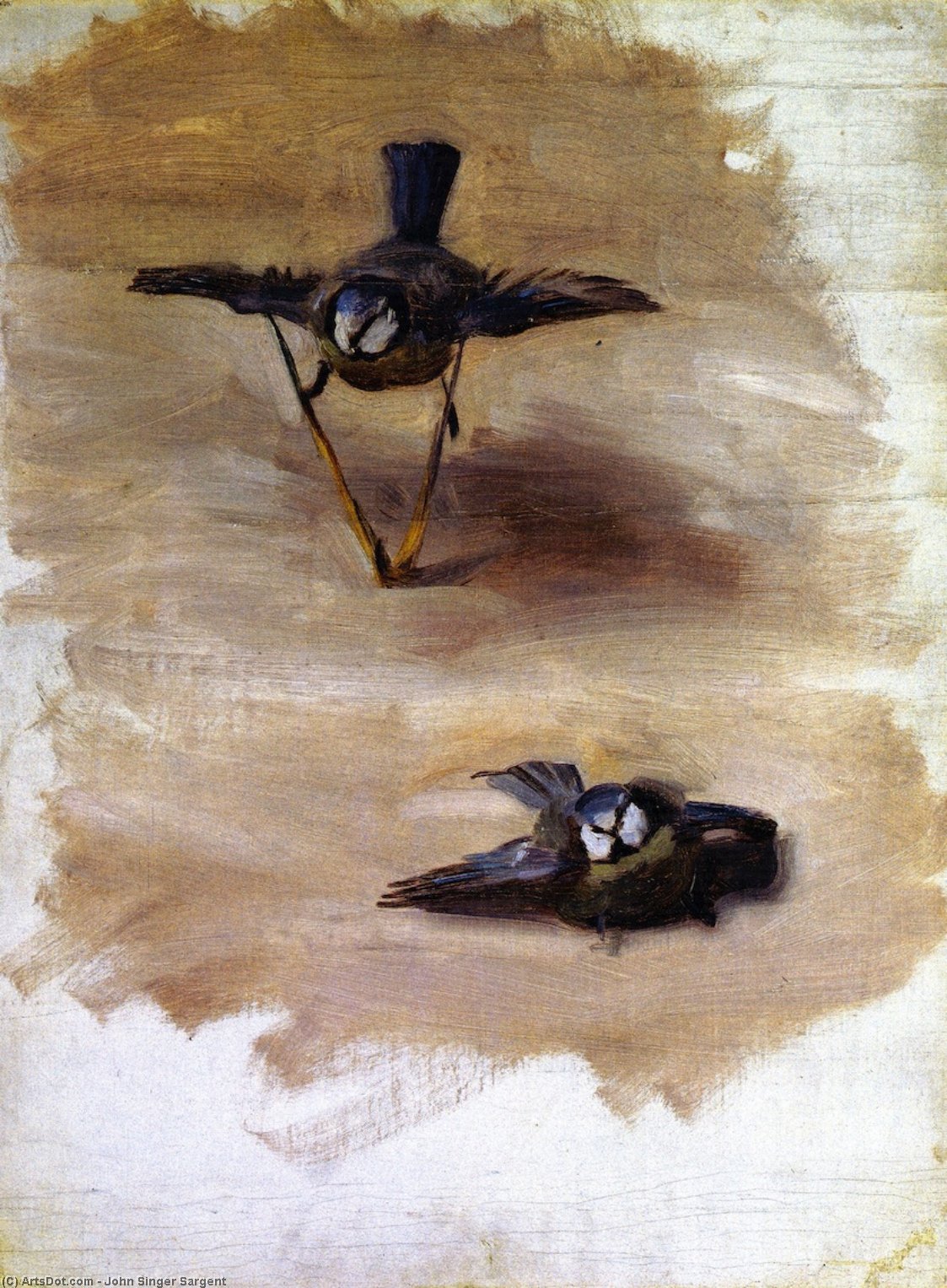
Studies of a Dead Bird: A Momentary Stillness
John Singer Sargent’s “Studies of a Dead Bird,” created in 1874, is more than just a depiction of avian mortality; it's a profound exploration of observation, technique, and the quiet beauty found within seemingly mundane subjects. This oil on canvas painting, now residing at the Metropolitan Museum of Art, exemplifies Sargent’s early mastery and foreshadows his later artistic development.
Artistic Style and Technique
Sargent, already demonstrating remarkable skill at just 18 years old, employs a realistic style infused with Impressionistic sensibilities. The painting isn't about grand narrative or overt symbolism; instead, it’s a study in rendering texture and form. Sargent meticulously captures the delicate plumage of the birds, utilizing subtle variations in tone and brushstroke to convey the softness and fragility of feathers. The use of chiaroscuro – the interplay of light and shadow – is particularly effective, creating depth and volume that brings the birds to life despite their stillness. The visible brushwork, characteristic of Sargent’s technique, adds a dynamic quality to the composition, preventing it from feeling static or lifeless. Impasto techniques are evident in the thick application of paint, further emphasizing texture and adding visual interest.
Historical Context and Significance
This work was created during a pivotal period in Sargent's artistic journey. Having studied under Carolus-Duran in Paris, he absorbed lessons in academic realism while simultaneously developing an eye for capturing fleeting moments of light and atmosphere – hallmarks of the burgeoning Impressionist movement. “Studies of a Dead Bird” reflects this blend of influences. It’s not a typical portrait or landscape that would define Sargent's later career, but it serves as a crucial stepping stone, demonstrating his technical prowess and willingness to explore unconventional subjects. The painting offers insight into Sargent’s early artistic experimentation before he became renowned for his society portraits.
A Study in Mortality and Beauty
While the subject matter – dead birds – might initially seem somber, Sargent elevates it through his artistry. The painting isn't morbid; rather, it evokes a sense of quiet contemplation and appreciation for the natural world. The stillness of the birds invites viewers to observe their form with heightened attention, noticing details they might otherwise overlook. It’s a meditation on mortality, yes, but also a celebration of beauty in its most transient state. The muted color palette – primarily browns, blacks, and creams – contributes to this contemplative mood, creating an atmosphere of understated elegance.
Beyond the Canvas: Sargent's Legacy
“Studies of a Dead Bird” stands as a testament to John Singer Sargent’s exceptional talent and his ability to find artistic merit in everyday observations. It provides valuable insight into his early development as an artist, showcasing his technical skill and foreshadowing his later mastery of portraiture and landscape painting. As a hand-painted reproduction, this artwork allows admirers to experience the intricate details and textures that make the original piece so remarkable, bringing a touch of Sargent’s quiet brilliance into any space.