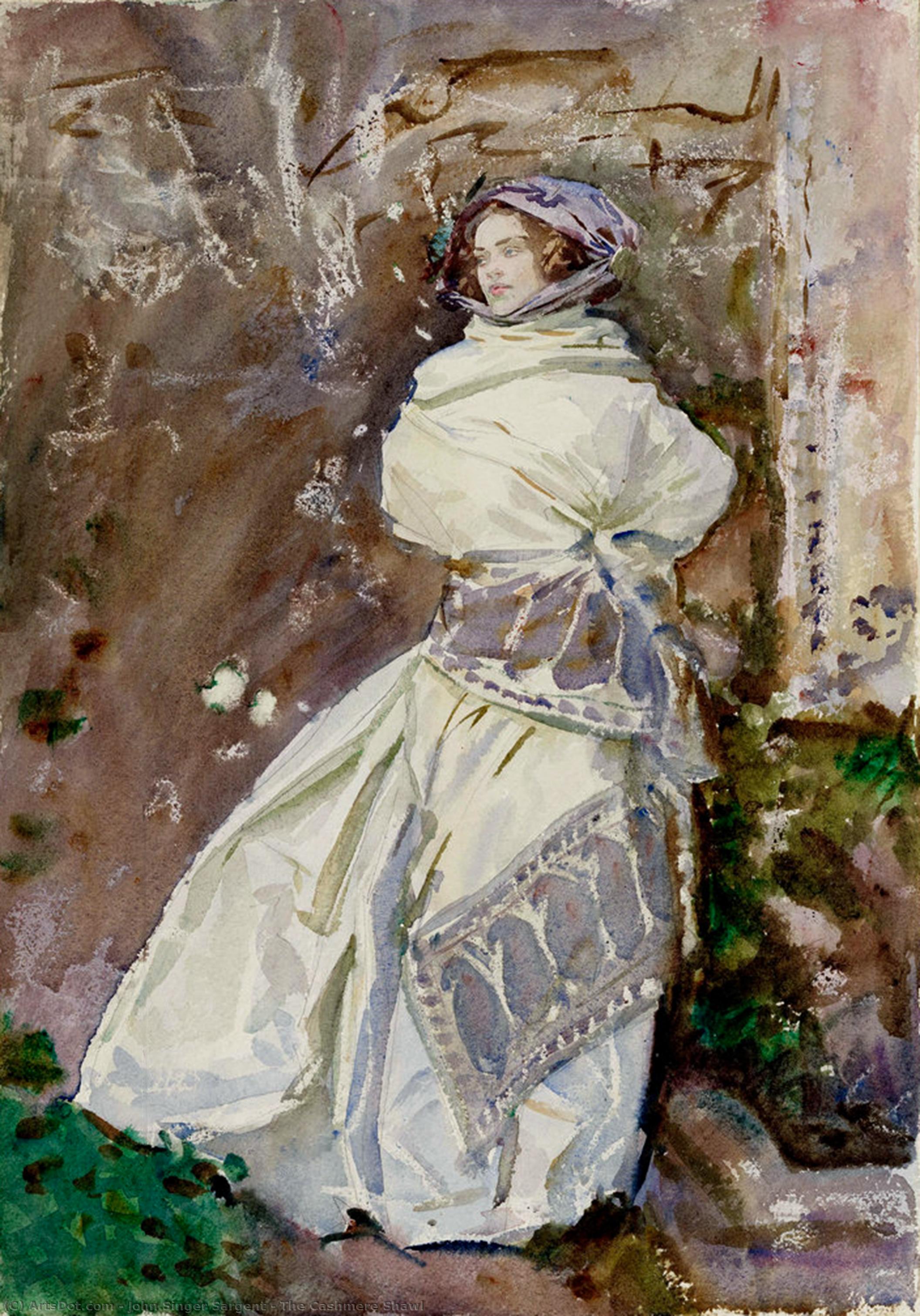
Captured in an ethereal watercolor style by John Singer Sargent during the Belle Époque, this portrait depicts a woman draped in luxurious cashmere, embodying timeless elegance against a textured backdrop – explore exquisite reproductions and bring artistic beauty into your home.
A Portrait of Grace Amidst Stone – Exploring John Singer Sargent’s “The Cashmere Shawl”
John Singer Sargent's "The Cashmere Shawl," painted in 1910, transcends mere representation; it embodies the spirit of its era and speaks to timeless themes of femininity, luxury, and contemplative beauty. This watercolor masterpiece captures a woman draped in elegant simplicity against a backdrop that subtly hints at both grandeur and solitude—a masterful blend of Impressionistic technique and psychological insight.
- Subject Matter: The painting depicts a woman posed gracefully before what appears to be a rocky outcrop or wall, emphasizing her stillness and poise. Her attire consists of a flowing white dress complemented by a luxurious cashmere shawl, instantly conveying notions of wealth and refinement.
- Style & Technique: Sargent’s signature Impressionistic style is evident in the loose brushstrokes and diffused light that characterize the composition. Watercolor lends itself beautifully to capturing subtle tonal variations and atmospheric effects, creating an ethereal quality that softens the contours of the woman's form and the surrounding landscape.
The historical context surrounding “The Cashmere Shawl” is crucial to understanding its significance. Painted during the height of the Gilded Age in New York City, it reflects the opulent tastes and social conventions of the time—a period marked by extravagant parties, lavish estates, and a preoccupation with appearances. Sargent’s patrons were often wealthy industrialists and aristocrats who sought portraits that conveyed status and sophistication. The shawl itself serves as a potent symbol of comfort, warmth, and protection – perhaps representing inner peace amidst external pressures.
Symbolism: Beyond its visual beauty, the painting resonates with deeper symbolic meanings. The white dress symbolizes purity and innocence, while the cashmere shawl embodies indulgence and sensual pleasure. The rocky outcrop behind the woman could represent resilience or a grounding force against which her grace stands out—a visual metaphor for inner strength.
Emotional Impact: “The Cashmere Shawl” evokes a feeling of serene contemplation. The muted palette and soft brushstrokes invite viewers to linger on the image, absorbing its quiet elegance and appreciating the subtle nuances of light and color. It’s a portrait that captures not just a likeness but also an emotional state—a moment frozen in time, radiating tranquility and understated beauty.
This reproduction offers collectors and interior designers alike the opportunity to experience Sargent's artistic vision firsthand. Its delicate watercolor rendering faithfully recreates the original painting's luminous atmosphere and textural richness, bringing a touch of timeless elegance into any space.